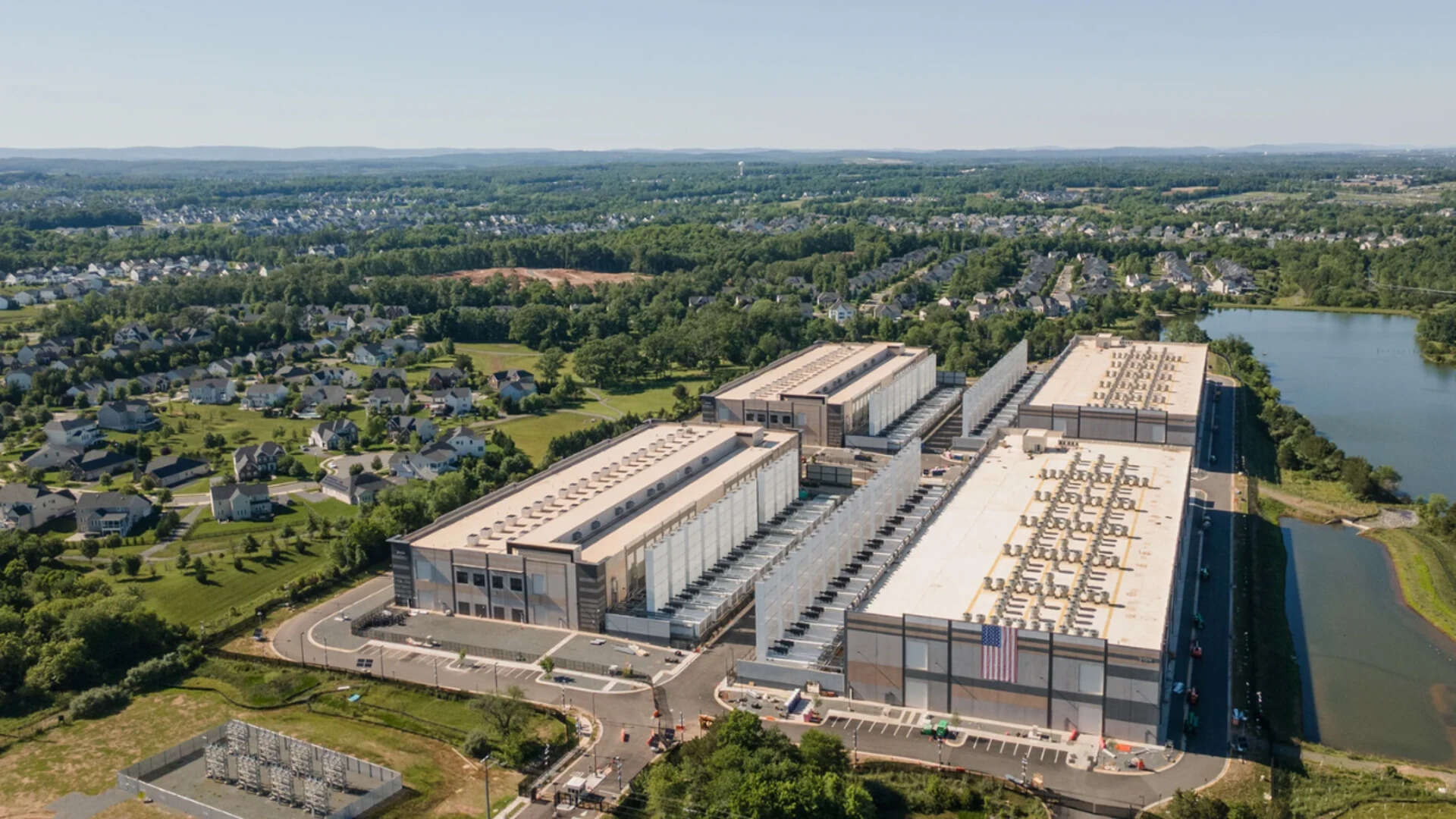
The rapid proliferation of hyperscale data centres within localized municipal jurisdictions creates a fundamental structural imbalance between industrial infrastructure demand and public utility capacity. When a single US county approves the development of 37 data centre facilities, the resulting shift in load profiles alters the regional energy economy. Municipalities frequently miscalculate the long-term systemic costs of these developments, viewing them through the lens of short-term tax revenue while ignoring the structural strain on local grid infrastructure. The immediate consequence is not merely an abstract supply-demand imbalance, but a direct financial penalty levied against captive public consumers—manifesting in localized utility rate hikes of up to 25% and mandated demand-response measures, such as instructing public schools to dim their lighting systems.
To understand how high-density computing infrastructure displaces municipal resource allocation, analysts must move past superficial political narratives and deconstruct the core economic and thermodynamic realities governing modern electrical grids.
The Dual-Driver Cost Function of Municipal Grid Strain
The inflationary pressure on local utility bills is driven by two distinct but interconnected mechanisms within utility economics: peak capacity constraints and capital expenditure socialization.
Total Utility Cost Increase = (Base Load Expansion Costs + Peak Demand Premium) + (Grid Reinforcement CapEx / Captive Ratepayer Base)
1. Baseload Displacement and Peak Demand Premiums
Data centres operate on an atypical demand profile compared to residential or commercial real estate. While a school or office building exhibits a diurnal load curve—peaking during daylight hours and dropping significantly at night—a hyperscale data centre maintains a flat, near-continuous baseload requirement.
When 37 facilities are introduced to a regional grid, they consume a massive share of the available, low-cost baseload power. When regional demand peaks during extreme weather events, the utility provider cannot scale down the data centres due to strict uptime Service Level Agreements (SLAs). Consequently, the utility must activate or purchase power from expensive peaker plants or spot markets. The financial premium of this high-cost marginal generation is ultimately passed through to standard ratepayers.
2. Capital Expenditure Socialization
The physical integration of tens of gigawatts of new demand requires comprehensive grid modernization. Substation upgrades, high-voltage transmission line installations, and advanced thermal management infrastructure require immense upfront capital expenditure (CapEx).
Under prevailing regulatory frameworks for public utilities, these infrastructure deployment costs are frequently socialized across the entire ratepayer base rather than being borne exclusively by the industrial entities driving the demand. The 25% escalation in school district and residential power bills represents the direct amortization of these grid upgrades, distributed across a captive local market.
The Operational Paradox of Public Infrastructure Rationing
The directive for public schools to dim lights highlights a profound operational paradox: highly sophisticated, capital-intensive digital infrastructure actively degrades the baseline operational efficiency of physical civic infrastructure.
The Physics of Efficiency Degradation in Public Facilities
Instructing a school district to reduce illumination levels is a rudimentary form of Demand-Side Management (DSM). While superficially effective at reducing immediate kilowatt-hour consumption, this tactical rationing introduces hidden secondary costs:
- Human Capital Depreciation: Reduced lux levels in educational environments correlate directly with decreased cognitive focus and visual fatigue, undermining the primary institutional objective of the facility.
- HVAC Imbalances: Modern building management systems rely on predictable internal heat gains, including the thermal output of lighting systems. Sudden, uncoordinated shifts in lighting loads force HVAC compressors to modulate inefficiently, often counteracting the intended energy savings through increased heating cycles in cooler months.
The Asymmetric Priority Matrix
The structural hierarchy of the regional energy market prioritizes data centre uptime over civic functionality. Because data centre operators negotiate sophisticated Power Purchase Agreements (PPAs) that include steep financial penalties for curtailment, utilities treat them as non-interruptible loads. Conversely, municipal institutions lack the market leverage to secure similar protections. The public sector effectively serves as the shock absorber for the regional grid, absorbing volatility through operational degradation so that private computing clusters can maintain five-nines (99.999%) availability.
Systemic Structural Remedies for Municipal Regulators
Municipalities facing grid strain cannot rely on voluntary conservation measures to resolve systemic capacity deficits. Regulators must implement structural frameworks that realign the economic incentives of industrial developers with the capacity realities of local infrastructure.
Tiered Industrial Rate Design and Dynamic Marginal Pricing
The standard flat-rate or simple time-of-use (TOU) tariff structures applied to commercial entities are insufficient for hyperscale clusters. Regulators must transition to a Lokational Marginal Pricing (LMP) model coupled with a dedicated Industrial Infrastructure Tariff.
Under this framework, data centres pay a variable rate that scales exponentially with total grid utilization. When regional demand approaches critical thresholds, the cost of power to the data centre increases to a level that economically incentivizes voluntary computing load migration to other geographic nodes, mitigating the need to ration power to public schools.
Mandated On-Site Microgrid and Storage Co-Location
Zoning approvals for high-density computing facilities should be legally contingent upon the co-development of captive energy generation and storage infrastructure.
- Behind-the-Meter Storage: Requiring data centres to maintain large-scale utility battery storage (e.g., lithium-iron-phosphate or flow batteries) allows them to draw from the grid during off-peak periods and run entirely on stored energy during peak regional demand windows.
- Baseload Co-Generation: Integrating on-site small modular reactors (SMRs) or advanced hydrogen fuel cell systems isolates the data centre's primary demand from the public grid, transforming the facility from an infrastructure drain into a self-sustaining island.
Institutional Risk Allocation via Localized Infrastructure Bonds
To prevent the socialization of grid upgrade costs, municipalities must mandate that data centre developers capitalize a localized Infrastructure Stabilization Fund prior to breaking ground. This capital must be earmarked specifically to subsidize the energy costs of public institutions within the affected footprint, insulating school districts and municipal services from the rate volatility generated by the industrial expansion.
The Structural Limits of Mitigation Strategies
Every regulatory tool carries structural trade-offs that municipal planners must evaluate objectively. Implementing aggressive industrial tariffs or mandating self-generation increases the capital friction of a jurisdiction. Data centre developers, possessing highly mobile capital, may simply shift their pipelines to adjacent counties with laxer oversight, creating a race-to-the-bottom dynamic between competing regional economies.
Furthermore, behind-the-meter battery storage systems carry inherent supply-chain constraints and localized environmental risks, including thermal runaway management, which shifts the burden from the electrical utility to local emergency response infrastructure.
Strategic Playbook for Municipal Energy Realignment
The optimal path forward requires an immediate transition away from retroactive crisis management toward a proactive, closed-loop infrastructure strategy. Municipalities currently experiencing a capital-induced utility crisis must execute a three-part operational pivot:
- Enact an Immediate Moratorium on High-Density Interconnection Approvals: Halt all pending data centre grid connections until an independent, third-party hosting capacity analysis determines the exact thermal and transmission boundaries of the existing regional network.
- Restructure the Municipal Ratepayer Class Hierarchy: File an emergency petition with the state public utility commission to decouple municipal and educational facility rates from the broader commercial class, establishing a protected, cost-insulated civic rate tier.
- Enforce Virtual Power Plant (VPP) Integration: Mandate that all operating data centres integrate their backup diesel and battery systems into a unified virtual power plant framework, allowing the utility to actively draw power from the facilities to support the public grid during peak stress events, reversing the flow of energy dependency.