The narrative is tempting. A billionaire’s vision, a $20 billion price tag, and the sheer force of Chinese engineering muscle combining to end Nigeria’s fuel poverty once and for all. It makes for a great press release. It makes for a terrible reality check.
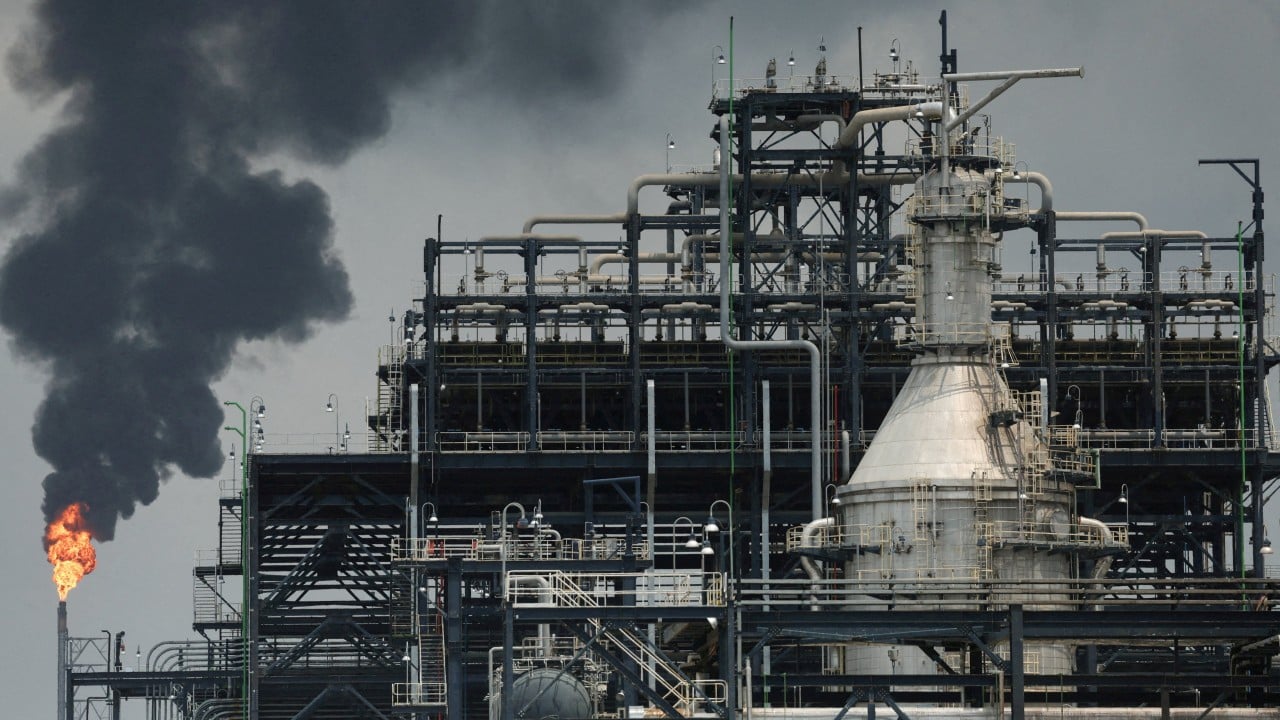
While mainstream outlets swoon over the "engineering prowess" that built the Dangote Refinery, they are missing the forest for the steel. Building a massive industrial complex is a feat of logistics, yes. But assuming that a refinery—no matter how shiny or large—can fix a broken energy market is the kind of developmental fairytale that keeps Africa reliant on foreign solutions for domestic failures. You might also find this connected coverage interesting: The Invisible Valve and the Price of Peace.
We need to stop talking about the volume of concrete poured and start talking about the economic friction that is about to grind this giant to a halt.
The Myth of the Silver Bullet
The common consensus is simple: Nigeria has crude, Nigeria lacks refined petrol, so building a refinery in Lagos fixes the math. As extensively documented in latest articles by The Wall Street Journal, the results are widespread.
It doesn't.
I have watched dozens of heavy-industry projects across the continent stumble because they mistook a physical solution for a systemic one. The Dangote Refinery is a 650,000 barrel-per-day beast dropped into an ecosystem that cannot feed it.
The refinery requires a steady, massive diet of crude. Yet, Nigeria’s upstream sector is a graveyard of aging infrastructure and rampant theft. When the "biggest refinery in Africa" has to import crude from the United States—as it has already done—the entire argument for domestic energy security evaporates.
If you are paying in USD for American WTI crude to refine it in Lekki, you aren't "fueling a continent." You are running a high-stakes currency arbitrage play. The moment the Naira slips or global shipping costs spike, the "engineering miracle" becomes a stranded asset.
China Is Not Building a Future They Are Selling a Template
The praise for China’s National Bureau of Quality and Technical Supervision and various state-owned contractors ignores a fundamental truth about industrial exports. China isn't "helping" Nigeria develop engineering prowess; they are exporting excess industrial capacity.
The Chinese model of infrastructure development—often referred to as "EPC+F" (Engineering, Procurement, Construction, plus Financing)—is a turnkey trap. It prioritizes the speed of construction over the long-term integration of the local workforce.
Look at the technical specs. When a project is built using proprietary Chinese standards, specialized components, and specific alloys, the maintenance cycle is locked into a single source. You aren't building a Nigerian industry. You are building a permanent Chinese storefront.
True engineering prowess isn't the ability to follow a blueprint provided by a foreign firm. It is the ability to iterate, repair, and innovate on that design. By outsourcing the "brain" of the refinery to Beijing and the "brawn" to a massive imported labor force, Nigeria hasn't climbed the value chain. It has just bought a very expensive piece of foreign hardware.
The Scale Paradox
Bigger is not always better. In fact, in volatile markets, bigger is usually more fragile.
The industry calls this "the tyranny of scale." The Dangote Refinery is designed for a world of stable demand and predictable logistics. Nigeria is neither. By centralizing the majority of the nation’s refining capacity in a single geography, the project has created a massive point of failure.
Imagine a scenario where the single pipeline feeding this behemoth is compromised, or a localized strike halts the Lekki Free Trade Zone. In a decentralized model, you have resilience. In the Dangote model, you have a total blackout.
The "prowess" celebrated by the media is actually a massive gamble on stability in a region that has spent the last forty years proving it is anything but stable.
The Hidden Cost of Monopoly
We are told this refinery will lower prices. This is economically illiterate.
Refineries are price-takers, not price-makers. The cost of a liter of petrol is determined by the global Brent or WTI benchmark, plus the crack spread (the margin for refining), plus logistics. Unless Aliko Dangote plans to operate a multi-billion dollar charity, he will charge market rates.
The "People Also Ask" sections on Google are filled with variations of: "When will fuel prices drop?" The answer is: they won't.
In fact, they might rise. By effectively granting a monopoly to a single private entity, the Nigerian government has killed competition before it could even start. If the state-owned refineries (NNPC) remain the rusted husks they currently are, Dangote becomes the sole arbiter of energy prices.
Is a private monopoly better than a failed state monopoly? Marginally. But it is certainly not the populist victory the headlines suggest.
The Logistics Nightmare Nobody Mentions
Engineering a refinery is one thing. Engineering a country is another.
The Lekki peninsula is a geographical bottleneck. To move the refined product out, you need a world-class distribution network. Currently, that means thousands of trucks clogging already broken roads.
The competitor's article waxes poetic about the "state-of-the-art" marine facilities. They fail to mention that the internal infrastructure of Nigeria cannot support the output of 650,000 barrels per day. Without a radical overhaul of the national rail and pipeline network—projects that are decades behind schedule—the refinery is a heart with blocked arteries.
It doesn't matter how fast you can refine fuel if you can't get it to a filling station in Kano without it being stolen, taxed by a dozen different agencies, or stuck in a three-day traffic jam.
Why We Keep Falling for This
We love the "Great Man" theory of history. We want to believe that one billionaire and one foreign superpower can fix a decade of rot with enough steel and sweat.
But the real engineering prowess isn't in the construction; it's in the maintenance and the institutional environment. Until Nigeria fixes its currency volatility, its upstream production deficits, and its middle-man corruption, the Dangote Refinery is just a very impressive monument to what money can buy, rather than what a system can sustain.
Stop looking at the height of the distillation towers. Start looking at the depth of the structural deficits.
The refinery is not the end of Nigeria's energy crisis. It is merely the start of a much more expensive, much more complicated chapter of industrial dependency.
You don't build a prosperous nation by buying a giant machine from your neighbor. You build it by being the person who knows how to design the machine in the first place. Nigeria didn't get the knowledge; it just got the invoice.