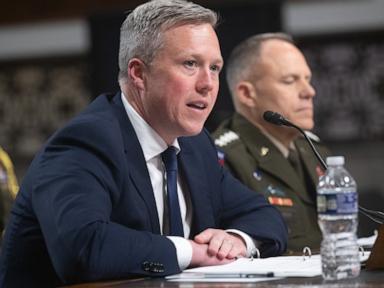
The media wants you to believe that Army Secretary Dan Driscoll walking out the door is a tragedy of institutional breakdown. The mainstream narrative spins a clean, lazy morality play: the brave, forward-thinking civilian technocrat tries to modernize the force, only to be kneecapped by a paranoid, hypermasculine Defense Secretary purging anyone smarter than him.
It is a comforting script for Washington insiders who love institutional stasis. It is also entirely wrong.
Driscoll’s exit and his eleventh-hour warnings to the White House about Pete Hegseth’s brass-clearing blitz are not signs of a system failing. They are the violent, overdue symptoms of a bureaucracy finally being forced to answer for decades of strategic drift. The conventional wisdom treats military "readiness" and "transformation" as sacred terms that justify infinite spending loops and risk-averse general officer management. We need to stop pretending that the architects of the old, bloated Pentagon are the victims here. They are the problem.
The Myth of the Innovating Bureaucrat
Let’s look at the roster of generals pushed out or sidelined in this purge—names like Army Chief General Randy George, General David Hodne, and General Christopher Donahue. The press frames these men as irreplaceable visionaries of military transformation.
I have watched defense acquisition programs up close for over a decade. I have seen billion-dollar modernization initiatives die not from budget cuts, but from death by a thousand PowerPoint slides. The "transformation" these officials champion has routinely produced multi-decade weapon system delays, bloated administrative overhead, and a general officer corps optimized for congressional testimony rather than tactical friction.
When Driscoll and his allies talk about protecting "readiness", they are usually talking about protecting an institutional comfort zone. They mean maintaining a sprawling global footprint, preserving legacy force structures that belong in the Cold War, and insulating four-star headquarters from accountability. Hegseth’s mass culling of senior leadership is chaotic, yes. It is abrasive. But institutional inertia does not yield to polite memo-writing. It requires a wrecking ball.
The Real Cost of Bureaucratic Paranoia
The media focuses heavily on the interpersonal drama between the Pentagon's civilian leadership. They frame Hegseth’s moves as textbook insecurity, a media-friendly trope about a television commentator turned cabinet secretary threatened by traditional operators.
This completely misreads the structural incentives at play.
The civilian head of the Army is structurally incentivized to protect the Army’s budget share, its end-strength numbers, and its traditional authorities against inter-service rivals and the Office of the Secretary of Defense. Driscoll was playing the classic institutional game: trying to manage modernization from inside a bureaucratic cocoon while slow-rolling directives that threatened the Army's internal hierarchy.
When an outsider like Hegseth arrives with a mandate to break crockery, the resident bureaucracy does what it always does. It leaks. It weaponizes the press. It frames policy disagreements as existential threats to national security. The warnings delivered to the White House about readiness crises and strained supply chains in ongoing regional conflicts are standard-issue bureaucratic defense mechanisms. Every time a civilian leader attempts real structural disruption, the building generates a chorus of Cassandras predicting immediate collapse.
The irony is thick. The same leaders warning that a prolonged campaign strains our forces are the ones who spent the last twenty years designing a force structure incapable of decisive, rapid victory against peer or near-peer competitors. They built a military tailored for endless, low-intensity counterinsurgencies, then panicked when forced to confront high-end attrition and regional blockades.
Why Disruption Beats Consensus Every Time
If you want a military that can win tomorrow's conflicts, you have to break the personnel systems that reward careerism over risk-taking.
The traditional promotion track for American generals rewards the risk-averse. To make four stars, an officer must spend thirty years learning how not to offend a subcommittee chairman, how not to lose a single vehicle in a training accident, and how to successfully lobby for budget allocations that sustain base structures in key congressional districts.
A purge of that leadership tier is disruptive. It creates immediate command vacuums. It leaves offices temporarily rudderless. But stability within a broken architecture is a trap. If every general officer shares the exact same institutional worldview—the worldview that produced the procurement disasters and strategic confusion of the post-9/11 era—then replacing them with officers cut from the same cloth is just rearranging deck chairs on a sinking hull.
Hegseth’s approach is blunt force trauma. It flies in the face of civil-military norms that treat four-star generals as autonomous philosopher-kings who answer only to history. But those norms have insulated military leadership from the consequences of strategic failure for a generation.
The Uncomfortable Reality of Civilian Control
The Constitution did not establish the Department of Defense to make generals feel secure or to protect the career trajectories of service secretaries. It established civilian control of the military for one explicit reason: to inject raw, unapologetic political will into an institution that naturally tends toward self-preservation.
When Dan Driscoll walked out, he chose institutional loyalty over alignment with the commander-in-chief's executive mandate. That is his right. But let’s stop dressing it up as a defense of democracy. It was a turf war, and the turf lost.
The military does not need another smooth-talking change agent who operates within the comfortable consensus of the beltway echo chamber. It needs leaders willing to break the administrative state that swallows up defense dollars and spits out indecision. Hegseth is swinging wildly, and he will undoubtedly make mistakes. But a wild swing at a entrenched bureaucracy is infinitely more valuable than another decade of polite managed decline.