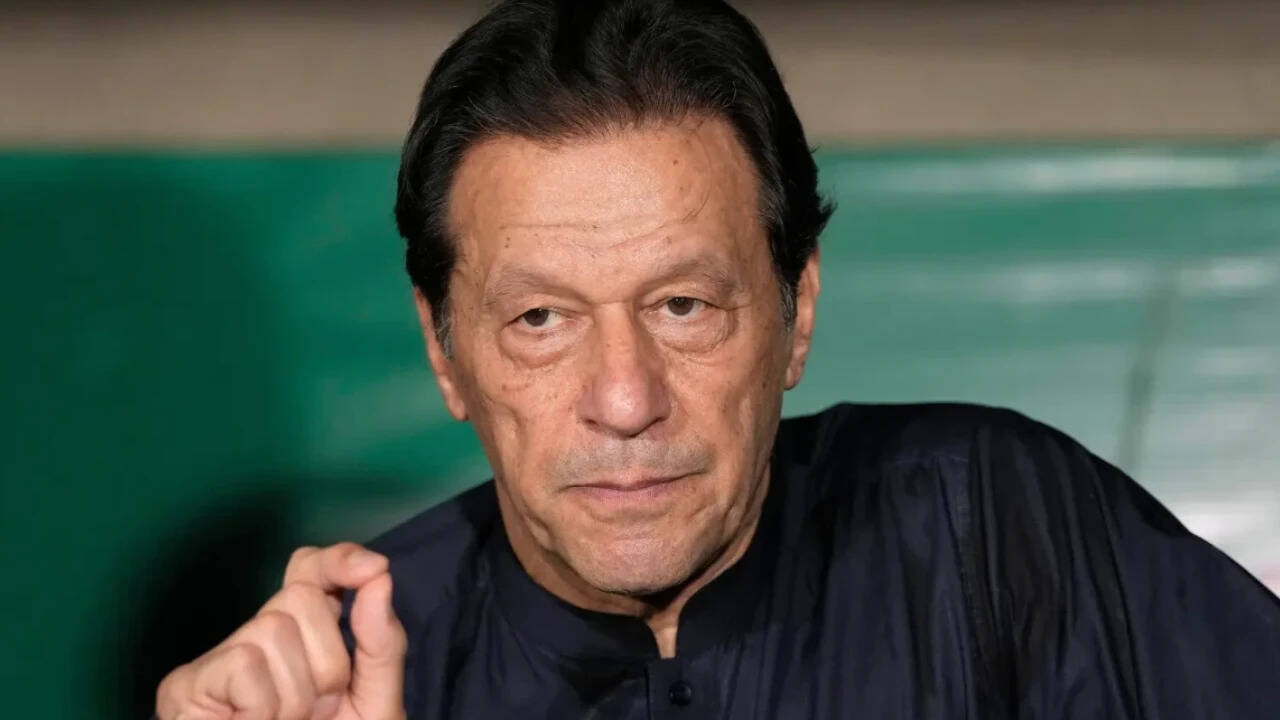
When former Pakistani Prime Minister Imran Khan warns from Adiala Jail that he may not return alive without urgent medical intervention, he is executing a calculated political maneuver rooted in custodial deterrence rather than issuing a mere health update. Standard media coverage treats such statements as isolated human-interest developments or binary credibility tests between the state and the opposition. That framing misses the structural reality. In high-stakes political detentions, a prisoner's medical status functions as a primary bargaining chip, shifting the operational burden from judicial proceedings to state liability management.
Analyzing the mechanics of Imran Khan's medical appeals requires separating verified clinical realities from strategic signaling. Because the competitor reference provides no underlying source text beyond the headline, and because independent clinical diagnostics from inside Rawalpindi's Adiala Jail remain restricted to state-appointed medical boards and vetted legal counsel, any rigorous assessment must rely on documented institutional protocols, historical precedents in Pakistani political custody, and the verifiable incentive structures governing both the Pakistan Tehreek-e-Insaf (PTI) leadership and the state apparatus.
The Three Pillars of Custodial Medical Leverage
In asymmetric political conflicts where an opposition leader is physically isolated from their mass base, traditional mobilization tools degrade. Public rallies face logistical friction, communication networks suffer throttling, and legal timelines stretch across appellate courts. Under these constraints, physical vulnerability becomes the most efficient transmission mechanism for political pressure.
Asymmetric Information Control
The state maintains a monopoly over physical access to the detainee, controlling which physicians enter the facility, which diagnostic tests are authorized, and when medical bulletins are released. The detainee and their legal team counter this monopoly through selective narrative leaks during court appearances and family visitations. By framing a localized ailment—such as reported ear, dental, or gastrointestinal issues documented in prior court petitions—as an existential threat, the defense forces the state to prove a negative: that the detainee is not deteriorating under its care.The Liability Inversion Mechanism
Under international human rights frameworks and Pakistan's own Prison Rules, the detaining authority assumes absolute fiduciary responsibility for the physical survival of an inmate. The moment a high-profile detainee publicly declares a fear of death due to medical neglect, the political cost function flips. If the detainee suffers an acute health event, the state absorbs immediate domestic instability and international diplomatic censure regardless of the underlying pathology. This threat compels prison authorities to over-index on defensive documentation, creating procedural delays that the defense can further cite as evidence of obstruction.Base Mobilization Through Existential Framing
Routine legal updates generate diminishing returns in public attention. Procedural adjournments in cipher, Toshakhana, or Al-Qadir Trust cases fail to sustain street-level urgency over multi-year timelines. An existential health warning bypasses legal complexity, converting a technical judicial battle into an immediate moral emergency capable of reactivating dormant party networks and forcing diaspora lobbying groups into rapid action.
Separating Verified Clinical Facts from Strategic Hypotheses
Rigorous analysis demands strict boundaries between what is empirically established in court records and what remains unverified political positioning.
Known Facts:
- Custodial Environment: Imran Khan has been held primarily at Central Jail Rawalpindi (Adiala Jail) since late 2023, subject to high-security protocols that restrict routine movement and external contact.
- Prior Medical Interventions: Following the November 2022 assassination attempt in Wazirabad, Khan sustained gunshot wounds to his lower extremities, requiring surgical stabilization and ongoing rehabilitative care. Subsequent detention petitions filed by his legal counsel have repeatedly cited tinnitus, vestibular issues, and dental complications requiring specialist evaluation.
- Institutional Response: In response to prior judicial directives from the Islamabad High Court and accountability courts, the Pakistan Institute of Medical Sciences (PIMS) has periodically dispatched multi-disciplinary medical boards to examine Khan inside the facility, consistently reporting stable vital signs in official summaries.
Educated Hypotheses:
- Tactical Escalation Timing: Warnings regarding mortal risk correlate tightly with periods of judicial stagnation or impending military-court transfer rumors. The phrasing "may not return alive" functions as a preemptive deterrent against sudden custodial transfers to undisclosed locations or facilities with lower judicial oversight.
- Diagnostic Friction: While state boards confirm baseline stability, the refusal to permit Khan's personal physicians—specifically specialists from Shaukat Khanum Memorial Cancer Hospital—unfettered access creates a genuine diagnostic blind spot. Without baseline comparisons from his longtime clinicians, subtle progressions in chronic conditions remain plausible, even if acute mortality risk is overstated for political effect.
The Institutional Bottleneck in High-Profile Detentions
Why does a state apparatus with immense security infrastructure struggle to resolve a straightforward medical access dispute? The answer lies in organizational risk aversion within Pakistan's civil-military and judicial bureaucracies.
When a former prime minister is incarcerated, no mid-level prison superintendent or provincial home department official possesses the political insulation required to authorize an external hospital transfer independently. Moving a high-value detainee from a fortified prison to a civilian hospital like PIMS introduces three severe operational vulnerabilities:
- Perimeter Security Collapse: Transporting Khan through Rawalpindi or Islamabad triggers immediate crowd convergence, creating flashpoints between PTI supporters and law enforcement.
- Communication Breach: Hospital wards are porous environments compared to solitary prison blocks. Admission to a civilian facility allows unauthorized staff, sympathetic medical personnel, and visitors to pass unmonitored messages, instantly breaking the state's information containment strategy.
- Precedent Setting: Granting external medical transfer on the basis of verbal warnings establishes a repeatable playbook. In Pakistani political history—most notably during Nawaz Sharif's 2019 departure to London following platelet count disputes—medical emergencies have served as the primary exit ramp from incarceration. The current establishment views any concession on external hospitalization as the first step toward a forced political compromise.
This creates a structural deadlock. The prison administration cannot release him to an external hospital without risking a political containment failure, yet keeping him inside without independent medical verification amplifies the exact existential narrative Khan's legal team seeks to project.
Historical Precedents and the Politics of Custodial Health
Pakistan's political history demonstrates that custodial health crises rarely follow purely clinical trajectories; they operate as proxies for behind-the-scenes negotiations.
In 2019, former Prime Minister Nawaz Sharif's sudden drop in blood platelets while in National Accountability Bureau (NAB) custody transformed from a localized hematological dispute into a full-scale constitutional crisis. State medical boards initially downplayed the severity before rapidly reversing course once independent hematologists warned of imminent intracranial hemorrhage. That precedent permanently altered the risk calculus for subsequent administrations. Jail superintendents and medical board chairs now face personal career ruin if a prominent prisoner suffers irreversible harm on their watch, yet they face equal pressure from executive authorities not to manufacture a medical exit visa.
For Imran Khan, the operational constraints are tighter than those faced by Sharif in 2019. Unlike the Pakistan Muslim League-Nawaz (PML-N) leadership, which maintained active backchannel negotiations with the military establishment during Sharif's detention, Khan's confrontation with state institutions remains openly adversarial. Because no negotiated exile framework exists on the table, his medical warnings are not designed to secure a flight to London. Instead, they aim to achieve three localized objectives:
- Mandate Independent Verification: Force courts to compel the inclusion of Shaukat Khanum physicians on official medical boards, thereby breaking the state's monopoly on clinical reporting.
- Halt Custodial Transfers: Raise the political price of moving him from Adiala Jail to a remote facility or military custody, where judicial access would drop to zero.
- Sustain International Scrutiny: Provide foreign legislators, human rights monitors, and international media with concrete, urgent hooks to question the legitimacy of ongoing trials.
Limitations of the Medical Leverage Strategy
While existential health framing generates immediate headlines, relying on physical vulnerability as a primary political instrument carries severe diminishing returns and operational hazards.
First, credibility decay sets in rapidly if dramatic warnings are not followed by verifiable clinical evidence. Each time a detainee predicts imminent mortality and subsequently appears in court walking unassisted or delivering lengthy, energetic remarks to reporters, the marginal impact of the next warning drops. Skeptical observers and neutral arbiters begin discounting future alerts as routine political theater, which paradoxically increases the detainee's actual vulnerability if a genuine, silent medical emergency occurs later.
Second, state counter-messaging has grown more sophisticated. Rather than relying solely on opaque prison statements, authorities now publish granular vital-sign logs, ECG results, and signed acknowledgments from medical specialists to neutralize claims of neglect in the court of public opinion.
Third, judicial fatigue limits legal remedies. High courts can order medical checkups and guarantee family visitation rights, but judges are reluctant to override prison security assessments regarding external hospital admissions unless presented with irrefutable diagnostic proof of life-threatening pathology.
The Definitive Strategic Play
For analysts, policymakers, and institutional observers tracking Pakistan's political stability, monitoring the rhetoric surrounding Imran Khan's health is a distraction. The decisive variable is not what Khan says during brief courtroom interactions, nor what state-aligned commentators claim about his physical fitness. The true indicator of institutional risk lies entirely in the composition of the examining medical board.
Watch the court orders governing his next clinical evaluation. If the Islamabad High Court or the Supreme Court maintains the status quo—restricting examinations strictly to government-employed specialists from PIMS—the state retains absolute information control, signaling that no backchannel de-escalation is underway and that Khan's isolation will deepen. Conversely, the exact moment a judicial order or executive concession permits his personal physicians from Shaukat Khanum Memorial Cancer Hospital to conduct an unescorted diagnostic assessment inside Adiala Jail, the containment firewall has cracked. That procedural shift, rather than any public warning, will mark the first tangible step toward a broader political accommodation.