The Weight of an Empty Plate
Trash. We know the texture of it. The crinkle of high-density polyethylene bags, the stubborn snap of yogurt tubs, the ghost of discarded packaging piling up in landfills and choking the margins of our oceans. For decades, we treated this material as a terminal sentence. Once molded, it existed forever. A monument to human convenience built out of stubborn polymers that refuse to rot.
Walk down any grocery aisle, and you can feel the silent, oily permanence of it.
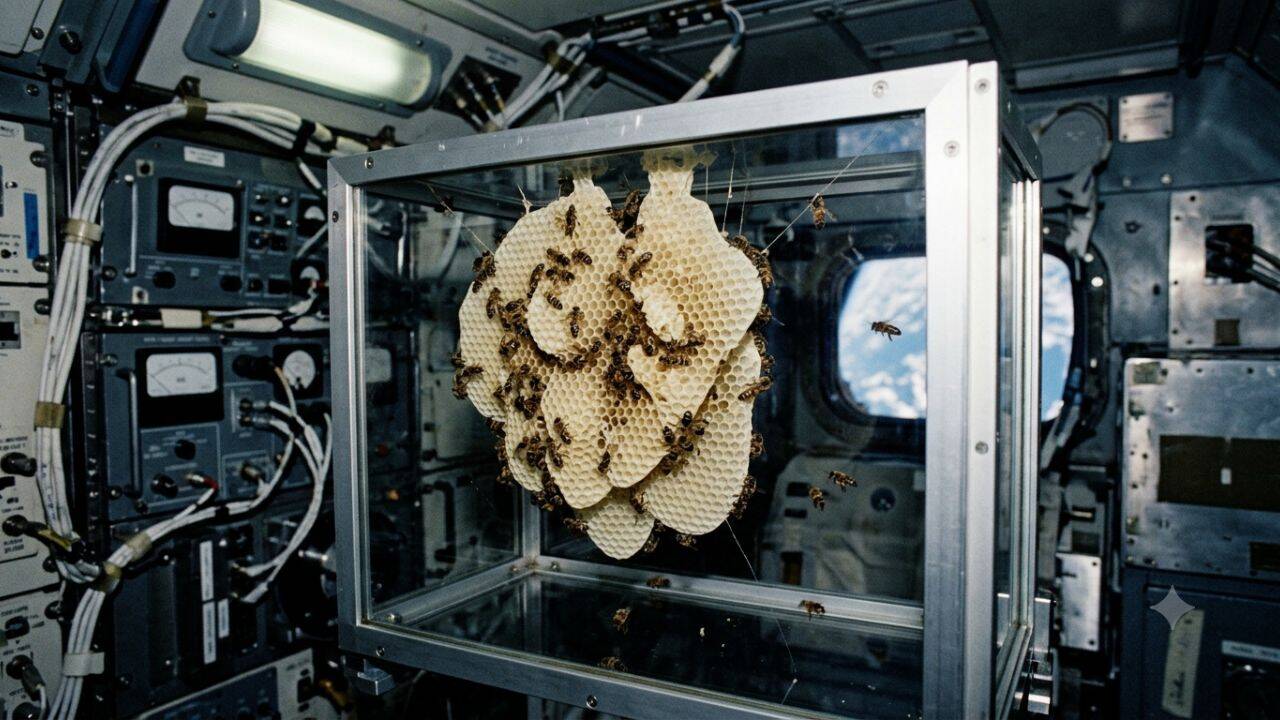
Now, look up at the stars. Or rather, look at the narrow, sterile metal tubes where humans live in permanent free-fall aboard orbital stations. Up there, every single calorie must be calculated, launched, and rationed. Water is recycled sweat. Air is scrubbed machinery. And when astronauts stare out at the infinite dark, they are tethered entirely to an umbilical cord of resupply ships sent from the dirt they left behind.
Two crises. One invisible bridge.
Scientists have figured out how to turn our garbage into dinner.
I still remember the smell of my grandfather’s workshop, thick with the scent of melted solder and burning plastic whenever he repaired old electronics. It smelled like ruin. It smelled like the end of something clean. We are a species terrified of our own refuse. We bury it, burn it, or push it offshore, pretending that out of sight means out of existence.
Yet, chemistry does not care about our guilt. Chemistry is just an accountant of atoms.
Rewriting the Carbon Chain
To understand how a discarded shopping bag becomes a protein cookie, you have to stop seeing plastic as a solid object and start seeing it as a vault.
Inside every synthetic polymer lies a dense, orderly arrangement of carbon and hydrogen atoms. For nature, cracking that vault has always been too difficult. Microbes take centuries to chew through it because the bonds are simply too stubborn. But human ingenuity has a way of turning stubbornness into opportunity.
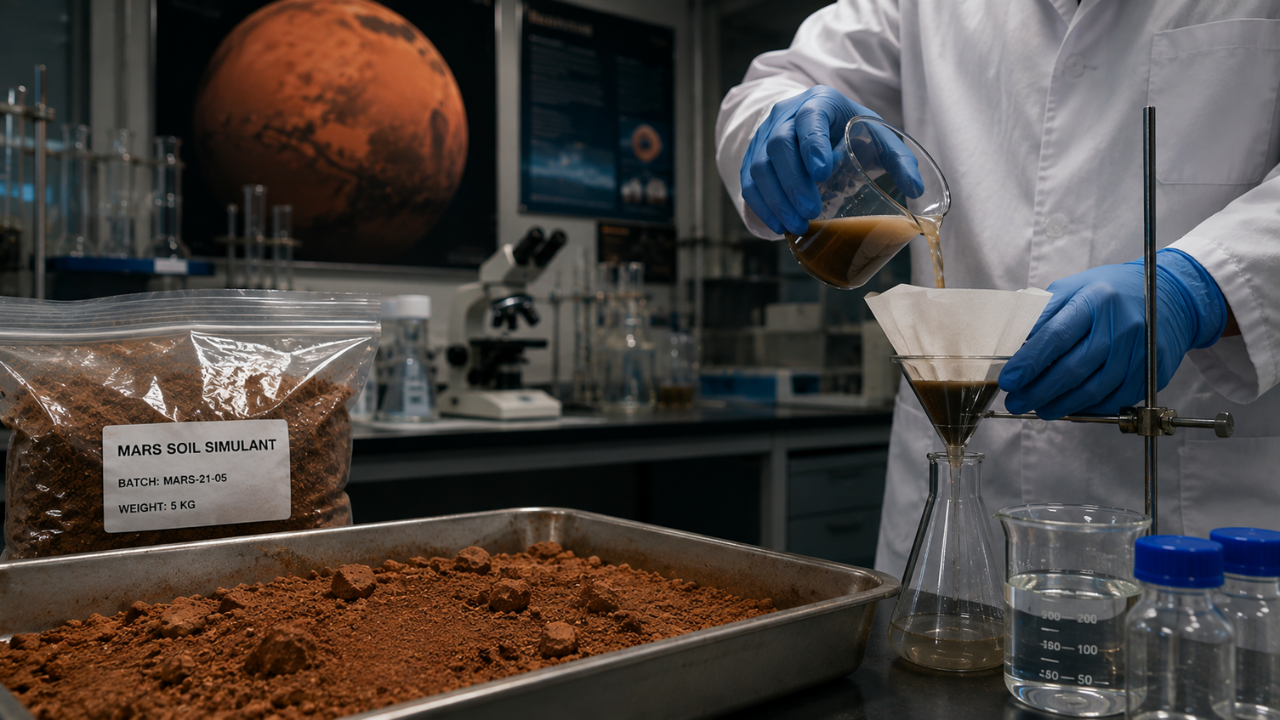
Consider a hypothetical scenario in a high-tech laboratory. A researcher drops a few grams of pulverized polyethylene—common plastic waste—into a specialized bioreactor. Inside, specialized microorganisms go to work. These aren't your average garden-variety bacteria. They are engineered or selected extremophiles, organisms that treat carbon chains the way a starving wolf treats an elk.
They break the polymer apart. They feed on the carbon backbone. And as they multiply, they convert that synthetic waste into single-cell protein.
Metamorphosis.
It sounds like alchemy. It feels like science fiction. But the math checks out. The resulting biomass is rich, dense, and packed with the essential amino acids required to sustain human muscle and bone. When processed and baked into a simple, unassuming ration bar or cookie, it tastes remarkably unremarkable. Neutral. Safe.
And that is the quiet revolution. The trash that outlives our grandchildren can now fuel our bodies.
Beyond the Horizon
The implications stretch far beyond terrestrial landfills.
Think about a three-year voyage to Mars. You cannot pack every calorie in a dehydrated pouch. Weight is currency in spaceflight; every extra pound demands exponential fuel. Worse still, human crews generate waste—lots of it. Food wrappers, hygiene items, discarded gear.
In the closed-loop ecosystem of a deep-space habitat, throwing things away is an impossibility. Every atom must be accounted for. By capturing plastic waste, breaking it down enzymatically or microbial-wise, and transforming it into edible protein, we create a biological loop. The trash of yesterday becomes the crew's breakfast tomorrow.
We stop being consumers of a finite world. We become processors.
Back on Earth, the stakes are different, but the urgency is identical. Millions face food insecurity while mountains of non-biodegradable waste sit baking in the sun. Traditional agriculture demands immense swathes of land, vast quantities of fresh water, and heavy fertilizer use. Turning industrial waste streams into microbial protein requires a fraction of that footprint.
It bypasses the soil entirely.
Of course, doubt lingers. We are creatures of instinct. Tell someone their lunch was forged from a discarded shampoo bottle, and their stomach will likely turn. We have deep-seated psychological barriers against artificial origins. We prefer our food to look like it fell off a tree or grazed in a meadow.
We forget that nature itself is the ultimate recycler. Every apple you have ever eaten was built out of the decomposed remnants of dead leaves, decayed animals, and ancient soil. We are just accelerating the wheel.
The Final Bite
There is a profound humility in looking at our worst mistakes—our indestructible, polluting, planet-choking plastics—and realizing they contain the exact building blocks we need to survive.
We spent a century trying to conquer nature with synthetics. Now, we are using those same synthetics to sustain ourselves against the void.
The next time you toss a wrapper into the bin, pause for a second. Imagine that material dissolved, transformed, fed to a hungry colony of microscopic life, and baked into a dense, humble cookie floating through the cold silence of space.
We are not running out of futures. We are just beginning to digest our past.