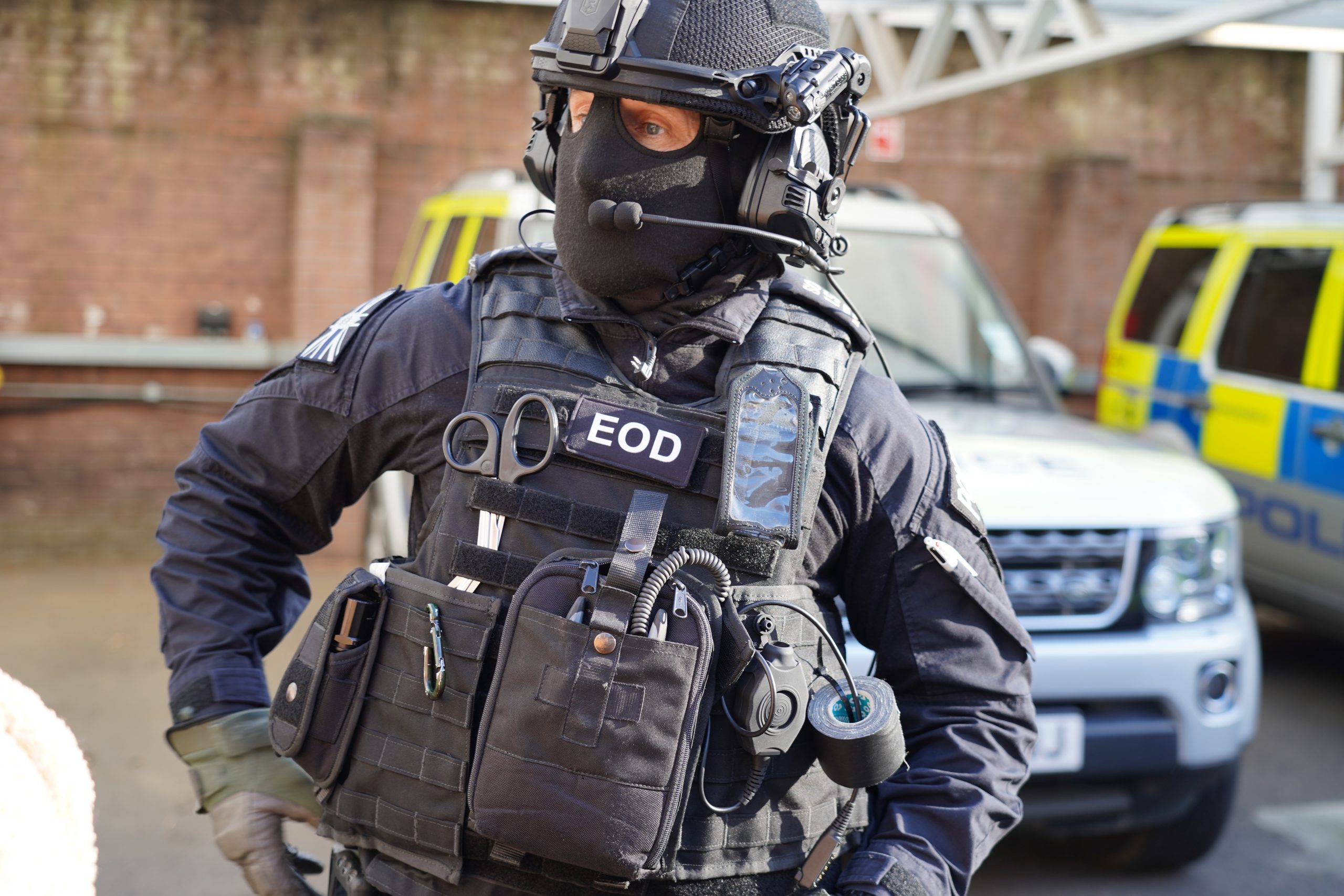
Security agencies love a clean sweep. The headlines write themselves. On one side, the Bureau Central d’Investigations Judiciaires (BCIJ) in Morocco; on the other, the Spanish National Police. They shake hands, execute simultaneous raids, and announce the "neutralization" of an ISIS-affiliated cell. The public sleeps better. The bureaucrats get their funding. But the narrative that these arrests are winning the war is a comfortable lie that ignores how radicalization actually scales in the digital age.
We are measuring success by counting bodies in handcuffs while the hydra grows two heads for every one we cut off.
The Myth of the Centralized Cell
The "cell" is a legacy term from 20th-century espionage that has no business being used in 2026. Traditional media and security press releases treat these groups like corporate branches—organized, hierarchical, and dependent on a central command. This is a fundamental misunderstanding of modern insurgency.
Radicalization today is an open-source franchise model. It isn't directed; it is curated. When the BCIJ "dismantles" a cell in Nador or Almería, they aren't destroying an organization. They are deleting a few files from a distributed cloud. The ideology remains cached in the system.
I’ve spent years analyzing the digital footprints of these networks. What we see in these "joint operations" is often the capture of low-level enthusiasts—individuals who have the intent but frequently lack the technical capacity to execute high-impact operations. By treating them as a major strategic victory, we create a false sense of security while the truly dangerous actors—the silent, high-skill professionals—remain below the noise floor.
The Cooperative PR Machine
Morocco and Spain have turned counter-terrorism into a diplomatic currency. Every time a joint operation is announced, it isn't just about security; it's about proving that the Mediterranean isn't a sieve. Morocco uses these raids to assert its status as the "indispensable partner" to Europe, while Spain uses them to justify its complex geopolitical dance with Rabat.
The "lazy consensus" is that more cooperation equals more safety.
In reality, the heavy reliance on these public displays of force creates a "whack-a-mole" strategy. We are obsessed with the Tactical Catch. We ignore the Strategic Void.
Consider the mathematics of radicalization. If a joint operation takes down five individuals but the socio-economic and digital conditions that produced them remain untouched, the "replacement rate" for those recruits is likely less than six months. We are using $100,000 operations to stop $50 threats, all while the underlying infrastructure of extremist thought thrives on encrypted platforms that security services still struggle to penetrate effectively.
The Technical Blind Spot
Security agencies are still fighting a physical war in a digital-first environment. They brag about seizing knives, flags, and "electronic devices." But seizing a laptop after the data has been synced to a decentralized server is like locking the barn door after the horse has been turned into a ghost.
The real threat isn't the guy with the flag in a basement in Morocco. It’s the developer in a mid-tier European city who is building the custom encryption tools these groups use to communicate. We don't see "joint operations" against the technical architects because they don't provide the visual satisfaction of a SWAT team kicking in a door at 4:00 AM.
- Data over Dynamic Entry: We need fewer raids and more aggressive signals intelligence.
- The Financial Illusion: Arresting a cell doesn't stop the flow of micro-donations via cryptocurrency that keeps the movement alive.
- The Echo Chamber Effect: Raids often act as a recruitment tool, turning fringe sympathizers into martyrs for the cause within their specific digital enclaves.
Why the Current Model is Broken
If you want to understand why we aren't winning, look at the recidivism and the "lone wolf" pivot. By focusing on "cells," we force the movement to evolve. We have essentially been the primary driver of the shift toward individualized, decentralized violence. We taught them that groups are easy to track, so they stopped forming groups.
The BCIJ and Spanish authorities are perfecting the art of fighting the last war. They are incredibly good at catching the people who are loud enough to be heard. They are failing to account for the silence.
The "People Also Ask" sections of the internet want to know: "How safe is Morocco?" or "Is ISIS still a threat?" These are the wrong questions. The question should be: "Why is our security strategy predicated on the capture of the least competent members of a movement?"
The Cost of the Performance
Every time we celebrate a "dismantled cell," we exhaust resources that should be going into deep-cover infiltration and long-term psychological operations. We choose the quick win because it looks good on the news.
I have seen intelligence budgets evaporated on high-profile arrests that resulted in zero actionable intelligence regarding the broader network. We are trading the chance for a systemic strike for a momentary PR win. This is not a security strategy; it is a management of public perception.
The truth is that the border between Morocco and Spain is a frontline in a war that cannot be won with handcuffs. It is a war of attrition where the side that adapts the slowest loses. Right now, the bureaucracies of state security are moving at the speed of government, while the threat is moving at the speed of a fiber-optic connection.
Stop looking at the photographs of hooded suspects. Look at the data. The number of "dismantled cells" has stayed relatively consistent for years, yet the threat level remains high. If these operations were as effective as the press releases claim, the problem would have been solved by 2018. The fact that we are still doing this in 2026 is proof of a stagnant strategy.
Stop clapping for the theater. Demand a strategy that addresses the architecture, not just the occupants.
Stop thinking in terms of "cells" and start thinking in terms of "nodes." Until the BCIJ and their European counterparts stop chasing the visual of the raid and start attacking the logic of the network, we are just watching a very expensive rerun.
The raids will continue. The headlines will repeat. And the underlying threat will continue to iterate, unbothered by the noise.


