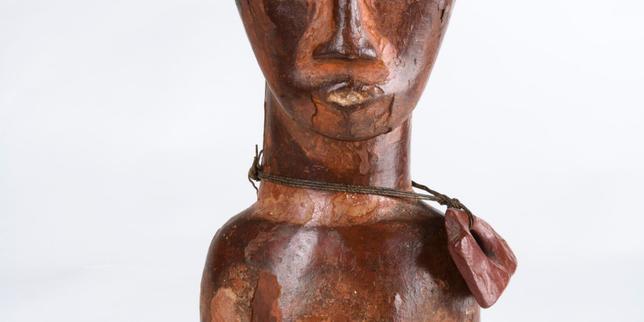
The boxes sit in a quiet room, filled with the dust of decades and the weight of a continent's history. Inside them are hundreds of weights used for measuring gold, intricate statues, traditional masks, and everyday objects crafted by hands in Ivory Coast, Cameroon, and Senegal. They belong to Jacqueline, an eighty-four-year-old retired midwife who spent her life delivering babies and collecting memories. She wanted to give it all away. She thought a city like Bordeaux, with its grand museums and deep historical ties to the wider world, would welcome the gift.
Instead, the bureaucracy said no. In related news, take a look at: The Realpolitik of Border Friction: Deconstructing India's Strategic Engagement with Myanmar.
It is a strange feeling to offer a lifetime of passion to a public institution only to have the door shut in your face. This is not just a story about old objects in cardboard boxes. It is a glimpse into a friction point happening across the globe: what happens when personal devotion collides with the rigid, changing standards of modern cultural institutions?
The Midwife and Her Millions of Memories
Jacqueline did not collect to invest. She collected to remember. Decades ago, her work as a midwife took her across West Africa. In the quiet hours between delivering new life, she immersed herself in the local cultures, building relationships with artisans and families. Over forty years, she accumulated nearly three hundred pieces of African art and ethnography. NBC News has also covered this fascinating issue in extensive detail.
To walk through her collection is to see Africa through the eyes of a woman who witnessed its most intimate moments. Each weight for gold tells a story of trade; each mask speaks of a ceremony she was invited to witness. When she returned to France, the collection came with her, filling her home with the scents of aged wood and forged iron.
As the years advanced, Jacqueline faced the question that haunts every collector: what happens when I am gone?
She decided to bequeath the entire collection to the city of Bordeaux. She envisioned a "little African museum" or a dedicated space where school children could touch the history she had loved so dearly. She wanted nothing in return—no money, no grand plaques. Just a guarantee that the objects would stay together and remain visible to the public.
Then came the letter from the town hall.
The Cold Reality of Modern Curating
The refusal was polite but absolute. Bordeaux’s cultural authorities examined the offer and decided they could not accept the legacy. To understand why, we have to look past the emotional weight of Jacqueline’s request and step into the sterile, demanding world of museum conservation.
Museums do not just accept objects; they adopt them.
Consider what happens next when an item enters a public collection. It requires climate-controlled storage to prevent decay. It requires insurance, cataloging, and digital archiving. It requires the time of specialized curators who must verify the provenance—the documented history of ownership—of every single piece. In an era where European museums are actively scrutinizing how African art entered their borders, the lack of ironclad documentation is an immediate red flag.
Bordeaux already houses the Musée d'Aquitaine, an institution that holds vast collections of world ethnography. The curators there faced a hard logistical truth. The city budget is tight. Storage facilities are overflowing. To accept three hundred new pieces with strict conditions—chiefly, that they must be kept and displayed together—was a commitment the city simply could not afford to make.
A museum cannot be a repository for every well-intentioned gift. If it accepts everything, it becomes a warehouse, not a cultural guide.
The Invisible Stakes of a Conditional Gift
But the real problem lies elsewhere, rooted in the very condition Jacqueline attached to her generosity. She wanted her collection to remain whole.
In the world of art and heritage, this is known as a conditional bequest. It is a trap that many passionate donors fall into. They love their collections as a single, coherent narrative—a reflection of their own lives. But modern curators view objects individually. A museum might desperately need three specific gold weights from Ivory Coast to fill a gap in their existing collection, but they have absolutely no use for the other two hundred and ninety-seven items.
When a donor says "take all of it or none of it," the museum almost always chooses none.
It is a painful disconnect. On one side stands an elderly woman driven by altruism and nostalgia, watching the clock tick down on her ability to secure her legacy. On the other side stand municipal officials managing spreadsheets, space constraints, and strict conservation policies.
This rejection leaves the objects in limbo. They remain in their boxes, unseen, untouched, and vulnerable to the passage of time.
Where Do the Rejected Stories Go?
What happens to the histories that cities refuse to hold?
When public institutions step back, private markets step in. Collections like Jacqueline’s are often broken up at auctions after the owner passes away. The objects she fought to keep together will be scattered to individual buyers across Europe and America, disappearing behind the closed doors of private living rooms. The educational dream—the idea of children learning from these pieces—evaporates.
There is a growing unease among independent collectors who find themselves in this position. They hold pieces of cultural heritage that they want to return to the public sphere, but the pathways to do so are narrowing.
Jacqueline’s dilemma is a warning sign for thousands of quiet collectors worldwide. Passion is no longer enough to buy a place in a public museum. Without a pristine paper trail, a massive budget for preservation, and the flexibility to let curators split the collection apart, even the most generous gifts will continue to be turned away at the door.
The boxes in Jacqueline's room remain closed. The masks look into the darkness of cardboard rather than the eyes of a new generation. A lifetime of safekeeping sits on a shelf, waiting for a home that might never open its doors.