The notification chimes with a light, airy pop. It is the sound of hospitality in the digital age, a sudden burst of possibility vibrating in the palm of your hand. For a traveler, that sound means a roof over your head in a strange city, a clean bed, and perhaps a welcoming note on a kitchen counter.
But for Shon Thomas, that digital chime signaled the beginning of a federally monitored legal battle.
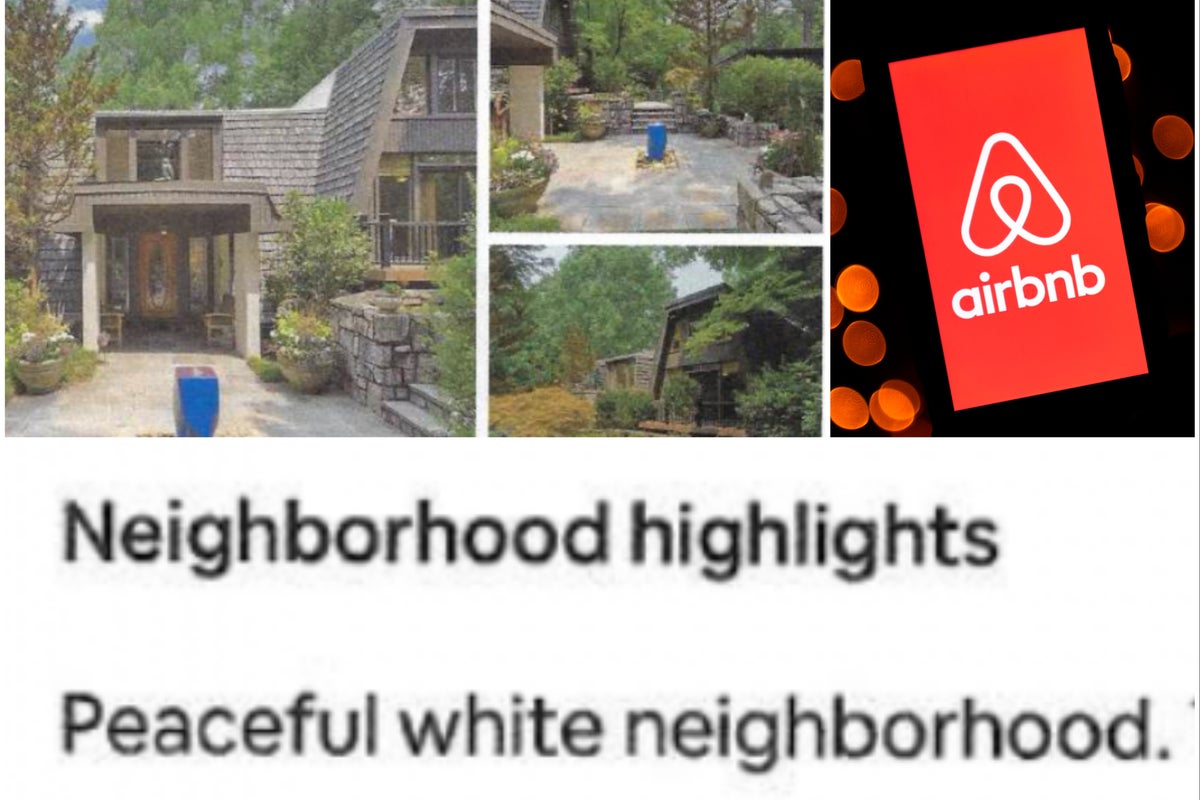
When Thomas browsed the digital aisles of Airbnb, looking for a place to stay in California, he found a listing that promised quietude. The host, a woman named Sharon, had carefully curated an online sanctuary. Her description of the property did not just highlight the amenities or the proximity to local attractions. Instead, it leaned heavily on a specific, evocative phrase. She promised a stay in a "peaceful white neighborhood."
To some, those words might read like an innocent, if clumsy, description of suburban serenity. To others, they sound like a siren. They evoke a history written in red ink on housing maps, a legacy of boundaries maintained not by brick walls, but by unspoken agreements and deliberate exclusions.
Thomas, a Black man, requested a booking. The response he received was not a confirmation. It was a rejection.
Suddenly, the polished veneer of the sharing economy cracked open. What lay beneath was something ancient, ugly, and intimately familiar.
The Architecture of the Virtual Gate
We are told that technology is a great equalizer. The marketing campaigns of Silicon Valley paint a utopian picture of a world without borders, where a smartphone can open any door. You tap a screen. You pay a fee. You belong anywhere.
That is the myth. The reality is that the biases of the physical world do not vanish when they are coded into software. They simply find new ways to hide.
When an algorithm handles the transaction, discrimination becomes quiet. It loses its loud, confrontational edge. It does not look like a sign in a shop window or a door slammed in someone’s face. It looks like an expired request. It looks like a calendar that suddenly becomes "unavailable" the moment a certain profile picture appears. It looks like a polite message saying, Sorry, something came up.
This digital distance makes the rejection feel phantom-like, leaving the user to wonder if they are imagining the slight. Did the host really have a family emergency? Was the room actually booked on another platform? Or was it something else?
In Thomas’s case, the ambiguity dissolved. The explicit branding of the listing as a "peaceful white neighborhood" cast a long, dark shadow over his rejection. It transformed a routine digital denial into a civil rights violation.
The California Civil Rights Department took notice. They didn't see a simple misunderstanding between a homeowner and a traveler. They saw a breach of the Fair Employment and Housing Act, a law designed to ensure that the places where we live and sleep are open to all, regardless of the color of their skin.
The Ghosts in the Guest Room
To understand why a phrase like "peaceful white neighborhood" carries such weight, you have to look past the screen and into the soil of American housing history.
For decades, the concept of the peaceful suburb was deliberately manufactured through exclusion. Racial covenants explicitly forbade home buyers from selling their properties to Black, Asian, or Jewish families. Redlining maps drawn by federal agencies ensured that investment flowed into white areas while starving minority communities of capital. The peace of these neighborhoods was often bought at the price of enforced segregation.
When a host revives that language today, they are not just describing a zip code. They are invoking that history. They are signaling who belongs and, more importantly, who does not.
Consider what happens next when a traveler encounters this kind of gatekeeping. The vacation is no longer about relaxation. The business trip is no longer about the conference. The journey becomes an exercise in hyper-vigilance.
Every interaction is re-evaluated. You begin to question the tone of every message. You wonder if your profile photo is "neutral" enough. You change the spelling of your name or omit your picture entirely, engaging in a exhausting ritual of digital camouflage just to secure a place to sleep for the night.
This is the hidden tax of traveling while Black. It is an emotional weight that white travelers rarely have to carry, measured in anxiety, humiliation, and the constant, draining anticipation of rejection.
The Limits of the Platform
Airbnb has not been blind to these dynamics. Years ago, after a wave of public outrage fueled by the viral hashtag #AirbnbWhileBlack, the company launched initiatives to combat bias. They hid guest photos until after a booking was confirmed. They instituted an anti-discrimination policy that users must sign to use the platform. They created teams dedicated to investigating claims of racism.
Yet, a massive corporate apparatus can only do so much when the core of its business model relies on individual human gatekeepers.
The platform operates on trust, but trust is a highly subjective mirror. When a host looks at a profile, they are not viewing a blank slate. They are viewing that person through the lens of their own assumptions, fears, and biases. If a host harbors a subconscious belief that certain groups are louder, less respectful, or more dangerous, that belief dictates their trigger finger on the "decline" button.
The lawsuit filed by the California Civil Rights Department against Sharon highlights this systemic vulnerability. It shows that despite the polished corporate statements and the diversity dashboards, the platform remains vulnerable to the ancient prejudices of the people who supply the rooms.
The state’s intervention is a stark reminder that self-regulation by tech giants is often an illusion. When the platforms fail to protect their users from discrimination, the law must step in with the heavy, blunt instrument of state power.
The Ripple on the Water
This legal battle is not merely an isolated dispute between a disgruntled traveler and a stubborn homeowner in California. It is a referendum on the nature of public accommodation in the twenty-first century.
When you open your home to the public for profit, that home ceases to be a purely private sanctuary. It becomes a business. And businesses are bound by a social contract that was signed in blood during the Civil Rights Movement: you do not get to choose your customers based on race.
If the courts allow hosts to use coded language to curate the racial demographics of their guests, it sets a terrifying precedent. It opens the door for a balkanized internet, where different digital spaces are quietly reserved for different kinds of people, effectively resurrecting the ghost of Jim Crow under the guise of private property rights and user autonomy.
The defense in these cases often centers on a distorted view of personal freedom. It is my house, the argument goes. I should be able to decide who sleeps under my roof.
It is an argument that sounds reasonable on its surface, appealing to deeply ingrained notions of privacy and independence. But it falls apart the moment that private home is transformed into a commercial hotel room advertised to millions of global users. You cannot pocket the profits of the public marketplace while rejecting the laws that govern it.
The Long Road to Arrival
The lawsuit will move through the courts. Lawyers will debate the definition of terms, the intent behind words, and the boundaries of fair housing laws. Sharon will have her defense, and the state will present its evidence. Money will change hands, and policies may be tweaked once again in a boardroom in San Francisco.
But the real damage of these encounters cannot be repaired by a settlement check or a revised terms of service agreement.
The true cost is found in the quiet erosion of human dignity. It is the moment Shon Thomas looked at his phone and realized that his presence was viewed as a threat to someone else's peace. It is the sudden, cold realization that no matter your achievements, your wealth, or your character, you can still be reduced to a checkbox that someone decides to leave blank.
The chime of the app will continue to ring in millions of pockets every day, a relentless soundtrack to a world on the move. But until the doors of those listed homes open with equal ease for everyone, that sound will remain, for many, a question mark rather than a welcome.