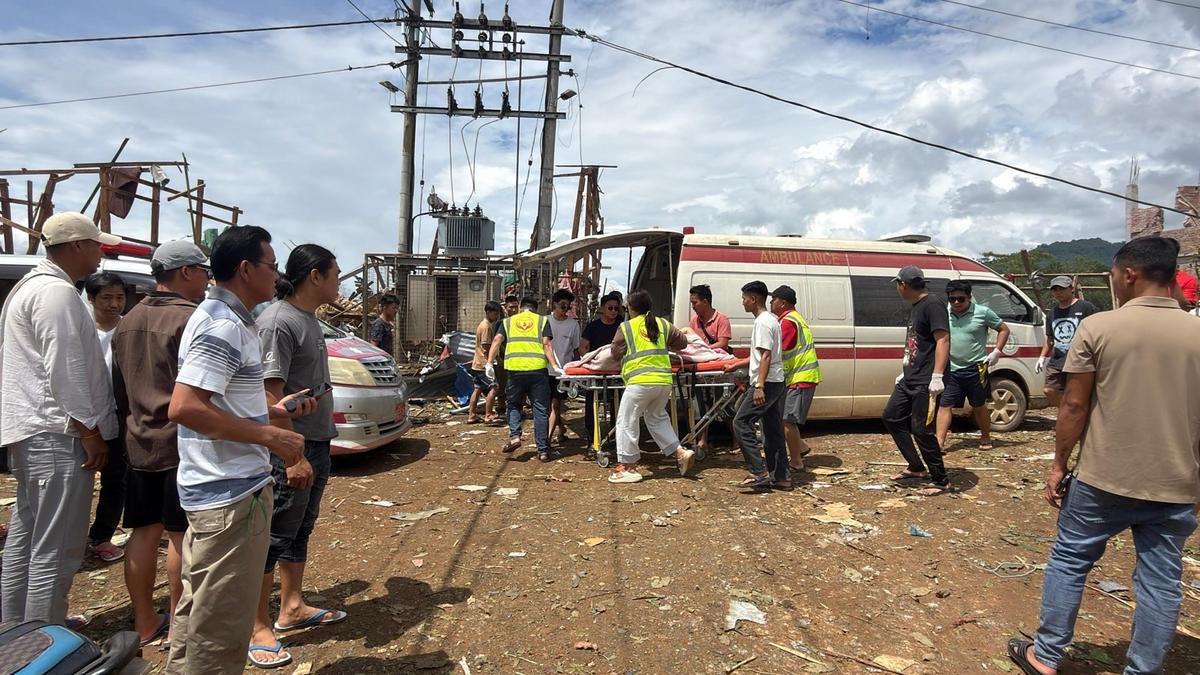
A massive explosion just tore through a building storing mining explosives in northeastern Myanmar, leaving dozens dead and a community completely shattered. If you think this is just another freak industrial accident, you're missing the bigger, darker picture of how resource extraction actually works in conflict zones.
On May 31, 2026, a devastating blast leveled a structure packed with gelignite in Kaungtup village, located in the Namhkam township. This isn't deep inside government territory. It's a tiny village sitting a mere two miles south of the Chinese border, an area firmly controlled by the Ta'ang National Liberation Army (TNLA). Initial reports from rescuers and independent local media place the death toll at anywhere from 40 to nearly 60 people, including at least six children. Over 70 others are seriously injured, and the local Namhkam hospital is already pleading for blood donations.
This tragedy isn't just about bad luck. It's about what happens when highly volatile industrial materials are stored right next to civilian homes in an active war zone.
The Reality of Gelignite Storage in Rebel Territory
Let's look at what actually caused the devastation. The TNLA admitted on its official Telegram channel that its economic department was storing gelignite at the site. They claim it was meant for legitimate mining and stone quarrying operations. While that might be true, storing commercial explosives in a residential zone is a recipe for disaster.
Gelignite is incredibly efficient for blasting through rock. But anyone with basic blasting experience knows it's a finicky, dangerous compound. Over time, especially in hot, humid tropical climates, gelignite sweats. The nitroglycerin seeps out of the binder material, pooling at the bottom of boxes or leaking onto floors. When that happens, the chemical becomes ultra-sensitive to shock, friction, and minor temperature fluctuations. A single spark, a dropped tool, or even a shifting pile can trigger an absolute catastrophe.
In Kaungtup, the blast was so violent that it completely flattened more than 100 nearby houses. Black smoke blanketed the region, and rescue workers spent hours digging through splintered wood and concrete blocks just to find bodies.
The Deadly Nexus of Conflict and Resources
You can't separate this explosion from the broader war in Myanmar. Since the Three Brotherhood Alliance—which includes the TNLA—launched a massive offensive in late 2023, ethnic armed groups have seized major border hubs. They didn't just take territory; they took over the lucrative local economies.
In northern Shan State and neighboring Kachin State, the earth is packed with wealth. We're talking about billions of dollars in jade, rare earths, timber, and stone quarrying. Control the land, and you control the mines. To run the mines, you need explosives.
Because these rebel groups operate outside the framework of international safety bodies or standard corporate governance, regulatory oversight is basically zero. There are no surprise workplace safety inspections from a federal agency. There's no specialized hazardous materials transport. Instead, you get raw military logistics handling commercial-grade demolition assets. When an armed group uses its "economic department" to store industrial explosives right next to a civilian village, the local population ends up paying the price.
Why Border Accidents Risk International Incidents
The geography of this blast adds another layer of anxiety. Kaungtup sits right on the edge of the Chinese border. Chinese state broadcaster CCTV was quick to report on the incident, highlighting the severe damage to residential structures.
Beijing keeps a hawk-like eye on this border. They've mediated shaky ceasefires between the TNLA and the central Myanmar military junta because instability hurts Chinese trade and investments. When a massive stockpile of military or mining explosives goes off close enough to shake Chinese border posts, it triggers immediate diplomatic pressure. Rebel groups know they can't afford to anger their massive northern neighbor, which is why the TNLA rushed to release an official statement expressing sympathy and promising a thorough internal investigation.
But an internal investigation won't rebuild the 100 homes that were turned to ash. It won't bring back the children pulled from the rubble.
What Needs to Change Immediately
If the ethnic armed groups running these liberated zones want to be seen as legitimate governing bodies rather than warlords, they have to stop treating industrial safety like an afterthought.
First, explosive stockpiles must be mapped and moved completely away from civilian population centers. Storing gelignite in a village center is negligence, plain and simple. Second, there needs to be an immediate audit of how these mining materials are aged and monitored. If material is sweating or degrading, it needs to be disposed of safely by ordnance experts, not left to sit in a hot warehouse until it detonates itself.
Right now, the priority in Namhkam is purely basic survival—finding blood, treating the wounded, and burying the dead. But once the smoke clears, the people living under rebel administration need to demand actual accountability. If you're going to profit from the minerals in the ground, you damn well better protect the people living on top of it.