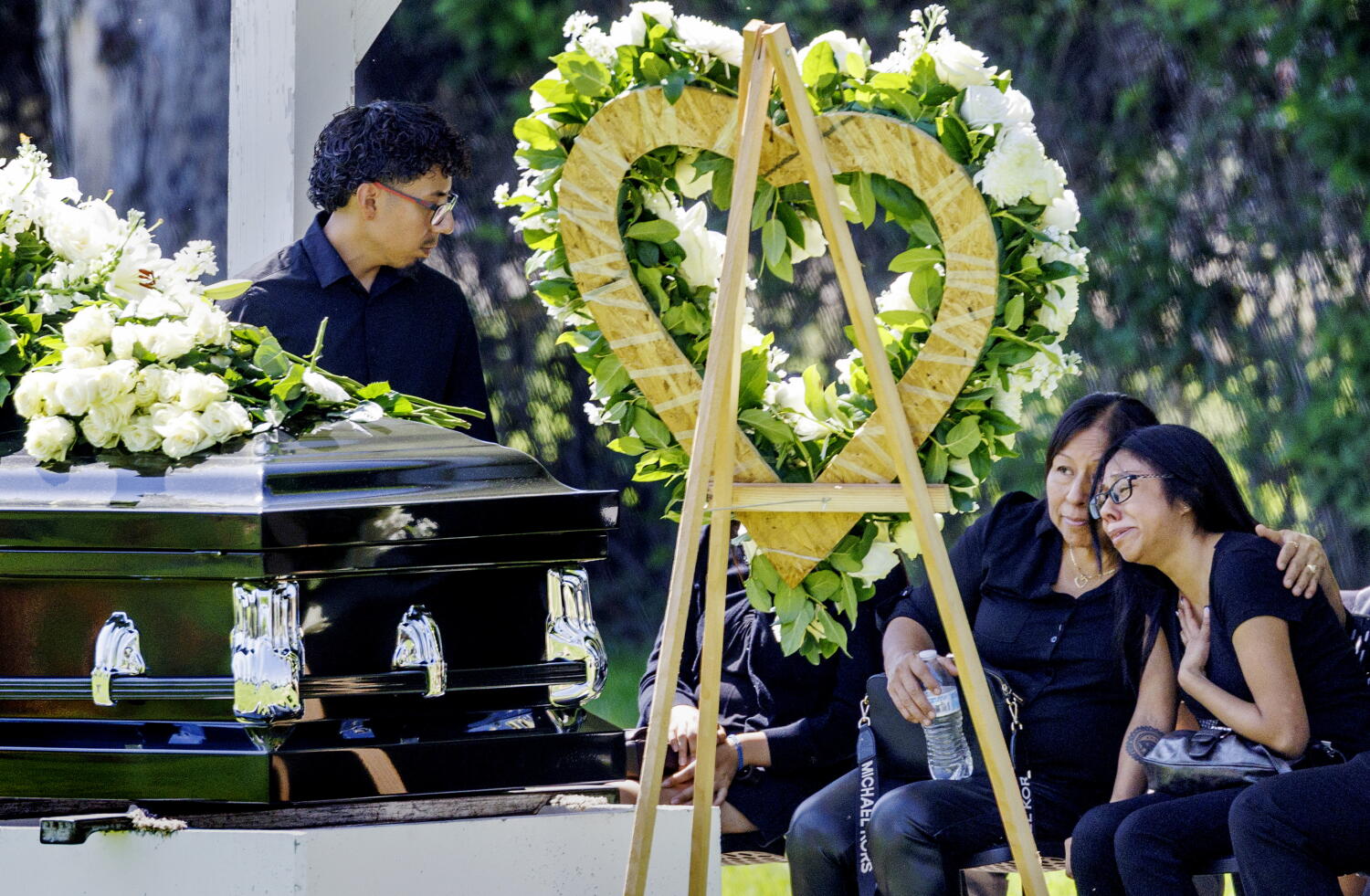
When a parent is suddenly pulled out of a child's daily life, the entire world collapses. It happens in an instant. A sudden knock on the door, flashing emergency lights, heavy handcuffs, and a federal van driving away into the morning fog. For thousands of families across the country, Immigration and Customs Enforcement raids aren't just dry political talking points on evening news broadcasts. They represent total, cataclysmic disruption. The shockwaves hit immediately, shattering households and leaving dependents stranded in a state of chronic, toxic panic.
We talk endlessly about immigration policy through cold economic lenses and complex legal frameworks. We debate numbers, quotas, and border security metrics until our eyes glaze over. Yet we consistently fail to look at the human shrapnel left behind when a primary caregiver vanishes into detention facilities. The psychological fallout is catastrophic. When the state detains a mother, father, or guardian, children absorb the trauma. That trauma doesn't simply fade away with time. It festers, deepens, and sometimes leads to unimaginable tragedy.
The Breaking Point of Institutional Enforcement
Immigration enforcement in the United States operates with a chilling coldness. Bureaucratic efficiency takes precedence over human well-being every single time. When an enforcement action targets a parent, agents rarely account for the minor children dependent on that adult. Kids come home from school to find empty houses, locked doors, and locked-out futures with no explanation.
The uncertainty is agonizing. Days turn into weeks, and weeks turn into months without clear communication from authorities. Children experience separation anxiety that mimics severe post-traumatic stress disorder. They stop eating, stop sleeping, and watch the front door with obsessive dread. Every passing car sounds like federal agents returning to take whoever is left behind.
This environment breeds despair. Adolescents and teenagers, already navigating the turbulent waters of growing up, suddenly bear the crushing weight of household survival. They take on adult responsibilities overnight. They pay bills, translate complex legal documents they cannot possibly understand, and try to comfort younger siblings while drowning in their own panic. The system expects resilience where none can possibly exist. When support networks fail and hope evaporates, the psychological pressure becomes terminal.
What Happens When a Parent Disappears Overnight
The immediate aftermath of an ICE detention resembles an active war zone inside a domestic home. Panic replaces routine. Confusion replaces clarity. Families scatter across extended networks, couch-surfing, or scrambling to find legal representation that costs thousands of dollars they do not possess.
Consider the logistical nightmare. Detention centers are rarely close to home. They are frequently tucked away in remote rural areas or private facilities managed by for-profit prison corporations. Visiting a detained parent requires money, transportation, and time off work—luxuries that working-class immigrant families simply do not have. Distance breeds isolation. The detained parent feels forgotten, anxious about their children's safety, and helpless against a sprawling legal machine.
Meanwhile, the children left on the outside feel entirely abandoned. Schools notice the sudden drop in attendance and academic performance, but teachers and counselors are rarely equipped to handle trauma of this magnitude. Mental health resources in underfunded school districts are practically nonexistent. Kids slip through the cracks. They internalize their grief, masking their pain until it boils over into depression, self-harm, or fatal despair.
Societal indifference makes the pain sharper. Public conversations surrounding detention often lack basic empathy. Pervasive political rhetoric dehumanizes undocumented immigrants, painting them as threats rather than human beings with families, children, and complex emotional ties. When society views a detained mother or father as disposable, the children absorb that message. They internalize the cruel notion that their family's grief doesn't matter to anyone outside their walls.
The Invisible Mental Health Epidemic Among Detained Families
Medical and psychological research paints a grim picture of family separation. The American Academy of Pediatrics has repeatedly warned that forced separation inflicts toxic stress on developing brains. This isn't hyperbole. It's biological reality. Chronic exposure to high-stress environments floods the nervous system with cortisol, altering brain development and predisposing individuals to lifelong anxiety disorders, depression, and severe mental health crises.
Yet, public health responses remain woefully inadequate. Traditional mental health clinics often present insurmountable barriers. Language barriers, lack of insurance, fear of institutional authorities, and social stigma keep families from seeking professional help. Many undocumented families live in perpetual fear that seeking assistance from community health programs might expose them or their remaining relatives to immigration authorities. They suffer in absolute silence.
When a teenager or young adult loses a parent to detention, the grief is compounded by disenfranchisement. They cannot mourn openly without drawing dangerous attention to themselves or their remaining family members. This forced bottling-up of emotion creates a pressure cooker. Without safe outlets to express anger, fear, and sorrow, individuals turn inward. Despair takes root. When hopelessness becomes absolute and permanent, suicide becomes, in their distorted state of mind, the only escape from an unbearable reality.
We cannot separate policy from its human consequences. Every enforcement decision carries a weight that extends far beyond courtroom dockets and deportation orders. When governments treat human beings as mere statistics on a ledger, they ignore the bleeding edges of society where real people live and suffer.
Why Bureaucracy Fails to See the Human Toll
Government agencies operate on institutional momentum. Rules are followed, quotas are met, and internal metrics dictate success. Compassion has no line item on a federal budget spreadsheet. ICE officials defend their operations as routine enforcement of existing laws, washing their hands of the collateral damage left in their wake.
This compartmentalization is dangerous. It allows officials to ignore the children crying in empty living rooms. It allows politicians to shrug off rising rates of adolescent depression and suicide linked to family destabilization. The administrative machinery of immigration enforcement is designed to process bodies, not heal communities.
Accountability is practically nonexistent. When a family suffers a catastrophic breakdown after a detention, federal agencies rarely conduct internal reviews or alter their tactics. There is no systemic tracking of the children left behind when breadwinners or primary caregivers are swept up in raids. They are ghosts in the bureaucratic machine, completely invisible until tragedy forces media attention onto their doorstep—and even then, the spotlight fades quickly.
Communities are left to pick up the pieces. Mutual aid networks, grassroots non-profits, and local volunteers shoulder the burden that federal and state governments refuse to touch. They organize fundraisers for funeral costs, provide emergency childcare, and connect traumatized kids with sliding-scale therapists. But volunteer-run networks are chronically underfunded and overwhelmed. They are a temporary bandage on a systemic hemorrhage.
Building Support Systems That Actually Work
Real solutions require structural change. We need radical transparency and humanity injected into immigration enforcement. At the very minimum, federal agencies must evaluate family ties and dependency before executing detentions, prioritizing alternatives to detention for parents with minor children. Ripping primary caregivers away from dependents without due consideration for child welfare is barbaric and short-sighted.
Communities must also dismantle the stigma surrounding mental health in immigrant populations. Culturally competent counseling services must be made widely accessible, free from fear of surveillance or deportation. Schools need proactive intervention programs that identify children showing signs of trauma after a family disruption, offering safe spaces to process grief rather than punishing them for behavioral changes.
Change won't happen overnight. Inertia protects broken systems. But ignoring the human cost doesn't make it disappear. Every time a child loses a parent to preventable state action, our collective humanity diminishes. We have to look past the political rhetoric and confront the raw, unvarnished reality on the ground. People are hurting. Families are breaking. Silence only ensures the cycle continues unchecked. Listen to the stories, acknowledge the damage, and demand a system that values human life above cold administrative efficiency.


