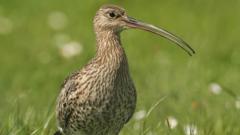
The discovery of a nesting site belonging to the Austral rail (Laterallus xenopterus) highlights the systemic inefficiencies in modern avian conservation frameworks. For decades, the structural scarcity of data surrounding this critically endangered species has stalled targeted intervention. While traditional reporting treats the location of a nest as a isolated milestone, an asset-management approach reveals that a single nesting site is not a recovery metric; it is an analytical baseline. To scale this discovery into a viable population recovery model, conservationists must transition from opportunistic observation to a rigorous evaluation of habitat constraints, reproductive friction, and resource allocation.
The survival of the Austral rail depends on a highly specific ecological matrix that can be broken down into three primary variables: structural cover, hydrological stability, and macroinvertebrate density. When any of these variables drops below a critical threshold, the localized ecosystem can no longer support reproduction.
The Tri-Factor Habitat Matrix
The spatial distribution of the Austral rail is bounded by strict environmental parameters. Unlike generalist species that adapt to modified landscapes, this bird occupies a hyper-specialized niche within dense marshlands and specialized wetland ecosystems.
1. Structural Canopy Density
The species requires a specific canopy height and density of emergent vegetation, such as reeds and sedges. This vertical structure serves two functions. First, it provides thermal regulation, mitigating microclimate volatility at the ground level. Second, it creates a physical barrier against avian and terrestrial predators. The loss of even 15% of this structural integrity exposes nesting sites to immediate failure.
2. Hydrological Equilibrium
Wetland degradation represents the most acute threat to the species' breeding stability. The water level must remain within a narrow band during the nesting cycle. Sudden flooding inundates ground-level or low-hanging nests, causing immediate clutch mortality. Conversely, premature drying alters the local microclimate and exposes the nest to terrestrial predators that would otherwise be deterred by standing water.
3. Macroinvertebrate Biomass
The caloric requirements of breeding adults and developing chicks demand high densities of localized macroinvertebrates. Foraging efficiency is tied directly to the health of the detritus layer within the wetland. If the soil chemistry or water quality shifts—often due to agricultural runoff—the insect population collapses, creating an energetic bottleneck that leads to nest abandonment.
[Hydrological Stability] + [Canopy Density] + [Biomass Availability]
                       │
                       ▼
         [Successful Nesting Baseline]
                       │
         (External Stressors / Human Encroachment)
                       │
                       ▼
         [Localized Population Attrition]
Quantifying Reproductive Friction
The primary barrier to stabilizing the Austral rail population is reproductive friction—the sum of all environmental and biological factors that prevent a fertilized egg from reaching breeding maturity. In critically small populations, this friction is compounded by genetic bottlenecks and Allee effects, where low population density actively depresses the reproductive rate.
The nesting phase introduces the highest concentration of risk within the lifecycle. Eggs are highly vulnerable to localized humidity drops, which can cause shell desiccation and embryonic death. Once hatched, the chicks face a high-stakes race to achieve thermoregulation and mobility before seasonal weather patterns shift or local water tables drop.
Statistical modeling of related rail species suggests that the probability of a fledgling reaching adulthood decreases exponentially if the nesting site is within two kilometers of human infrastructure. This edge effect introduces invasive predators, noise pollution that disrupts acoustic communication, and artificial light fields that alter nocturnal foraging behavior.
Resource Allocation and Conservation Inefficiencies
Current conservation funding suffers from an allocation mismatch, prioritizing high-visibility data collection over structural habitat preservation. Locating a nest is a resource-intensive endeavor that yields high media value but low long-term ROI if the surrounding land remains unprotected.
The structural bottleneck in saving the Austral rail is not a lack of biological intent, but an optimization failure in three specific areas:
- Reactive vs. Proactive Protection: Funds are typically deployed after a population segment enters a critical decline, rather than securing the buffer zones around existing, unverified habitats.
- Data Siloing: Field observations collected by independent researchers frequently remain locked in localized databases, preventing the deployment of real-time predictive distribution models.
- Land-Tenure Conflicts: The optimal habitats for the species often overlap with private agricultural holdings or areas earmarked for drainage, creating a legal and economic barrier to long-term site security.
To counteract these inefficiencies, conservation frameworks must pivot toward a predictive model. By leveraging satellite imagery to track changes in wetland hydrology and canopy cover, researchers can identify high-probability nesting zones before conducting field surveys. This reduces the search radius and maximizes the impact of limited field budgets.
Designing a Resilient Recovery Framework
The path forward requires a shift away from sentimental environmentalism toward objective, scalable resource management. To convert the raw data of a single nesting site into a regional survival strategy, conservation authorities must implement a multi-tiered operational playbook.
The first step demands the immediate establishment of a hydrological buffer zone around the discovered site. This entails binding agreements with regional water management authorities to prevent artificial drawdowns or agricultural discharges within a defined radius during the peak breeding season.
The second step involves implementing non-invasive acoustic monitoring arrays. Because visual tracking of the Austral rail causes significant habitat disruption and physiological stress to the birds, continuous passive acoustic monitoring provides a cleaner dataset. This technology tracks vocalization frequency, mapping population density and movement patterns without altering the physical structure of the marsh.
The final, and most critical, component is the creation of artificial contiguous corridors. Wetland fragmentation isolates sub-populations, driving down genetic diversity and increasing the risk of localized extinction via a single catastrophic event (such as a disease outbreak or localized fire). Creating physical wetland links between isolated pockets ensures gene flow and allows the species to self-migrate as climate pressures alter the regional hydrology.
The discovery of the nest confirms the presence of reproductive capability, but it also resets the clock on a degrading asset. If the surrounding matrix is left to natural variance and unmitigated human encroachment, the site will inevitably transition from a cradle to a population sink. Precision tracking, strict hydrological boundaries, and aggressive corridor acquisition are the only viable mechanisms to move the Austral rail from an endangered anomaly to a stabilized biological system.