The lights in a small apartment in Noida, just outside India’s capital, flicker when the grid groans under the weight of a rising summer heatwave. Inside, a father named Rajesh checks the fuel gauge on his motorbike. He is a man of modest means, living in a world of massive shifts. Every rupee he saves on gasoline is a rupee that goes toward his daughter’s tuition. For Rajesh, and for millions like him, the macro-politics of oil aren't about global hegemony or maritime law. They are about the price of the commute.
Across the ocean, in the wood-paneled rooms of Washington D.C., a different kind of pressure is building. The ink is drying on a decision that will ripple from the Potomac to the Ganges. The United States has signaled it will not renew the sanctions waiver that allowed India to buy Russian oil with relative impunity. The diplomatic grace period is over.
This is not a mere bureaucratic adjustment. It is a tightening of the knot. Since the invasion of Ukraine, India has walked a razor’s edge, balancing its historical ties with Moscow against its burgeoning partnership with the West. For two years, Russian Urals crude flowed into Indian refineries at a discount, acting as a vital pressure valve for an economy hungry for energy. But now, the United States is pulling the lever.
The Ledger of Broken Bonds
Money has a way of complicating even the oldest friendships. To understand why this waiver mattered, we have to look at the sheer scale of the trade. At its peak, Russia provided nearly 40% of India's oil imports. This wasn't because of a sudden ideological shift toward the Kremlin. It was cold, hard math. Russia needed buyers who weren't afraid of Western glares, and India needed to keep inflation from devouring its middle class.
The waiver was the lubricant that kept the machine moving. It allowed banks to process payments and shipping companies to provide insurance without the fear of the U.S. Treasury Department descending upon them like a vengeful god. Without it, the risk premium skyrockets. Imagine trying to buy groceries, but every time you swipe your card, there is a chance your bank account will be frozen by a third party who doesn't like your grocer. Most people would stop going to that store.
The U.S. is betting that India will do exactly that. By refusing to renew the waiver, Washington is forcing New Delhi to make a choice that it has spent two years avoiding. The message is clear: the season of "strategic autonomy" has a price tag, and that price just went up.
The Ghost of the Price Cap
In the backrooms of the energy market, there is a ghost that haunts every transaction: the price cap. The G7 led an effort to keep Russian oil under $60 a barrel. The idea was simple in theory and a nightmare in practice. If the oil stays cheap, Russia can’t fund its war machine, but the world doesn't lose the supply and face a global recession.
India played this game brilliantly. They didn't officially sign on to the cap, but they used it as a bargaining chip. "The Americans have a cap," Indian negotiators would tell their Russian counterparts. "So, give us a steeper discount or we go elsewhere." It worked. For a while, India was the world’s most effective arbitrageur, buying the crude, refining it, and even selling the finished products back to Europe.
But the "shadow fleet"—the aging, mysterious tankers that carry Russian oil outside the reach of Western oversight—can only do so much. When the U.S. stops granting waivers, it isn't just targeting the oil itself. It is targeting the infrastructure of the trade. It is telling the world’s largest shipping insurers and the most powerful banks that the era of looking the other way is finished.
A Kitchen Table Crisis
Back in Noida, Rajesh doesn't know about the G7 price cap. He knows that the cost of onions has gone up because the trucks that carry them from the farms are paying more for diesel. Energy is the hidden ingredient in every meal. When the cost of the base commodity rises, everything else follows.
If India has to pivot back to more expensive Middle Eastern crude, the government faces a brutal dilemma. Do they absorb the cost and blow a hole in the national budget? Or do they pass it on to Rajesh, risking the kind of social unrest that can topple even the most popular administrations?
There is a visceral anxiety in this kind of economic shift. It is the feeling of being a passenger in a vehicle where two different drivers are fighting for the steering wheel. One driver wants to punish a warmonger; the other wants to ensure the lights stay on in the suburbs of Delhi. Both claims are valid. Both are urgent.
The Narrowing Path
Washington’s refusal to renew the waiver is a calculated gamble. They believe India is now sufficiently integrated into the Western security architecture—through the Quad and various defense deals—that it won't break ranks. They expect India to grumble, pay more for oil from elsewhere, and move closer to the American orbit.
But there is a historical memory in India that Washington often ignores. It is a memory of the 1970s, of sanctions, and of the feeling that Western powers are fair-weather friends who only care about democracy when it serves their immediate strategic goals. When the U.S. squeezes the oil supply, they aren't just squeezing the Kremlin. They are squeezing the aspirations of a billion people who feel they are finally on the cusp of true prosperity.
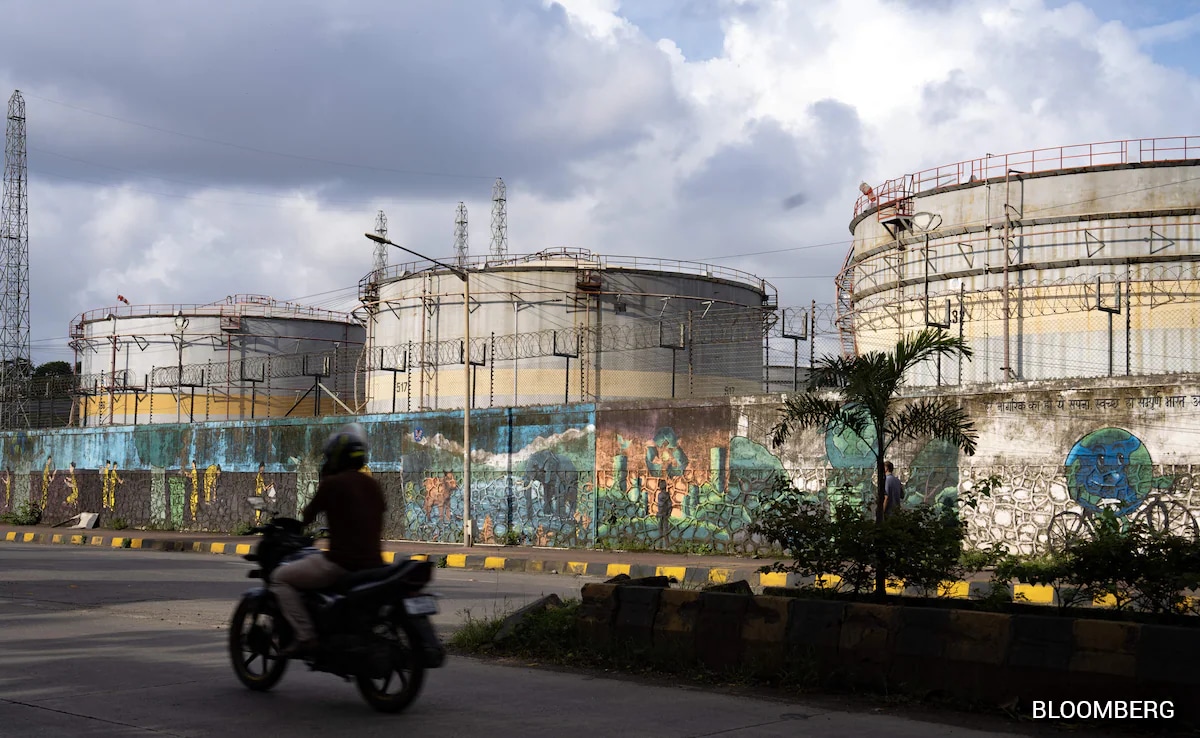
Refineries like those in Jamnagar or Vadinar are massive, complex cities of steel and fire. They are calibrated for specific types of crude. Switching from Russian Urals to, say, American West Texas Intermediate or Saudi Light isn't as simple as changing a brand of soda. It requires technical adjustments, new contracts, and a complete reimagining of the supply chain.
Consider the tankers currently at sea. They are the physical manifestation of this tension. Millions of barrels of oil are floating in the Indian Ocean, their captains waiting for a signal. Will the payment go through? Will the insurance be honored at the port? These ships are the "hypothetical" characters of the global economy, drifting in a limbo created by a pen stroke in Washington.
The Silence of the Markets
What happens when the waiver expires is rarely a loud explosion. It is a slow, cold silence. It is the sound of a bank officer in Mumbai saying "no" to a credit line. It is the sound of a shipping broker in London hanging up the phone. It is the quiet realization that the rules have changed while the game was still in play.
The U.S. argues that this is about the moral imperative to stop the flow of blood money to Moscow. It is a powerful argument. Every barrel of oil sold helps sustain a conflict that has shattered millions of lives in Ukraine. But for a policymaker in New Delhi, the primary moral imperative is the survival and growth of their own people. The definition of "blood money" changes depending on which side of the poverty line you stand.
If India is forced to pay significantly more for its energy, the "Green Transition" also takes a hit. Solar panels and wind turbines require massive upfront capital. If that capital is being diverted to pay for expensive oil imports, the future is literally delayed. The shadow of the sanction reaches far beyond the immediate horizon of the war in Eastern Europe.
The Weight of Choice
We often talk about "nations" making decisions, but nations are just collections of people trying to navigate a series of impossible trade-offs. The U.S. diplomats pushing for the end of the waiver are doing their jobs, trying to end a war. The Indian officials scrambling to find new energy sources are doing their jobs, trying to keep a nation developing.
The tragedy lies in the fact that both can be right, and yet someone still loses.
Rajesh fills his tank. The price has ticked up by a few paise. It seems small. But he knows the rhythm of his own life. He knows that when the price of fuel starts to climb, it doesn't stop. He looks at the dusty road ahead, the heat shimmering off the asphalt, and wonders why the decisions made in rooms he will never enter always seem to find their way into his thin wallet.
The waiver is gone. The era of the easy discount is over. The world is getting smaller, tighter, and significantly more expensive. As the sun sets over the refineries of the Gujarat coast, the flames from the flare stacks flicker like candles in a wind that is blowing from the West. It is a cold wind, despite the tropical heat. It carries the scent of a new world order where every transaction is a statement of loyalty, and where the price of independence is measured in the struggle of a man trying to get his daughter to school.
The shadow has fallen. Now, we wait to see who moves first in the dark.