Football on the Canadian prairies is not merely a sport. It is a weather event.
Ask anyone who has ever stood in the concrete bowl of a late-autumn stadium when the temperature plummets below zero and the breath turns to instant ice. Your fingers go numb inside your gloves. Your toes forget they belong to you. Yet you stay, packed shoulder-to-shoulder with thirty thousand strangers who share a single, stubborn pulse.
There is a unique violence to the autumn wind on the plains. It strips the leaves off the cottonwoods, sweeps across miles of stubble fields, and hits the turf with a low, whistling moan. Underneath those swirling grey skies, two ancient rivals line up. The Calgary Stampeders and the Saskatchewan Roughriders.
Red versus green. The city of oil and ambition against the heartland of green pride.
If you want to understand why a regular-season game can feel like a life-or-death struggle, you have to stand on the sidelines when the clock winds down in the fourth quarter. You have to hear the pads crack like dry timber. You have to watch a safety take an angle that defies geometry, launching his body across frozen turf just to save an inch of grass.
Consider the anatomy of a hot run. Momentum in professional football is a fragile, ghost-like thing. It cannot be measured in yards or calculated in completion percentages. It lives in the collective psyche of a locker room. One week you are unstoppable, executing every block with surgical precision. The next week, a dropped pass or a missed assignment opens a crack in the dam, and the whole structure threatens to wash away.
The Stampeders entered this particular contest carrying the heavy, brittle burden of a winning streak. Every victory adds an ounce of weight to your shoulders. By October, you are no longer just playing your opponent; you are fighting the terrifying expectation of perfection. Every team in the league has your film. Every defensive coordinator has spent sleepless nights dissecting your tendencies, looking for the tiny, microscopic hitch in your quarterback's stride.
Across the line stood Saskatchewan. In Regina, football is a religion with strict, unforgiving doctrines. The Rider Nation does not just support their team; they inhabit them. When the Roughriders are rolling, the province hums with a low, electric frequency. When they are down, a heavy quiet settles over the wheat towns. They came into this game smelling blood, desperate to halt Calgary's march, to puncture the balloon of confidence that the red and white had inflated over the past month.
For fifty minutes, it was a trench war.
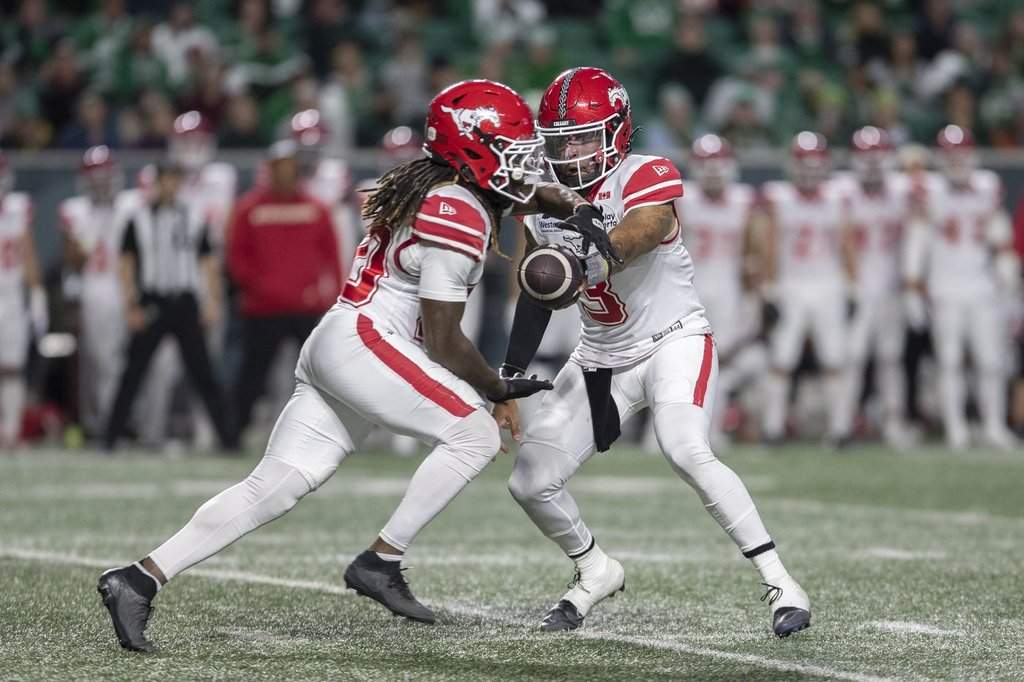
The kind of game where yards are earned through sheer stubbornness. Every handoff felt like dragging a sled through deep snow. Quarterbacks absorbed hits that made the press box shudder. In the secondary, receivers ran deep crossing routes knowing a linebacker was waiting to separate them from their ribs.
This is where human nature reveals itself under the lights.
Imagine a rookie offensive lineman, his lungs burning, tasting the metallic tang of cold air and exhaustion. His assignment is a veteran defensive end who has spent a decade throwing offensive tackles into the turf. On every single snap, that veteran tests the rookie's balance, his leverage, his will. One split-second lapse in concentration, one tiny misstep, and the quarterback is planted in the dirt, the drive stalls, and the momentum evaporates.
Football is cruel that way. It compresses the drama of a lifetime into sixty ticking minutes.
As the fourth quarter bled away, the score tightened. The air grew colder. Every breath visible. Every whistle sharp enough to cut glass. The Roughriders mounted a furious, desperate surge, the kind born of absolute necessity. The green-clad crowd roared, a wall of sound that shook the aluminum bleachers. You could feel the tide turning. You could smell the upset hanging in the frosty air.
This is the exact moment where good teams fold and great teams lock their jaws.
Calgary needed a play. Not a flashy, twenty-minute-highlight-reel play, but grit. The kind of quiet, unglamorous execution that doesn't make the morning papers but wins championships.
A blitz came up the middle. The protection broke down just enough to force a scramble.
In that frantic flash of chaos, time seemed to dilate. The runner had a split second to make a choice: slide and live to fight another down, or lower the shoulder and absorb a collision that would leave every bone aching by dawn.
He didn't slide.
He fought for the marker, churning his legs through a tangle of arms and legs, dragging two defenders an extra three yards before the whistle blew. First down.
The chains moved. The clock kept draining.
The Stampeders did not blow their opponent out of the water that night. They did not deliver a masterclass of offensive wizardry. They simply refused to break. They held the line when the ground beneath them turned to mud and ice, weathering the green storm until the final gun sounded across the empty prairie night.
When the players finally walked off the field, trudging toward the warmth of the tunnel through a cloud of steam, their jerseys torn and stained with green paint and turf pellets, there was no celebration of poetry or art. There was only the quiet, bone-deep satisfaction of survival.
Another game won. Another week ahead.
Out on the plains, the wind never stops blowing, and the winter is always waiting just around the corner.