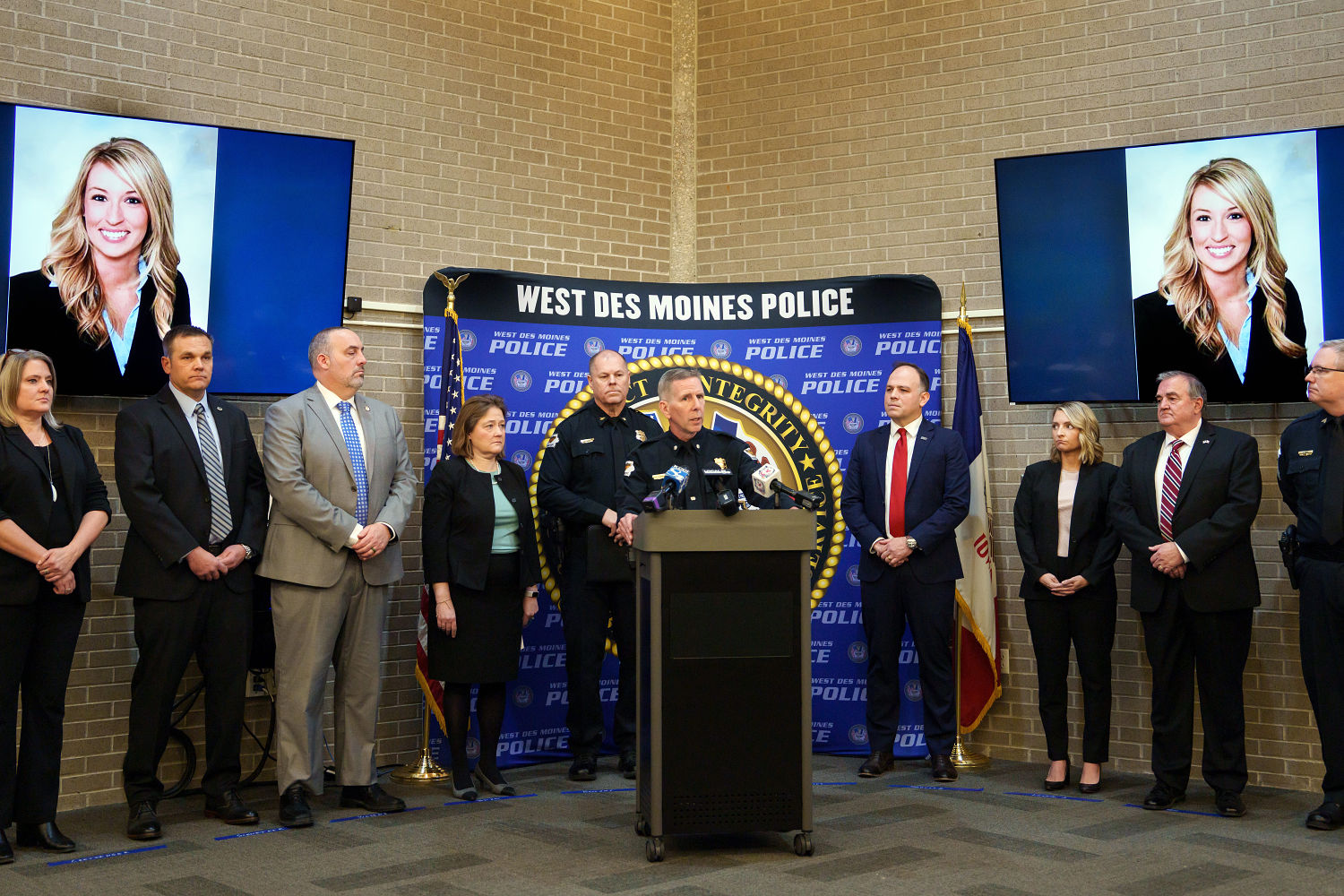
After fifteen years of silence, the breakthrough in the 2011 murder of Iowa real estate agent Ashley Okland has finally arrived. For over a decade, the case sat as a chilling reminder of the inherent risks within the housing industry, a file gathering dust while a killer walked free. Authorities recently confirmed an arrest, linking a suspect to the broad-daylight shooting that occurred inside a model home in West Des Moines. This development isn't just a win for forensic persistence; it is a reckoning for a profession that often prioritizes accessibility over the lives of its workers.
Ashley Okland was twenty-seven years old when she was shot twice while working alone at a townhouse development. There was no sign of a struggle. There was no clear motive. The case went cold because the crime was as surgical as it was senseless. Now, with a suspect in custody, the focus shifts from the mystery of "who" to the systemic failures of "how."
The Illusion of Safety in Suburban Sales
The real estate industry operates on a foundation of forced friendliness. Agents are taught to be welcoming, to keep doors unlocked, and to invite strangers into empty properties. In 2011, the digital trail we take for granted today—GPS tracking, instant lead verification, and doorbell cameras—was in its infancy. Okland was a sitting duck in a high-end development, isolated by the very nature of her job.
Most brokerages at the time viewed safety as an afterthought. "It won't happen here" was the prevailing mantra in the Midwest. Yet, the statistics tell a grimmer story. Real estate agents are among the most vulnerable solo workers in the country. They meet unknown individuals in vacant buildings, often in areas with poor cell reception or limited foot traffic. The arrest in the Okland case proves that the passage of time does not erase the trauma, but it also highlights how long it has taken for the industry to acknowledge its own role in these tragedies.
The suspect's capture reportedly relied on a mix of revisited DNA evidence and a tip that finally connected the dots. While the legal system grinds forward, the real estate community must look at the mirror. Since 2011, have the protocols actually changed, or have we simply added more apps to a broken system?
Forensics and the Long Game
Wait-and-see is the hardest part of any investigation. In the Okland case, the Des Moines Police Department and the Division of Criminal Investigation (DCI) maintained a tight lid on information for years. This wasn't incompetence; it was a strategy to protect the integrity of a case that lacked a smoking gun.
Modern investigative techniques, specifically Genetic Genealogy, have turned the tide for cold cases across the United States. While officials have not yet detailed the exact laboratory breakthrough that led to this arrest, the pattern matches other high-profile resolutions of decade-old crimes. By comparing crime scene DNA against public databases, investigators can narrow down a family tree until they find their man.
This technology is the ultimate equalizer for victims who were forgotten by the news cycle. However, it also raises questions about privacy and the ethics of how we catch criminals in the 2020s. For the Okland family, these philosophical debates are secondary to the fact that a name has finally been put to the ghost that haunted their lives for fifteen years.
The Cost of the Open House Model
The "Open House" remains a staple of the American home-buying experience, yet it is arguably the most dangerous part of the business. It is a marketing relic that serves the brokerage more than the seller. It creates a "soft target" environment where an agent is expected to manage multiple strangers in a labyrinth of rooms.
In the wake of Okland’s death, several Iowa firms implemented "buddy systems," but these mandates often crumble under the pressure of commission-based work. If an agent can’t find a partner, they go alone. They need the sale. This financial desperation is a silent accomplice in many crimes against agents.
We have to move beyond the "Safety Tip" brochures. Telling an agent to "carry their keys between their fingers" is an insult to the complexity of the threat. Real change requires a fundamental shift in how properties are shown.
- Mandatory Pre-Screening: No one enters a home without a verified ID on file.
- Active Monitoring: Real-time GPS check-ins that trigger an alarm if the agent doesn't "clear" the property by a specific time.
- Professional Security: For high-risk or isolated listings, the cost of a secondary security presence should be baked into the marketing budget.
Beyond the Arrest
The arrest of a suspect brings a sense of closure, but it does not bring back a young woman who was at the start of her life. Ashley Okland was described as a "fireball" of energy, a woman who spent her free time volunteering for the Special Olympics. Her death wasn't just a loss for her family; it was a loss for a community that saw her as the face of the Des Moines dream.
As this case moves into the courtroom, the prosecution will likely face hurdles. Cold cases are notoriously difficult to try. Memories fade. Witnesses move or pass away. Physical evidence can be challenged based on how it was stored over the last decade and a half. The defense will undoubtedly point to the delay as a sign of a "desperate" investigation looking for any scapegoat.
But for those who have followed this case since the sirens first echoed through the Stone Creek Villas in 2011, the arrest is the first breath of fresh air in a very long time. It serves as a warning to those who think they can outrun their past. The technology caught up. The investigators stayed patient. The silence is finally over.
The industry must now decide if it will honor Okland by actually evolving, or if it will continue to treat agent safety as a line item that can be cut when the market gets tight.
If you are an agent today, take a hard look at your next showing. Ask yourself if your brokerage has your back, or if you are just another unlocked door. Demand better. Your life is worth more than a closing signature.
Verify your safety protocols before your next listing goes live.