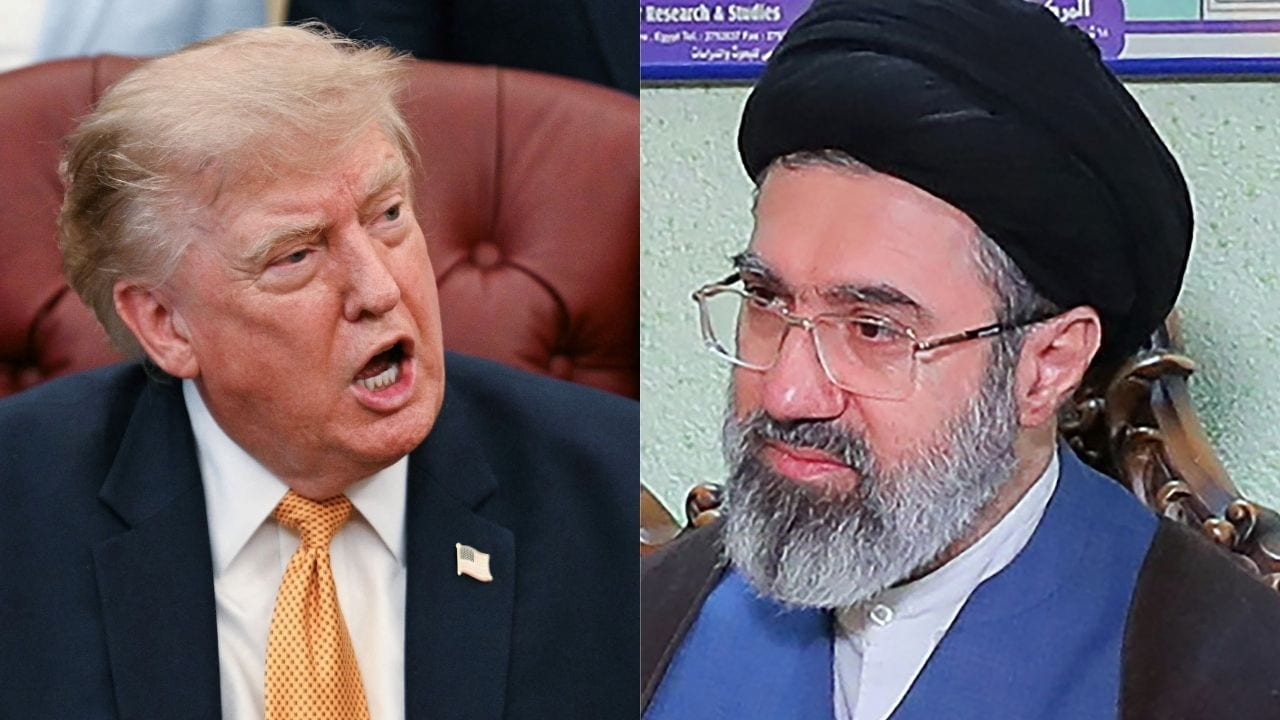
Maximum pressure rhetoric paired with multi-point diplomatic counter-offers represents a classic bilateral bargaining impasse rather than an imminent shift toward either total war or comprehensive peace. When U.S. leadership issues existential military threats while Tehran responds with a structured seven-term nuclear framework, both actors are executing distinct, predictable phases of coercive diplomacy. Understanding this standoff requires stripping away the theatrical headlines to examine the underlying game theory, historical precedent, and structural constraints governing Washington and Tehran.
The Architecture of Coercive Bargaining
In international relations theory, specifically Thomas Schelling’s framework of compellence, a threat to "destroy" an adversary is rarely a literal operational war plan. Instead, it functions as a signaling mechanism designed to alter the adversary's perceived cost-benefit matrix before formal negotiations begin. By establishing an extreme upper bound of potential kinetic escalation, the threatening party attempts to lower the target's reservation price—the minimum acceptable outcome Tehran would tolerate in a negotiated settlement. You might also find this related coverage insightful: Why Everyone Reading the Russell Brand Police News is Missing the Real Story.
Tehran’s issuance of a seven-point proposal operates as the direct counter-move in this bargaining sequence. Rather than capitulating to the threat or escalating symmetrically through immediate military provocation, Iranian negotiators utilize procedural complexity to absorb the shock of the ultimatum. Breaking a singular existential demand into seven distinct negotiating tracks achieves three immediate strategic objectives for the Islamic Republic:
- Time Dilution: Multi-point frameworks require technical verification, working groups, and sequential sequencing, extending the diplomatic timeline and reducing the immediate likelihood of a sudden kinetic strike.
- Asymmetric Leverage: Bundling nuclear constraints with non-nuclear demands—such as sanctions relief, regional security guarantees, or frozen asset releases—forces the opposing party to pay multiple times for a single concession.
- Domestic Legitimacy: Presenting a formal counter-proposal allows leadership in Tehran to project rationality to international observers while signaling resolve to domestic hardline constituencies that it is dictating the terms of engagement.
Deconstructing the Seven-Term Framework
While the specific line items of diplomatic proposals fluctuate across negotiation cycles, any structured Iranian nuclear counter-offer is governed by immutable structural imperatives. Based on historical negotiating patterns established during the 2013 Joint Plan of Action and the 2015 Joint Comprehensive Plan of Action (JCPOA), a seven-term framework from Tehran invariably distributes concessions and demands across three core operational domains: nuclear latency, economic normalization, and enforcement durability. As highlighted in recent articles by NBC News, the implications are notable.
1. Calibration of Nuclear Latency
Tehran’s primary bargaining chip is its breakout timeline—the time required to produce enough weapons-grade fissile material for a single nuclear device. In any multi-term proposal, Iranian negotiators do not offer the permanent dismantlement of their nuclear infrastructure. Instead, they offer reversible technical modifications.
These modifications typically involve capping uranium enrichment purity levels (such as rolling back enrichment from 60 percent or 20 percent down to the 3.67 percent threshold), diluting or exporting stockpiles of enriched uranium, and placing advanced centrifuges (such as IR-2m, IR-4, and IR-6 cascades) into monitored storage rather than destroying them. The strategic logic is straightforward: reversible concessions preserve Iran’s status as a nuclear threshold state. If the counterparty fails to deliver economic relief, Tehran can reconstitute its enrichment capacity within weeks.
2. The Verification and Sequencing Bottleneck
A persistent failure point in US-Iran negotiations is the sequencing of obligations. Washington typically demands front-loaded nuclear compliance verified by the International Atomic Energy Agency (IAEA) before lifting economic restrictions. Tehran demands the inverse: verifiable economic benefits prior to, or strictly simultaneous with, irreversible technical steps.
Within a seven-term structure, at least two to three points are routinely dedicated to verification mechanisms and sequencing. This includes defining the exact scope of IAEA access under the Additional Protocol, establishing clear timelines for snapback mechanisms, and isolating civilian nuclear research from military oversight. The friction arises because verification of nuclear activities is scientifically measurable via centrifuge counts and isotopic analysis, whereas the verification of sanctions relief depends on the risk appetite of private global banks and multinational corporations, which government decrees cannot fully compel.
3. Economic Relief and Guarantee Mechanisms
Following the 2018 U.S. withdrawal from the JCPOA, Tehran’s negotiating calculus shifted from seeking statutory sanctions waivers to demanding structural guarantees against future U.S. policy reversals. A multi-term proposal inevitably addresses the mechanics of financial normalization:
- Primary and Secondary Sanctions: Distinguishing between direct U.S. trade embargoes and secondary sanctions that penalize third-party European or Asian entities for conducting business with Iranian institutions.
- Oil Export Quotas and Banking Channels: Reconnecting Iranian financial institutions to the SWIFT messaging system and authorizing sovereign crude oil sales without escrow restrictions.
- Compensation and Non-Withdrawal Clauses: Attempting to bind future U.S. administrations through legislative ratification or financial penalties for unilateral exit—a demand that collides directly with the constitutional limits of the U.S. executive branch, which cannot legally bind a successor's foreign policy without a two-thirds Senate treaty ratification.
The Structural Constraints Limiting Both Actors
Media coverage often frames these exchanges as arbitrary clashes of personality, missing the rigid institutional constraints that dictate what either side can actually execute. Both Washington and Tehran operate within narrow corridors of viable action.
Washington's Credibility vs. Escalation Dilemma
When a U.S. administration pairs maximalist rhetoric with demands for total nuclear capitulation, it faces a credibility trap. If Tehran rejects the ultimatum and continues advancing its nuclear program, Washington must either execute a large-scale military campaign against deeply buried, hardened facilities—such as the Fordow Fuel Enrichment Plant—or suffer a loss of deterrent credibility.
Military action carries severe systemic risks. Kinetic strikes can degrade physical infrastructure and set back enrichment timelines by months or years, yet they cannot erase indigenous scientific knowledge. Furthermore, a military strike risks triggering asymmetric retaliation across the Strait of Hormuz, threatening global energy supply chains and drawing U.S. forces into a prolonged regional conflict. Consequently, extreme rhetoric is frequently deployed to compel a diplomatic settlement precisely because the military option carries prohibitive economic and geopolitical costs.
Tehran's Economic Attrition vs. Regime Survival
Conversely, Tehran’s willingness to transmit a seven-term proposal under the shadow of military threats reveals acute internal pressures. Prolonged economic isolation, currency depreciation, and domestic inflation erode state capacity. The Iranian leadership views nuclear advancement not as an end in itself, but as a lever to secure sanctions relief and regime survival.
However, the Islamic Republic faces its own domestic ceiling on concessions. Yielding entirely to foreign threats without securing tangible economic relief risks fracturing the regime’s ideological base and projecting weakness to regional adversaries. Therefore, Tehran must calibrate its proposals to appear pragmatic to external mediators while framing any resulting agreement domestically as a victory achieved through strategic patience and resistance.
Evaluating the Viability of Bilateral Breakthroughs
Assessing whether a multi-point counter-proposal can bridge the gap between maximalist threats and entrenched positions requires looking at three empirical indicators rather than public statements:
- Channel Directness: Public proposals delivered through media leaks or third-party intermediaries serve primarily as public relations instruments. Genuine progress occurs only when technical annexes are exchanged via established bilateral channels or trusted regional mediators, such as Oman or Qatar.
- Scope Discipline: Negotiations succeed when restricted strictly to nuclear parameters and directly linked economic sanctions. When either side insists on integrating ballistic missile restrictions or regional proxy networks into the primary nuclear text, the probability of agreement drops precipitously due to the sheer number of veto players involved.
- Interim De-escalation: Before any comprehensive seven-term framework can be ratified, both parties typically execute quiet, confidence-building steps—such as prisoner exchanges, unfreezing limited humanitarian funds, or informal freezes on enrichment above 60 percent—to test the counterparty's ability to deliver on commitments.
Strategic Forecast and Operational Posture
Analysts and institutional decision-makers tracking US-Iran geopolitical risk should discount both the literal threat of imminent total destruction and the likelihood of a rapid, comprehensive seven-point grand bargain. The structural gap between Washington's demand for permanent, verifiable nuclear rollback and Tehran's insistence on reversible caps paired with guaranteed economic normalization remains unresolved.
The highest-probability trajectory over the near term is continued coercive oscillation: periods of acute rhetorical escalation and military posturing punctuated by indirect, technical negotiations aimed at establishing an informal, unwritten freeze. Organizations with exposure to Middle Eastern energy markets, maritime transit, or regional security must calibrate risk models around localized asymmetric friction and sustained sanctions enforcement rather than assuming either a swift diplomatic resolution or an immediate full-scale regional war.