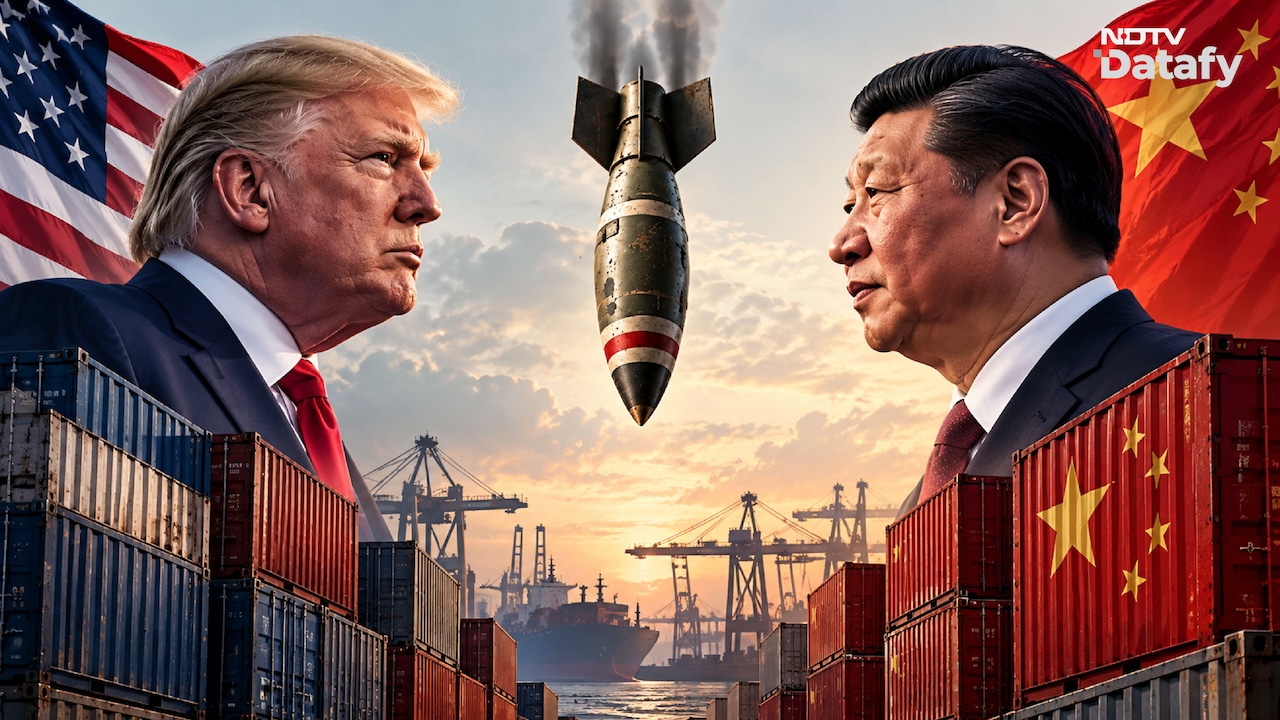
Deploying strategic bombers and fighter escorts during a diplomatic reception converts military hardware into an explicit bargaining chip before formal negotiations even begin. When a host nation greets a foreign head of state with supersonic bomber flyovers and an armed fighter jet guard, the spectacle functions as an immediate exercise in coercive diplomacy. This operational theater establishes an asymmetric baseline for the summit, signaling lethal reach and rapid strike capability while remaining entirely within the bounds of ceremonial protocol.
Standard media coverage treats these displays as mere pageantry or strongman posturing. That interpretation misses the underlying mechanics of statecraft. In high-stakes bilateral diplomacy, particularly between rival superpowers, every physical asset positioned within the line of sight of a visiting delegation serves a specific signaling function. To understand the strategic utility of pairing a formal state welcome with heavy aerial assets, analysts must separate the visual spectacle from the operational doctrine driving it.
The Architecture of Coercive Signaling
In international relations theory, specifically within Thomas Schelling’s framework of coercive diplomacy, states communicate resolve not through verbal threats—which carry low credibility—but through costly, visible actions. Flying supersonic bombers and maintaining a combat air patrol over a diplomatic venue imposes real operational costs: fuel expenditure, airframe flight hours, maintenance cycles, and logistical coordination across multiple command structures. Because these actions are expensive and difficult to fake, they function as high-credibility signals.
The deployment of two distinct tiers of aerial assets—heavy strategic bombers and tactical fighter escorts—executes a dual-layered signaling strategy:
- Strategic Deterrence via Bomber Flyovers: Supersonic strategic bombers represent the apex of conventional and nuclear force projection. Their presence directly above a diplomatic reception reminds the visiting delegation of the host nation's ability to penetrate contested airspace and deliver massive payloads at intercontinental ranges. The message is aimed at the macro-level calculus of the visiting leader: the host possesses overwhelming escalatory dominance.
- Tactical Control via Fighter Escorts: Flanking a visiting head of state’s aircraft with armed fighter jets—or maintaining visible fighter patrols during ground arrivals—communicates absolute sovereignty and immediate tactical control over the local battlespace. While formally presented as an honor guard and a security measure, the operational reality is unambiguous: the host controls the skies, dictates the terms of transit, and holds immediate kinetic capability within seconds of the visiting leader.
This combination eliminates ambiguity. Verbal warnings during closed-door sessions can be dismissed as domestic political theater or negotiating bluffs. A supersonic bomber shaking the tarmac at low altitude provides undeniable physical proof of capability and readiness.
Deconstructing the Protocol-to-Force Continuum
Diplomatic protocol traditionally relies on symmetry and reciprocity to lower friction between states. Red carpets, honor guards with ceremonial rifles, and national anthems exist to create a neutral, predictable environment where leaders can negotiate without losing domestic face. Introducing active combat aviation into this environment disrupts the traditional protocol-to-force continuum.
When a host nation integrates active strike platforms into a welcome ceremony, it forces the visiting delegation into an immediate perceptual bind. To object to the display appears weak, suggesting the visiting leader is intimidated by standard military honors. To accept the display passively requires standing beneath the physical manifestation of the host's military superiority while cameras broadcast the image globally.
The operational execution of such a welcome requires precise synchronization across diplomatic and defense apparatuses:
- Airspace Deconfliction and Security: Integrating heavy bombers into civilian or restricted VIP airspace demands total control of air traffic corridors. The host military must establish temporary flight restrictions, clear commercial traffic, and coordinate timing down to the second so the flyover coincides precisely with the visiting leader's emergence onto the tarmac.
- Visual Framing for Global Broadcast: The trajectory, altitude, and formation of the aircraft are engineered for camera angles. A low-altitude pass ensures the acoustic signature—the physical roar of afterburners—interrupts the auditory environment of the welcome ceremony, dominating both the physical space and the resulting media feeds.
- Rules of Engagement and Readiness: Even in a ceremonial context, aircraft operating near a foreign head of state operate under strict command-and-control protocols. The visible presence of ordnance or the specific configuration of the fighter escorts signals whether the posture is purely ceremonial or linked to heightened regional alert levels.
This approach replaces traditional diplomatic ambiguity with calibrated friction. Rather than smoothing over tensions prior to talks, the host intentionally elevates the psychological pressure at the exact moment of arrival.
Domestic Audience Costs and Image Projection
High-stakes summits are never purely bilateral; they are simultaneous performances for domestic constituencies. For a leader projecting a doctrine of peace through strength, the visual juxtaposition of a rival authoritarian leader standing beneath the host nation's premier strike aircraft yields immediate domestic political dividends.
In domestic political communication, complex policy concessions or nuanced trade negotiations rarely translate into clear victories for the general public. Visual dominance, however, requires no explanation. Footage of supersonic bombers framing a diplomatic handshake creates an immediate, easily digestible narrative of dominance and control. This imagery insulates the host leader against domestic critics who might otherwise accuse the administration of weakness or appeasement for hosting a controversial foreign adversary.
Simultaneously, this visual framing complicates the domestic narrative for the visiting leader. Authoritarian regimes rely heavily on carefully curated state media to project infallibility and equal standing with global superpowers. When the host controls the staging of the arrival, state media from the visiting nation must either censor the aerial display—losing the prestige of a grand state welcome—or broadcast the footage and inadvertently validate the host nation's military pageantry to their own domestic audience.
Operational Risks and Limitations of Militarized Diplomacy
While coercive aerial displays maximize initial leverage, relying on military spectacle as a diplomatic tool carries severe structural limitations and operational risks. Force projection cannot resolve fundamental divergences in national interest, and overt intimidation often triggers predictable countermeasures.
First, escalation dominance can harden negotiating positions. When a visiting leader feels publicly cornered or subjected to overt military signaling upon arrival, their room to make substantive concessions shrinks. Making compromises after being greeted by strategic bombers risks looking like capitulation to both domestic elites and international observers. Instead of softening the adversary, the display can force them into an inflexible posture to preserve political survival at home.
Second, signaling loses marginal utility through repetition. Coercive diplomacy relies on shock and novelty to alter an adversary's risk calculus. If supersonic flyovers and heavy fighter escorts become standard fixtures of bilateral summits, visiting delegations simply price the spectacle into their pre-summit preparation. Once anticipated, the psychological impact drops sharply, leaving the host with high operational costs and diminishing diplomatic returns.
Third, technical or coordination failures carry catastrophic reputational risk. Executing low-altitude, high-speed flyovers over tightly packed diplomatic venues leaves zero margin for mechanical error, weather delays, or communication breakdowns. An aborted pass, a visible mechanical issue, or a timing failure that forces a visiting leader to wait awkwardly on a tarmac instantly inverts the intended message, projecting operational incompetence rather than overwhelming capability.
Finally, spectacle cannot substitute for strategic coherence. Military hardware demonstrates the ability to impose costs, not the political will to sustain them over a multi-year conflict or trade war. Seasoned foreign policy practitioners distinguish clearly between a leader's willingness to stage an aggressive welcome and their willingness to absorb the economic or military blowback of an actual confrontation. If the subsequent closed-door negotiations reveal a lack of clear policy objectives or an eagerness to strike a superficial deal, the initial aerial display is exposed as hollow posturing.
The Strategic Calculus Going Forward
When evaluating future high-stakes summits involving rival powers, analysts must look past the immediate shock value of militarized welcomes and track the subsequent policy concessions. The true measure of coercive diplomacy is not the decibel level of the flyover, but the behavioral shift of the visiting delegation inside the negotiating room.
To assess whether an aerial display successfully generated leverage or merely produced empty theater, monitor three concrete indicators in the aftermath of the summit:
- Asymmetric Concessions in Joint Communiques: Look for verifiable commitments—such as tariff reductions, troop withdrawals, or regulatory changes—that disproportionately favor the host nation without matching reciprocation.
- Shift in Visiting State Media Rhetoric: Track whether the visiting nation's state-controlled press softens its ideological framing of the host nation in the weeks following the summit, which indicates an effort to de-escalate after receiving a credible deterrent signal.
- Reciprocal Force Posture Adjustments: Monitor military deployments in contested regions (such as naval patrols or bomber sorties) within 30 to 60 days of the meeting. If the visiting power reduces provocative operations without securing major diplomatic gains, the coercive signaling succeeded in altering their risk tolerance.
If none of these three indicators materialize, the aerial display functioned entirely as a domestic political advertisement for the host rather than an effective instrument of foreign policy. Watch the post-summit operational tempo, not the tarmac pageantry.