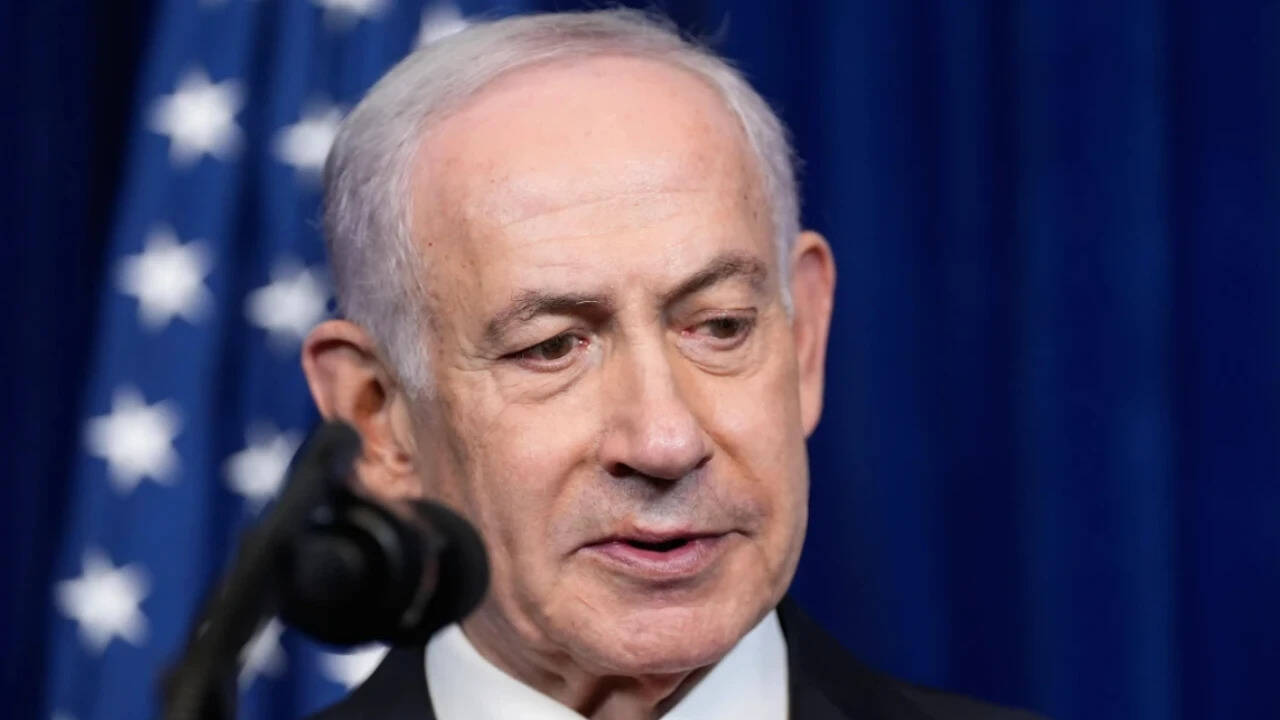
When an Israeli parliamentary election ends in deadlock, the primary constraint on Benjamin Netanyahu is rarely a drop in Likud’s baseline vote share; it is the sudden surge in marginal bargaining power held by minor coalition partners. In a proportional representation system with a 120-seat Knesset and a 61-seat threshold for a governing majority, an electoral stalemate converts small ideological or sectoral factions into kingmakers. When a key ally withholds automatic support following an inconclusive vote, the political crisis operates not as a simple loss of popularity, but as a structural breakdown in coalition game theory.
The Structural Mechanics of Knesset Stalemates
Israel’s parliamentary architecture relies on a single nationwide constituency with a 3.25 percent electoral threshold. Because party-list proportional representation fragments the electorate across numerous specialized factions—ranging from ultra-Orthodox (Haredi) parties and far-right religious nationalists to secular centrists and Arab-Israeli lists—no single party has ever secured an outright 61-seat majority.
In this environment, governing requires assembling a minimum winning coalition. Under standard coalition theory, rational actors seek to form the smallest possible majority to maximize the cabinet portfolios, ministerial budgets, and policy concessions distributed per seat. However, repeated electoral deadlocks disrupt this optimization model in three ways:
- The Asymmetric Veto Player Problem: When a bloc finishes at 59 or 60 seats—just shy of the 61-seat majority—every constituent party inside that bloc becomes a total veto player. A faction holding just six or seven seats possesses the exact same mathematical power to prevent a government as a 30-seat anchor party.
- Ideological Non-Substitutability: In fluid parliamentary systems, a prime minister whose right-wing partner defects can pivot toward the center to replace those lost seats. In recent Israeli election cycles, personal boycotts against Netanyahu by center-left and several center-right factions have eliminated cross-bloc substitution. Netanyahu cannot easily trade an uncooperative hardline partner for a centrist one, trapping him within a fixed pool of potential allies.
- The Outside-Option Divergence: A key ally withholding support after a deadlock typically holds a credible outside option—such as joining an alternative national unity government, sitting in the opposition without risking immediate collapse, or forcing another election cycle where their core constituency remains disciplined.
The Cost Function of Retaining a Reluctant Ally
Media coverage of post-election negotiations often frames a partner's hesitation as a personal rift or a vague weakening of grip. From an operational standpoint, withholding support is a deliberate price-discovery mechanism. By refusing to immediately endorse Netanyahu before the President of Israel assigns the mandate to form a government, the pivotal ally forces a renegotiation of the coalition's internal cost function.
Securing that missing signature requires paying three distinct political costs:
- Portfolio Dilution: Prime ministerial control depends on retaining core ministries—Defense, Finance, Foreign Affairs, and Justice—within the ruling party or among strictly loyalist surrogates. A reluctant ally uses deadlock leverage to demand one or more of these tier-one ministries, directly reducing the prime minister's executive control over state apparatus and crisis management.
- Statutory and Budgetary Earmarks: Sectoral allies, particularly ultra-Orthodox parties or settlement-focused factions, convert deadlock leverage into binding coalition agreements. These include guaranteed funding streams for specific educational networks, exemptions from national military conscription, or accelerated municipal planning approvals. Once written into coalition guidelines, these commitments constrain fiscal policy and alienate broader swing voters.
- Judicial and Institutional Concessions: When an ally’s primary objective involves altering the balance of power between the Knesset and the Supreme Court, withholding support forces the prime minister to adopt legislative agendas that carry high domestic and diplomatic friction.
The central limitation of paying these costs is internal cannibalization. Every ministry or ideological concession granted to pull a hesitant ally back into the fold reduces the rewards available to Likud’s own senior ministers, breeding backbench resentment within Netanyahu's home party.
Why Withholding Support Alters the Presidential Mandate Sequence
In the Israeli constitutional sequence, the President consults with all elected party leaders after official results are certified, asking each faction whom they recommend to form the next government. This recommendation phase is not ceremonial; it dictates who receives the initial 28-day mandate (extendable by 14 days) to assemble a coalition.
When a key ally withholds its recommendation during these consultations, two immediate tactical shifts occur:
First, the psychological momentum of inevitability evaporates. If Netanyahu enters the post-election window with 55 confirmed recommendations instead of 61, rival bloc leaders gain legitimacy to argue before the President that no stable right-wing government exists, increasing the probability that the mandate passes to an opposition figure or directly to the Knesset plenum.
Second, the temporal advantage flips. Under Israeli Basic Law, the clock runs against the mandate holder. A partner that withholds support early gains maximum leverage during the final 48 hours of the 28-day window, when the prime minister faces the binary choice of conceding to the ally’s terms or returning the mandate to the President in defeat.
Strategic Constraints on the Prime Minister's Counter-Moves
Experienced political operators rely on specific counter-strategies to break a coalition holdout, yet each carries severe operational risks under deadlock conditions:
- The Snap-Election Threat: Historically, a prime minister breaks a rebellious partner by threatening to dissolve the Knesset and trigger a new election, gambling that the smaller party risks falling below the 3.25 percent threshold. In a multi-election deadlock, this threat loses credibility. Voter fatigue hits the largest governing party hardest, while disciplined sectarian bases turn out reliably, meaning a snap election often punishes the prime minister more than the holdout faction.
- Poaching Individual Defectors: Rather than negotiating with a recalcitrant party leader, a prime minister can offer individual Knesset members from rival lists ministerial posts or reserved slots on the Likud slate in exchange for breaking ranks. Anti-defection statutes in Israel heavily penalize split-offs—a rogue MK who leaves a faction without taking at least a third of its members cannot run with an existing party in the next election and loses campaign financing—making individual poaching exceptionally expensive and legally precarious.
- The Rotational Premiership: Offering a split term as prime minister—where the reluctant ally serves as head of government for the first or second half of the four-year term—resolves immediate ego and status deadlocks. However, rotational agreements institutionalize instability, incentivizing the first prime minister to engineer a budget crisis or security pretext to collapse the government before the handover date arrives.
Strategic Forecast and Operational Play
A deadlock amplified by an allied holdout cannot be resolved through incremental messaging or appeals to ideological unity; it requires altering the underlying bargaining geometry before the presidential mandate expires.
To regain operational control without surrendering total policy autonomy, the prime minister's team must execute a two-track maneuver within the first 14 days of negotiations:
- Establish a Credible Alternative Channel: Open visible, substantive negotiations with at least one centrist or center-right opposition faction—even if an eventual deal is unlikely—focused on a narrow emergency or national-security framework. The objective is not necessarily to finalize that pact, but to strip the reluctant ally of its monopoly on the 61st seat. Once the holdout perceives that its outside option could leave it entirely out of government, its asking price drops sharply.
- Sequence Agreements from the Periphery Inward: Lock in binding agreements with all secondary coalition partners first, allocating mid-tier ministries and committee chairmanships immediately. By publicly finalizing the surrounding coalition structure, the prime minister isolates the holdout faction as the sole obstacle preventing a right-wing government, shifting the political blame for a potential collapse onto the hesitant ally's own voter base.
If neither track forces the ally to commit before day 21 of the mandate, the coalition calculus shifts decisively toward a prolonged caretaker government or a structural realignment that forces Netanyahu either to concede core executive ministries or cede the initiative to a rival bloc.


