The music industry doesn't make starmakers like Clive Davis anymore. With his passing at age 94, we lost the last corporate executive who actually relied on his ears instead of algorithms. TikTok trends can manufacture a viral moment, but they can't build a fifty-year career. Davis did it repeatedly.
He didn't start as a musician. He was a Harvard-educated lawyer who stumbled into running Columbia Records in 1967. Yet, over the next five decades, Clive Davis shaped the sound of modern music across rock, pop, R&B, and hip-hop. He discovered generational icons, resurrected dying careers, and changed how the world listens to music. Looking back at his track record reveals exactly what the modern streaming era is missing. In other news, read about: Ellen Burstyn at Venice The Economics of Longevity and Artistic Capital in Cinema.
The Ear That Reshaped Rock and Roll
Before Clive Davis took over Columbia Records, the label was safe, traditional, and heavily invested in Broadway cast albums and jazz. Rock music was seen as a passing fad for kids. Davis changed that entire corporate mindset during a single weekend in 1967.
He attended the Monterey International Pop Festival. He saw a young, raw singer named Janis Joplin pouring her soul onto the stage with Big Brother and the Holding Company. Davis signed her immediately. It was his first major rock signing, and it proved he had a natural gift he never knew existed. He simply knew a hit when he heard it. Variety has analyzed this important subject in extensive detail.
After Joplin, the floodgates opened. He signed Carlos Santana after seeing him play, bringing Latin rock into the mainstream. He gave a young kid from New Jersey named Bruce Springsteen a shot in his early twenties, ignoring critics who tried to write him off as just another folk singer. He signed Aerosmith after watching them play at Max's Kansas City in New York.
He didn't just sign these acts and walk away. He pushed them. When Joplin recorded "Piece of My Heart," Davis suggested adding a distinct chorus and tightening up the instrumentals to maximize its radio potential. He knew that great artistry needs a great edit to reach the masses.
Building the Whitney Houston Phenomenon
If Janis Joplin proved Davis had ears, Whitney Houston proved he was a mastermind. He spotted a 19-year-old Houston singing backup for her mother in a New York nightclub in 1983. He signed her to Arista Records on the spot.
Davis spent two years carefully curating songs for her debut album. He rejected hundreds of tracks because they weren't strong enough. He knew Houston had a voice that could change the world, but a voice is nothing without the right song. The result was an unprecedented run of consecutive number-one hits that broke records previously held by The Beatles.
Their creative partnership produced some of the most iconic moments in pop culture, but it wasn't always smooth sailing. When Houston recorded her cover of Dolly Parton's "I Will Always Love You" for The Bodyguard soundtrack, Davis fought bitterly with producer David Foster over the arrangement. Houston's co-star Kevin Costner suggested starting the song with a 40-second a cappella intro. Foster hated the idea. Davis backed the intro. He won the fight, and that silence before the beat drops became the most recognizable moment in modern pop history.
Resurrecting Legends and Expanding into Hip Hop
A lot of executives can ride the wave of a hot new talent. Very few know how to fix a career that has stalled out. Davis excelled at the comeback.
By the early 1980s, Aretha Franklin was struggling. Her legendary run at Atlantic Records was over, and changing musical tastes left her out in the cold. Davis signed her to Arista and orchestrated a massive pop-R&B revival. Tracks like "Freeway of Love" brought the Queen of Soul right back to the top of the charts.
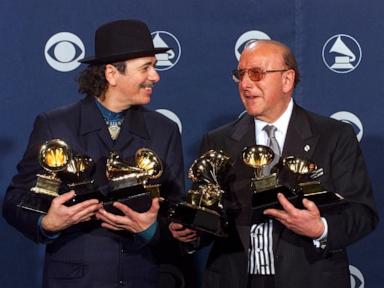
He did the same thing for Carlos Santana in 1999. Santana hadn't had a major hit in decades. Davis conceived the album Supernatural, pairing the aging guitar virtuoso with younger stars like Rob Thomas and Lauryn Hill. Santana initially disliked the lead single "Smooth," but Davis convinced him to cut it. The album won eight Grammys and became the biggest success of Santana's long career.
Even when music moved into genres Davis openly admitted he didn't fully understand, his business instincts held up. He backed Sean Combs in launching Bad Boy Records. He helped fund the label that brought the Notorious B.I.G. and Faith Evans to the world. He understood that his job wasn't to dictate the culture, but to find the people who were driving it and give them the resources to win.
The Last of the Pure Hitmakers
When BMG tried to force Davis into retirement in 2000, he didn't walk away. He founded J Records at age 68. His first massive signing? A young piano-playing singer-songwriter named Alicia Keys. Her debut single "Fallin'" blew up because Davis saw her talent early and gave her total creative support.
Later, he took over the musical direction for American Idol winners, turning reality TV contestants like Kelly Clarkson and Carrie Underwood into legitimate, long-lasting album sellers.
The lesson from Clive Davis is simple. Modern music relies heavily on data, algorithms, and 15-second social media hooks. But data can only tell you what people liked yesterday. It can't tell you what they will love tomorrow. Davis succeeded because he looked for timeless qualities—an unmistakable voice, an undeniable song, and raw star power.
If you want to build a career in music today, stop chasing the algorithm. Focus on the songwriting. Spend time developing a distinct identity that can't be replicated by a machine. True staying power isn't about being viral for a week. It's about finding your version of that 40-second intro.