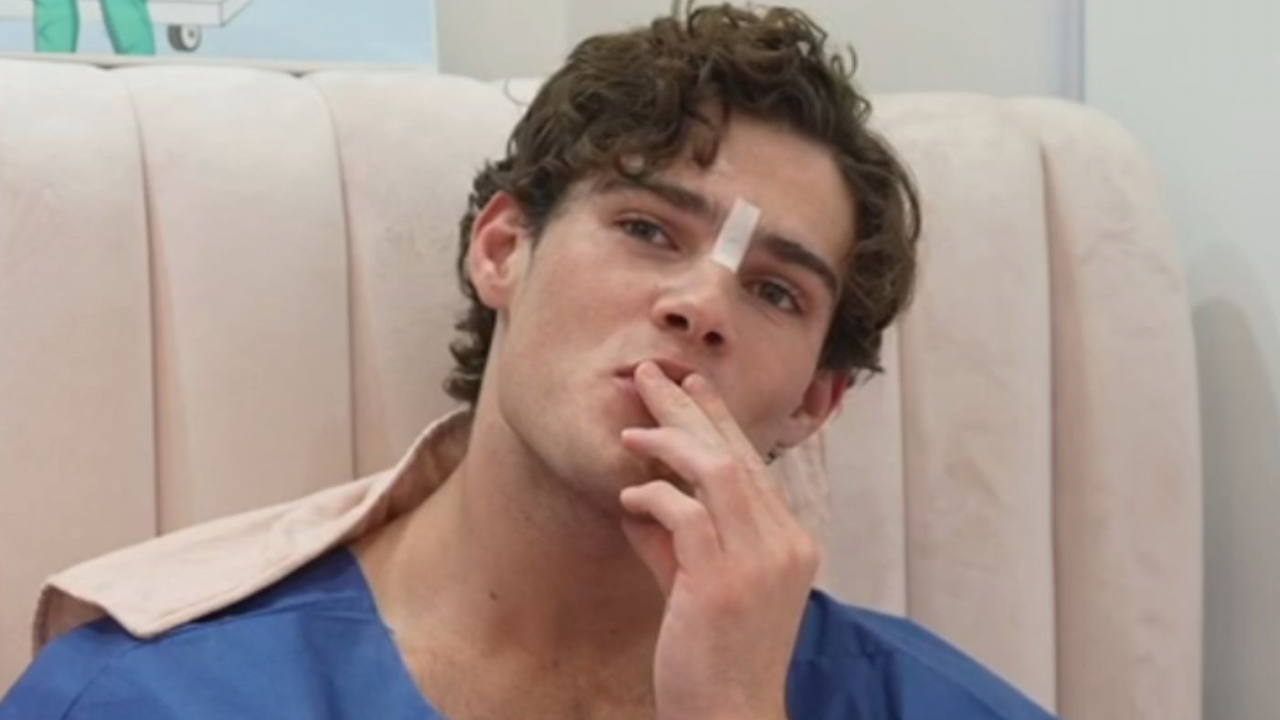
The internet is currently collective-coughing in simulated horror because Kick streamer Clavicular decided to broadcast his live rhinoplasty surgery to thousands of viewers. The trade blogs are running their usual hand-wringing commentary. They call it "shock value." They call it a "disturbing new low for attention." They treat the broadcast of a medical procedure as some unprecedented breakdown of human dignity.
They are entirely wrong. Expanding on this topic, you can also read: Why Shia LaBeouf Keeps Getting the Same Slap on the Wrist.
The lazy consensus surrounding this event views Clavicular’s broadcast as a desperate mutation of the attention economy. Commentators act as if a line was crossed the moment a scalpel met flesh on a Kick stream. In reality, broadcasting a nose job is the most honest, logically consistent piece of content a modern influencer has produced in years.
Stop pretending this is a sudden descent into madness. Livestreaming has always been a meat market. Clavicular just stopped hiding the butcher shop behind a digital filter. Experts at IGN have provided expertise on this matter.
The Illusion of the Body Modification Frontier
The prevailing critique of the broadcast focuses on the visceral nature of surgery. Viewers claim they were "left speechless" by the blood, the swelling, and the clinical reality of a surgeon restructuring a human face in real-time.
Let us dismantle the hypocrisy immediately.
Every single day, millions of people log onto Twitch, Kick, and TikTok to watch creators engage in slower, covert forms of physical destruction. They watch streamers drink themselves into oblivion during subathons. They watch creators consume 10,000-calorie cheat meals until they throw up. They watch competitive gamers destroy their posture, sleep cycles, and mental health for eighteen hours a day to maintain a subscriber count.
Why is a regulated, sterile, elective medical procedure performed by a licensed plastic surgeon deemed "disturbing," while watching a 22-year-old slowly destroy their liver for digital tips is considered standard Tuesday night entertainment?
The answer is simple: comfort. Audiences love the slow, sanitized decay of a creator’s health because it fits neatly into the background of their own lives. They cannot handle the abrupt, bloody reality of a surgical transformation because it strips away the comforting lie of "authenticity." It forces the audience to confront exactly what they demand from creators: total access to the physical vessel.
The Economics of the Scalpel
I have watched talent managers and agency executives lose their minds over brand safety every time a creator pushes the envelope. They scream about advertiser flight. They panic about terms of service violations.
Yet, from a pure operational standpoint, Clavicular’s live surgery is an incredibly efficient monetization strategy.
Consider the standard influencer transformation arc. A creator gets famous, develops intense physical insecurities fueled by millions of comments dissecting their appearance, privately gets plastic surgery, hides at home for three weeks, and returns with a vague story about "getting some rest" or "fixing a deviated septum."
That traditional model is a missed business opportunity. It incurs all the costs of surgery—both financial and reputational—while generating zero direct revenue from the process itself.
By turning the operating table into a stage, the creator flips the script:
- Monetized Downtime: The standard recovery period yields zero content. Broadcasting the procedure turns the actual medical event into a peak traffic milestone.
- Radical transparency as a moat: In an industry flooded with fake teeth, hidden lip fillers, and unacknowledged hair transplants, showing the raw, unedited violence of a cosmetic upgrade eliminates any future accusations of being "fake."
- Platform Arbitrage: Kick has positioned itself as the wild-west alternative to Twitch’s highly sanitized, corporate environment. A live surgery fits the platform's brand identity perfectly, guaranteeing maximum algorithmic amplification.
This is not a breakdown of culture. It is the logical endpoint of hyper-capitalism applied to the human body. The creator’s physical form is the product. Upgrading the product on camera is merely showing the manufacturing process.
Dismantling the Shock Value Premise
The media likes to ask: Does broadcasting a surgery encourage impressionable viewers to get plastic surgery?
This question fundamentally misunderstands how human psychology and body dysmorphia interact with digital media. You do not watch a raw, bloody, swollen rhinoplasty and think, "Wow, that looks fun, let me get a knife carved into my face."
The content that actually drives viewers toward plastic surgery is the post-op perfection. It is the highly filtered, perfectly lit, subtly edited post-recovery selfies that create unrealistic beauty standards. The actual surgery stream is an effective deterrent. It demystifies the glamour. It shows the brutal, unglamorous mechanics of beauty: the bruising, the packing, the absolute vulnerability of an anesthetized body.
If anything, Clavicular provided a public service by stripping the prestige away from cosmetic surgery. He showed it for what it is: a violent, mechanical restructuring of tissue.
The Hypocrisy of the Modern Viewer
Let us look at the "People Also Ask" style anxieties surrounding this topic. The internet wants to know if this violates the ethics of medical practice, or if platforms should ban medical procedures outright.
If you believe a surgeon broadcasting a consensual, legal procedure on an adult patient is an ethical crisis, your priorities are wildly inverted. The real ethical crisis is the audience itself.
The modern streaming viewer is a digital Roman citizen sitting in the Colosseum, demanding higher stakes, deeper access, and more vulnerability. They want to see the streamer cry during a parasocial breakdown. They want to see the streamer get swatted by a swat team live on camera. They want the thrill of real-world intrusion into the digital box.
Clavicular gave them exactly what they wanted, but because it arrived via a medical clinic rather than a video game glitch, the audience recoiled to protect their own self-image. They want to believe they are consuming harmless entertainment, not participating in a voyeuristic panopticon where a creator must slice open his own face to hold their attention for a weekend cycle.
The New Standard of Influencer Content
The era of the pristine, untouchable lifestyle vlogger is dead. The era of the goofy, hyperactive gamer is fading. We are now firmly entrenched in the era of radical, uncomfortable exposure.
Do not look at the live rhinoplasty as a bizarre one-off stunt. Look at it as a proof of concept. The barrier between private medical transformation and public entertainment has been permanently breached.
Next come the live hair transplants. The live dental veneer grinds. The live fitness transformations tracked down to the blood panel level. Creators who want to survive in an increasingly crowded market will realize that hiding their physical self-improvement behind a curtain is a waste of market share.
If you are a creator reading this and thinking about how to adapt, do not copy the nose job. That trick is already spent. Understand the underlying principle instead: the audience's appetite for raw reality always outpaces their moral objections. Find the parts of your life you are currently hiding out of a sense of traditional propriety, and put them behind a paywall.
Stop judging the streamer for holding up the mirror. Start questioning why you couldn't look away from the reflection.