The mainstream media loves a clean narrative. When local politicians gather on the steps of City Hall to piggyback on a winning streak, reporters dutifully show up to snap photos of elected officials squeezed into pristine, screen-printed team merchandise. Then, the inevitable happens. One person wears something slightly off-script, and the press corps treats it like a constitutional crisis.
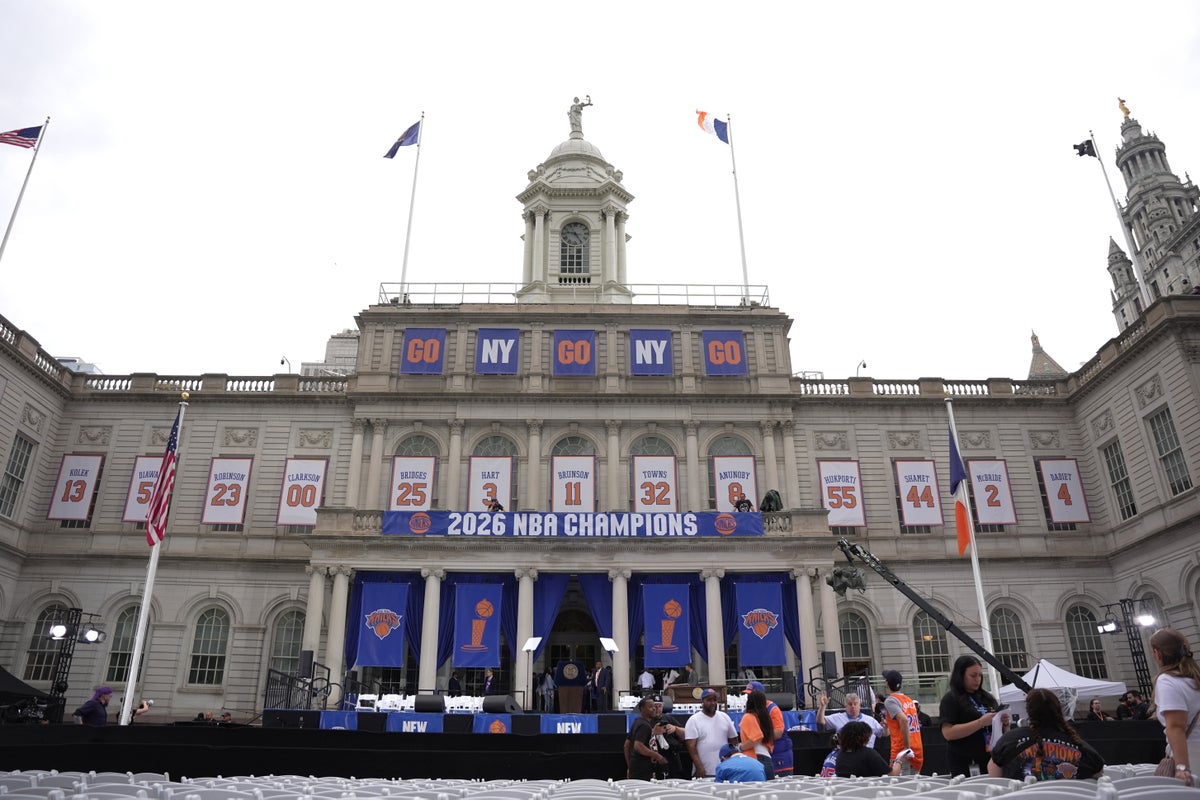
That is exactly how the press covered the recent gathering of New York officials mimicking unity in New York Knicks jerseys. The lazy consensus across local sports columns and political blogs immediately locked onto a singular target: the lone dissenter. The individual whose jersey did not match the pristine, corporate-approved aesthetic of the rest of the crowd. It was labeled an awkward gaffe. A public relations failure. A sign of being out of touch with the current cultural momentum of the city.
They got it completely backward.
The real embarrassment on those steps was not the outlier. The real embarrassment was the sea of identical, crease-less, fresh-out-of-the-box Jalen Brunson jerseys worn by career politicians who likely could not name the team’s backup center if their municipal funding depended on it.
The Cult of the Manufactured Superfan
I have spent two decades navigating the intersection of sports marketing, corporate sponsorship, and public relations. I have watched franchise executives hand out crates of free merchandise to politicians ahead of press conferences. I have seen the calculations that go into choosing exactly which player’s name goes on the back of an official’s jersey to maximize polling data in specific districts.
It is a sterile, calculated corporate exercise. When every politician on a stage is wearing the exact same modern superstar jersey, it is not a display of organic civic pride. It is a mandated uniform designed by a communications director to project relatability.
When a politician steps out in an identical, unwashed jersey, they are signaling submission to a corporate PR campaign. The modern sports franchise is no longer just a local team; it is a multi-billion-dollar entertainment entity that uses municipal infrastructure and political goodwill to maximize broadcast rights and luxury suite revenue. When politicians line up like line cooks in matching uniforms, they are acting as unpaid billboards for a private enterprise.
The single outlier jersey—the one the media mocked for being out of sync—was the only authentic element on that stage.
Whether that jersey belonged to a hard-nosed 1990s enforcer like Charles Oakley, an exiled star like Carmelo Anthony, or a forgotten role player from a lottery-bound era, it carried something the rest of the stage lacked entirely: historical context. It showed that the wearer did not just text their assistant to buy merchandise from the Madison Square Garden team store thirty minutes before the press conference. It showed a relationship with the franchise that predated the current winning cycle.
The Economics of Fan Authenticity
To understand why the mainstream analysis of this event is so flawed, you have to understand the modern economics of sports apparel. The sports merchandise industry thrives on artificial scarcity and rapid obsolescence.
When a team enters a championship window, the market is flooded with high-margin, heat-pressed jerseys designed to capitalize on casual interest. These are the jerseys you saw dominating the City Hall steps. They represent the financialization of fandom.
True sports culture, particularly in a market as brutal and cynical as New York, is built on suffering. It is built on the lean years. The real currency of the bleachers is not the shiny new jersey of the current MVP candidate. It is the faded, frayed jersey of the player who tore his ACL trying to drag a sub-.500 team into the eighth seed fifteen years ago.
- The Bandwagon Uniform: Perfectly clean, modern typography, purchased via corporate expense account, worn exclusively during winning streaks.
- The Legacy Artifact: Faded numbers, cracked screen printing, purchased during an era of organizational dysfunction, worn regardless of the team's record.
By hyper-focusing on the outlier as an error, commentators reveal their own shallow understanding of fan psychology. They assume that solidarity requires uniformity. In reality, the most fiercely loyal fan bases are those that celebrate internal friction, historical memory, and individual expression.
Dismantling the Optics Argument
Political consultants will argue that visual consistency is paramount during a public display of civic unity. They claim that a mismatched stage distracts from the core message.
Let us dismantle that premise entirely. Who is actually fooled by a row of politicians wearing identical sports gear?
Imagine a scenario where a city council member who has spent their entire career focusing on zoning laws suddenly emerges as a die-hard basketball fanatic, wearing a jersey that still has the plastic tag tracking strings attached to the collar. The public does not see a passionate supporter. They see a calculated stunt.
The media operates under the flawed assumption that the public demands perfect, sanitized optics. The opposite is true. Voters and sports fans alike are starving for authenticity in an era dominated by hyper-curated social media feeds and scripted press releases. A politician who wears an old, mismatched jersey because it is the only one they own is infinitely more relatable than a politician who treats a sports franchise like a temporary campaign button.
The Real Crisis Facing Sports Diplomacy
This fixation on uniform aesthetics highlights a broader problem within modern sports culture: the sanitization of the fan experience. Teams are actively pricing out the very communities that created their culture in favor of corporate ticket holders and high-net-worth individuals.
When civic leaders participate in this sanitization by turning team support into a sterile corporate uniform, they validate this displacement. They align themselves with the corporate front office rather than the fans in the upper deck who have been paying escalating ticket prices for decades.
The outlier jersey at City Hall was a accidental act of defiance against this corporate flattening. It broke the spell of the perfect photo-op. It forced a conversation about what it actually means to represent a fan base.
Stop demanding that public figures look like a synchronized dance troupe when they celebrate local sports. The beauty of a city's sports culture lies in its chaos, its arguments, and its deep, complicated history. If a political gathering looks less like a rowdy section at an arena and more like a corporate retreat, the problem is not the person who wore the wrong shirt. The problem is the stage itself.
The next time a sports franchise makes a deep postseason run and the local politicians gather to take credit for the city's collective joy, ignore the sea of matching jerseys. Look for the outlier. Look for the person who didn't get the memo, or who simply refused to follow it. That is where the real story is. That is where the real fan is standing. Use that as your metric for authenticity, and let the corporate front offices worry about the matching outfits.