Midnight in Hong Kong rarely smells like quiet. Even at two in the morning, a city built on steep granite hills and deep harbors hums with a low, metallic pulse: the distant thrum of a container vessel easing past Lamma Island, the clack of an air-conditioning compressor above a narrow lane, the sudden hiss of a delivery van braking on wet asphalt.
Now picture that same street at three in the morning during a major diplomatic summit like APEC.
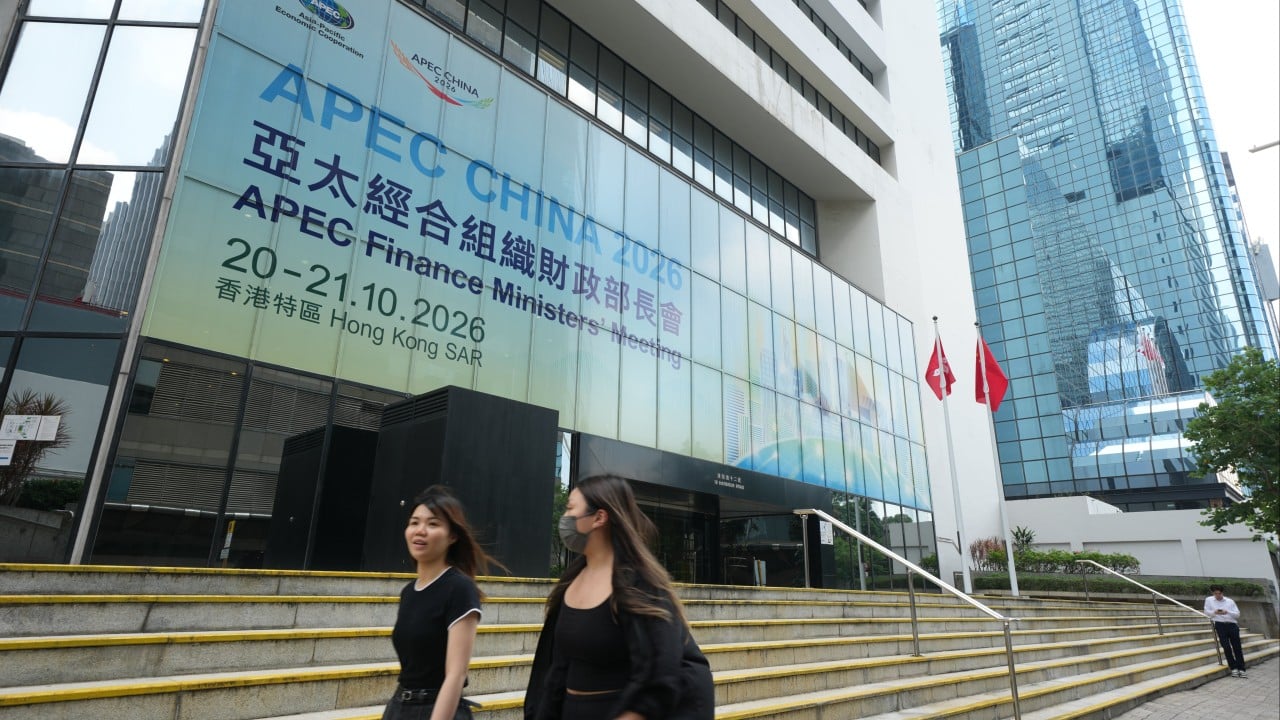
No siren wails. No tank rolls down the avenue. Instead, there is a shift in the cadence of footsteps. Two uniforms turn the corner at an unhurried, deliberate pace. A flashlight beam sweeps briefly along a row of parked cars and dips into the shadow of an awning before moving on. Around the corner, a conference hall stands behind temporary barriers, its glass facades reflecting streetlamps while a hotel lobby three blocks away holds hundreds of diplomats, aides, translators, and journalists behind locked doors and security checkpoints.
Twenty-four hours a day. Every shift. Every corridor of pavement between the meeting venue and the delegate hotels.
To a headline writer, a round-the-clock patrol plan near an APEC summit venue and partner hotels reads like a routine logistical note: security measures announced, perimeters tightened, officers deployed around the clock. Dry. Predictable. Easy to skim past while waiting for coffee.
Yet behind every round-the-clock patrol grid lies a human friction that cold bullet points almost never capture. A major summit is not just a gathering of ministers and trade negotiators at a convention center; it is a temporary collision of sovereign priorities, dense urban life, and fragile public trust. When authorities announce continuous patrols around the meeting venue and delegate hotels, they are trying to solve an equation with no clean answers: how do you keep thousands of high-profile visitors and local residents safe without turning a living, breathing city into a locked room?
I have spent enough time walking security perimeters during major international gatherings—standing behind metal barricades with notebook in hand as rain slicks the pavement and plainclothes officers watch every window—to know how quickly a neighborhood can feel foreign to the people who live in it. One afternoon you are buying wonton noodles on a side street your family has visited for twenty years; the next morning, a police tape line, a bag check, or a rerouted bus stop stands between your front door and your normal routine.
That tension is the real story beneath the patrol schedule.
The Invisible Line Between Order and Disruption
Consider a hypothetical local shopkeeper I will call Mei-Ling, whose small stationery and printing shop sits two blocks from a major summit hotel. (Mei-Ling is a composite character created to illustrate how ordinary businesses experience high-security zones.)
Mei-Ling does not wake up thinking about multilateral trade frameworks or summit communiques. She wakes up thinking about rent, delivery vans, and whether her regular customers—office workers grabbing notebooks before nine, students printing assignments at noon—can actually reach her door. When round-the-clock patrols expand across the streets linking the meeting venue and delegate hotels, her world changes in small, cumulative ways. A side street closes to casual parking. Delivery drivers hesitate, worried about fines or delays. Foot traffic thins out during peak hours because people assume the whole district is locked down.
Safety is an abstract promise until a detour costs you two hours of your day.
To understand why round-the-clock patrols happen in the first place, it helps to step back and look at how modern summits work. An APEC meeting brings together leaders, senior officials, business executives, media crews, and support staff across multiple sites. Delegates rarely stay in a single isolated compound; they move between convention halls, bilateral meeting rooms, press centers, and commercial hotels woven right into busy urban neighborhoods. That spread creates dozens of moving parts. Every transfer route, hotel entrance, loading bay, and pedestrian overpass becomes a potential point of vulnerability or gridlock.
Think of a city's transit and street network like the circulatory system of a body. Round-the-clock patrols act a bit like white blood cells moving continuously along vessel walls—monitoring for clots, obstructions, or sudden flare-ups before they reach the vital organs. If a protest gathers near a hotel entrance at dusk, or a suspicious package is left near a venue access road before dawn, continuous presence allows officers on the ground to respond in minutes rather than scrambling after a situation spirals.
Still, anyone who has watched a city lock down for a summit knows the side effect. Too much pressure on the system, and circulation slows for everyone else. Commuters miss connections. Couriers get turned back. Residents feel watched in places where they used to feel anonymous.
There is real uncertainty here, and pretending otherwise would be dishonest. Security planners face a genuine dilemma: under-prepare for a major international gathering, and a single security lapse or crowd surge can dominate global headlines and endanger lives; over-police a dense city with heavy round-the-clock patrols and roadblocks, and resentment can build among locals who feel treated like obstacles in their own neighborhood. Even experienced security officials admit that calibrating that balance in real time—hour after hour, day after day—is rarely exact.
Why Delegate Hotels Change the Stakes
Most people picture a summit happening inside a single fortified building: badges scanned at the door, cameras along the roof, motorcades gliding straight into an underground garage.
Reality is messier.
A major summit stretches across a patchwork of properties. While the main meeting venue draws the heaviest spotlight, delegate hotels carry an intense weight of their own. They are where officials sleep, hold quiet side conversations, host receptions, and step out into public view. Because those hotels sit inside active commercial and residential districts, their surrounding streets become high-sensitivity zones around the clock.
Night makes those edges sharper.
During the day, crowds blend together. Delivery workers, tourists, commuters, and officers share the sidewalk under bright light. At night, when storefronts dim and fewer pedestrians pass by, a continuous patrol takes on a different character. Every parked van stands out. Every unscheduled gathering draws attention. Officers working overnight shifts carry their own quiet burden—walking miles of concrete under fluorescent lights and streetlamps, staying sharp at three in the morning when human alertness naturally dips, knowing that nothing might happen all night or that everything could change in ten seconds.
I remember talking to a beat officer on a night shift outside a conference district years ago—not in Hong Kong, but in another bustling port city hosting a high-stakes summit. His boots were scuffed, his thermos was empty by midnight, and he looked less like a movie action figure and more like a tired father counting down the hours until relief arrived. "Most of the night is just watching," he told me quietly. "You look at doors. You look at corners. You stay calm so nobody else panics."
That honesty sticks with you. Security on paper is a strategy map with colored zones and shift schedules. Security in reality is human stamina, judgment under fatigue, and split-second decisions made on tired legs.
The Cost We Don't Put on the Balance Sheet
When governments prepare for high-profile gatherings, budgets usually focus on visible costs: overtime hours, barriers, transport, communications gear, and venue security. Those numbers are easy to count.
The harder costs are quiet.
They show up in the commuter whose bus route shifts for a week and adds forty minutes each way. They show up in the hotel worker navigating extra screening just to clock in for breakfast service. They show up in the subtle psychological shift of walking past constant patrols day and night—a reminder that the city is operating under exceptional rules, even if life looks normal on the surface.
History offers plenty of reminders of how high the stakes can climb around international summits. Across decades and continents, major diplomatic meetings have attracted everything from peaceful demonstrations and labor rallies to coordinated disruptions and serious security threats. Host cities learn quickly that preparation cannot wait until the opening ceremony. Once thousands of delegates, foreign security details, and international journalists arrive, the margin for improvisation shrinks fast.
At the same time, cities live or die by their openness. Hong Kong's identity—like that of many great global hubs—is bound up with movement, trade, street life, and everyday energy. When round-the-clock patrols frame the streets around the meeting venue and delegate hotels, the unspoken test is whether the city can project calm authority without losing its everyday humanity.
Notice how different that feels from a simple "law and order" story.
A standard news report tells you patrols are happening 24 hours a day near the venue and hotels. A deeper look asks what those hours feel like on the ground—for the officer walking the beat at dawn, for the business owner watching foot traffic shift outside her window, and for the traveler stepping out of a hotel elevator into a tightly managed street.
What Keeps a City Steady When the World Watches
If there is a constructive path through the friction of round-the-clock summit patrols, it lies in clarity, restraint, and predictability.
Cities handle disruption far better when people know what to expect. Clear notice about street access, honest timelines for temporary measures, and visible, measured conduct by officers on patrol help turn an imposing presence into something closer to reassurance. When patrols are predictable rather than arbitrary, residents and visitors can adapt their routines without feeling blindsided.
Communication matters just as much as presence. When authorities treat local residents and businesses as stakeholders rather than mere bystanders to manage around, tension eases. A shopkeeper who knows why a lane is restricted for two days—and when normal access returns—is far less likely to feel pushed aside than one left guessing behind a line of barricades.
And for anyone visiting or working near a summit zone during round-the-clock patrols, a little practical awareness goes a long way:
- Build extra buffer time into travel between hotels, transit stops, and meeting sites, especially during peak arrival and departure windows.
- Pay attention to local advisories on pedestrian access and road closures rather than relying solely on standard map routing.
- Keep identification handy near secured perimeters and follow instructions calmly without crowding checkpoints.
None of those steps make a locked-down street feel effortless. They simply help people move through it with less friction and less stress.
When the summit ends and the motorcades clear out, the temporary barriers come down and the shift rosters return to normal. The headlines move on to whatever comes next. Yet the memory of how a city carried itself under pressure lingers—in the quiet relief of a neighborhood getting its rhythm back, and in the reminder that behind every round-the-clock patrol is a city trying to hold its balance while the world watches.
A streetlamp flickers once above an empty pavement. Two pairs of boots fade around the corner. And somewhere just past the checkpoint, a kettle clicks on for the first morning tea as the city wakes up on its own terms.