The headlines are feeding you a cinematic lie. They paint a picture of surgical precision, high-tech surveillance, and a CIA that finally got its man. They want you to believe that a few lines of intercepted code and a satellite feed turned the tide of Middle Eastern history. It’s a comfortable narrative. It suggests that the West is in control, that the "intelligence community" is an omnipotent machine, and that decapitating a regime is as simple as finding the right GPS coordinates.
It is complete nonsense.
The reported "CIA-guided strike" on Ali Khamenei isn't the triumph of intelligence the media is selling. It is the loudest admission of strategic bankruptcy we have seen in decades. If you think killing the Supreme Leader solves the Iranian "problem," you aren't paying attention to how power actually functions in the Islamic Republic. You’re watching a Michael Bay movie while a complex geopolitical chess game turns into a street fight we aren't prepared to win.
The Myth of the "High-Value Target"
Washington has a pathological obsession with the "High-Value Target" (HVT). We’ve been addicted to it since the early 2000s. The logic is seductive: cut off the head, and the body dies. But I’ve seen this play out in Iraq, in Libya, and with the assassination of Qasem Soleimani. The body doesn't die. It develops an autoimmune response. It gets leaner, meaner, and far more unpredictable.
When you kill a figure like Khamenei based on "CIA intel," you aren't removing a bottleneck. You are removing a stabilizer. For all his rhetoric, Khamenei was a known quantity. He was a bureaucratic gatekeeper who balanced the competing interests of the Artesh (the regular army) and the IRGC (the Revolutionary Guard). He provided a predictable, if hostile, framework for regional escalation.
By taking him out, the CIA didn't "disable" Iran. They triggered a vacuum. In a theological autocracy, a vacuum isn't filled by a democratic uprising; it’s filled by the most organized, most violent faction available. In this case, that’s the IRGC’s hardline officer corps—men who don't care about diplomatic backchannels or "red lines."
Intelligence is Not Information
The media treats "intel" like a magic wand. They report that "CIA intel guided the strikes" as if the agency handed a pilot a map with an 'X' on it. Real intelligence work is a messy, low-probability gamble involving signals intelligence (SIGINT) and human intelligence (HUMINT).
The "lazy consensus" suggests that our technology is so advanced that we can track a Supreme Leader’s heartbeat from space. The truth is far more sobering. Most "actionable" intel in these regions is the result of massive payments to unreliable informants or the accidental interception of unencrypted burner phones. When a strike like this succeeds, it’s often 10% brilliance and 90% the target getting lazy.
But here is the nuance the competitor articles missed: The more we rely on technical intel to justify assassinations, the less we understand the culture we are disrupting. We can track the phone. We can’t track the ideology. We can see the convoy. We can’t see the succession plan being written in a basement in Qom that doesn't use electronics. By focusing on the where and when of Khamenei’s location, the CIA ignored the what happens next.
The Martyrdom Economy
In the West, death is an exit. In the radicalized elements of the Middle East, death is a promotion.
By killing Khamenei in a foreign-guided strike, the U.S. essentially handed the Iranian regime a blank check for internal repression. Every dissident, every student protester, and every moderate voice in Tehran just became a "CIA asset" by association. The regime doesn't need to prove you're a spy anymore; they just point to the crater where their leader used to be and say, "This is what the West wants for you."
If the goal was to "liberate" the Iranian people or "stunt" the nuclear program, this strike was the worst possible way to do it. It consolidated the very power structures it was meant to shatter.
The Technology Trap
We are entering an era where "Precision Strike" is a buzzword used to mask strategic incompetence. We use drones and cyber-warfare because they are politically cheap, not because they are effective.
Imagine a scenario where the CIA successfully uses an AI-driven facial recognition drone to eliminate a target. The "win" lasts 24 hours. The blowback—the radicalization of the next generation, the shift toward even more asymmetric warfare (suicide drones, sleeper cells, state-sponsored hacking)—lasts for 24 years.
We are leveraging—sorry, we are using—trillion-dollar technology to solve 7th-century theological disputes. It’s like trying to fix a software bug with a sledgehammer. The sledgehammer works, but the laptop is useless afterward.
What People Also Ask (and Why They’re Wrong)
"Will this stop Iran's nuclear program?"
No. It will accelerate it. A regime that feels vulnerable to assassination doesn't negotiate; it builds a deterrent. If you knew someone was tracking your movements to kill you, would you throw away your only shield? The IRGC now has every incentive to cross the nuclear threshold as fast as humanly possible.
"Is the CIA back to its Cold War glory?"
The CIA never left the Cold War. That’s the problem. They are still playing the game of "Great Men," believing that removing one individual changes the trajectory of a nation. It didn't work in Congo, it didn't work in Cuba, and it won't work in Iran.
"Does this mean the regime will collapse?"
Dictatorships are like pressurized containers. If you poke a hole in the side (the leader), the pressure doesn't just vanish—it sprays everywhere. Collapse is usually messy, bloody, and results in a more radical junta taking the reins.
The Professional Price of "Success"
I have spoken with analysts who spent decades in the "Sandbox." They don't celebrate these strikes. They see them for what they are: tactical wins that create strategic nightmares.
The "success" of the Khamenei strike is a PR victory for the Pentagon and a fundraising goldmine for the intelligence agencies. It looks great on a PowerPoint slide. It gets the Director of the CIA a seat at the big table. But on the ground, the assets we spent years cultivating are now being rounded up and executed in a paranoid purge. The backchannels we used to prevent total war have gone silent.
We traded a long-term containment strategy for a short-term explosion.
The Brutal Reality
The status quo was a slow, agonizing grind toward a potential internal Iranian shift. It was frustrating. It was boring. It didn't make for good television. But it was manageable.
The new reality is a fractured, nuclear-hungry, vengeful IRGC-led state with no central authority to negotiate with. We didn't kill the spider; we stepped on it and sent hundreds of tiny, angry spiders scurrying into the floorboards.
Stop celebrating the "intel." Start mourning the stability it destroyed.
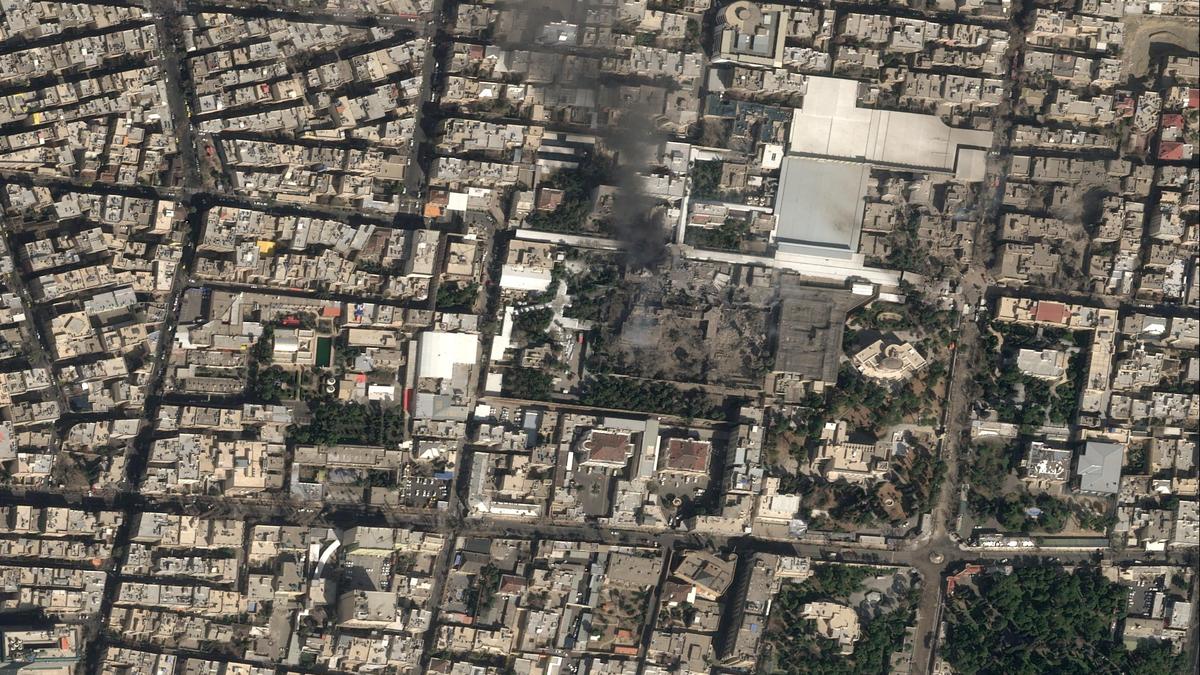
If you want to understand the future of the Middle East, stop looking at the satellite photos of the strike zone. Start looking at the budgets of the paramilitary groups now vying for the Supreme Leader’s throne. They aren't afraid of our drones anymore. They’ve seen what they can do, and they’ve already adjusted.
The CIA got their man. And in doing so, they lost the war.
Go back to your maps and your sensors. Buy another billion dollars' worth of surveillance tech. It won't help you when the next Iranian leader isn't a man in a palace, but a decentralized committee of vengeful generals with nothing left to lose.
The strike didn't end a regime. It started a fire that no amount of "intel" can put out.