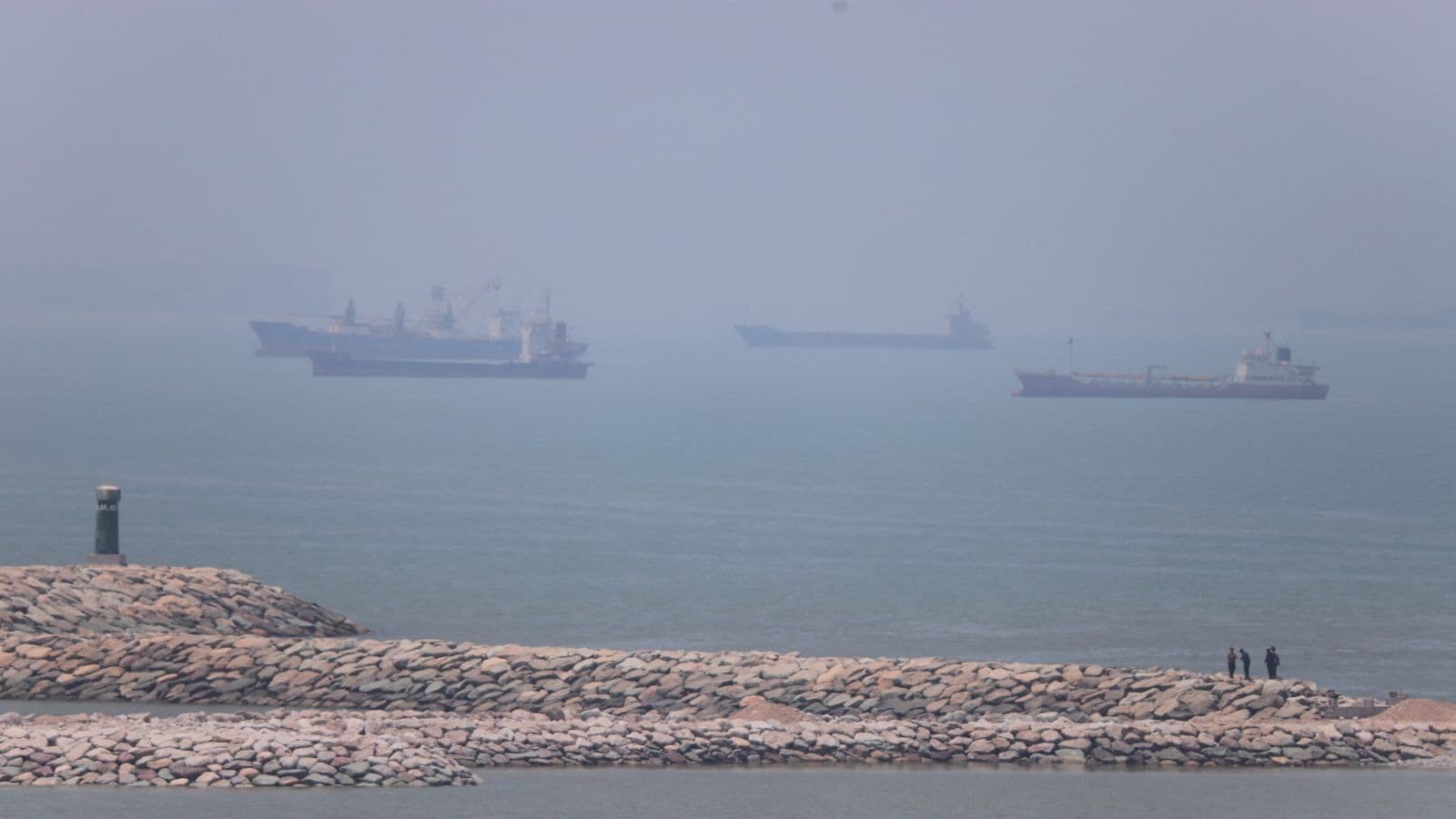
Picture a thin strip of blue water where the Arabian Peninsula almost touches the horn of Africa. This is the Bab el-Mandeb, a throat of the ocean through which roughly thirty percent of global container traffic and up to fifteen percent of all global trade must pass to keep modern economies breathing.
Now, imagine standing on the rocky coast of Yemen, watching a container ship creep along the horizon. To a casual observer miles away in a secure capital, it looks like a quiet maritime postcard. But beneath the surface, the water is boiling. Expanding on this idea, you can also read: The Price of Control When Steel Meets Strategy.
Yemen's foreign minister-designate, Afrah Al-Zouba, sat down inside the Yemeni embassy in Riyadh recently to deliver a stark warning to a small group of journalists. The message was blunt. The Houthi movement is no longer just fighting a localized civil war. They are actively attempting to replicate Iran's formidable Strait of Hormuz strategy right here in the Red Sea.
Consider what happens next when two of the world's most vital maritime gateways fall under the thumb of a single playbook. Observers at Reuters have also weighed in on this matter.
The Blueprint of a Blockade
For years, the world watched Iran turn the Strait of Hormuz into a geopolitical tripwire. By wielding the threat of missile fire, asymmetric naval swarms, and total blockades, Tehran proved that a regional actor could hold global commerce hostage without ever invading a neighbor.
The Houthis are taking notes. And worse, they are executing the lesson.
By declaring a naval blockade targeting Saudi shipping and launching waves of drones and cross-border missiles, the group has transformed the Red Sea into a brand-new front line in the broader Iran conflict. Jets from Saudi Arabia have responded with airstrikes pounding Houthi military sites, while commercial captains face a terrifying calculus: risk the burning waters of the Red Sea or take the long, expensive detour around the Cape of Good Hope.
Data tells a grim story. On a single recent Sunday, only eleven commodity vessels dared to navigate through the corridor. Eleven. In a channel that usually hums with continuous industrial movement, silence has begun to take over.
The Cost of Looking Away
Complacency is a luxury paid for in blood and inflation.
Al-Zouba pointed a direct finger at the international community, arguing that an insufficient global response has emboldened the group to push further. When the world treats intermittent missile attacks as background noise, the aggressors interpret quietness as permission.
Think about what this means for a household thousands of miles away from the smoke of Yemen. When the Bab el-Mandeb and the Strait of Hormuz are simultaneously choked, supply chains do not merely stutter—they fracture. Energy prices spike. Shipping insurance rates skyrocket. Goods on shelves grow scarce.
Yet, inside Yemen, the human cost is infinitely heavier. Years of continuous conflict have already claimed hundreds of thousands of lives, leaving deep scars across a broken landscape. Now, along the northwestern frontlines stretching from the Red Sea up to the Saudi border, artillery is active once more. Gunfire rattles the dust. Trenches are reinforced. The fragile truce that once offered a fragile breath of relief is shattering under the weight of renewed escalation.
Both sides claim they are prepared for what comes next. But readiness for war is a poor substitute for peace.
The conflict must find its resolution either through difficult diplomatic channels or through the catastrophic logic of escalation. As the gateways narrow and the chokepoints tighten, time is running out to choose the right door.
The smoke over the Red Sea thickens, and the horizon grows darker by the day.