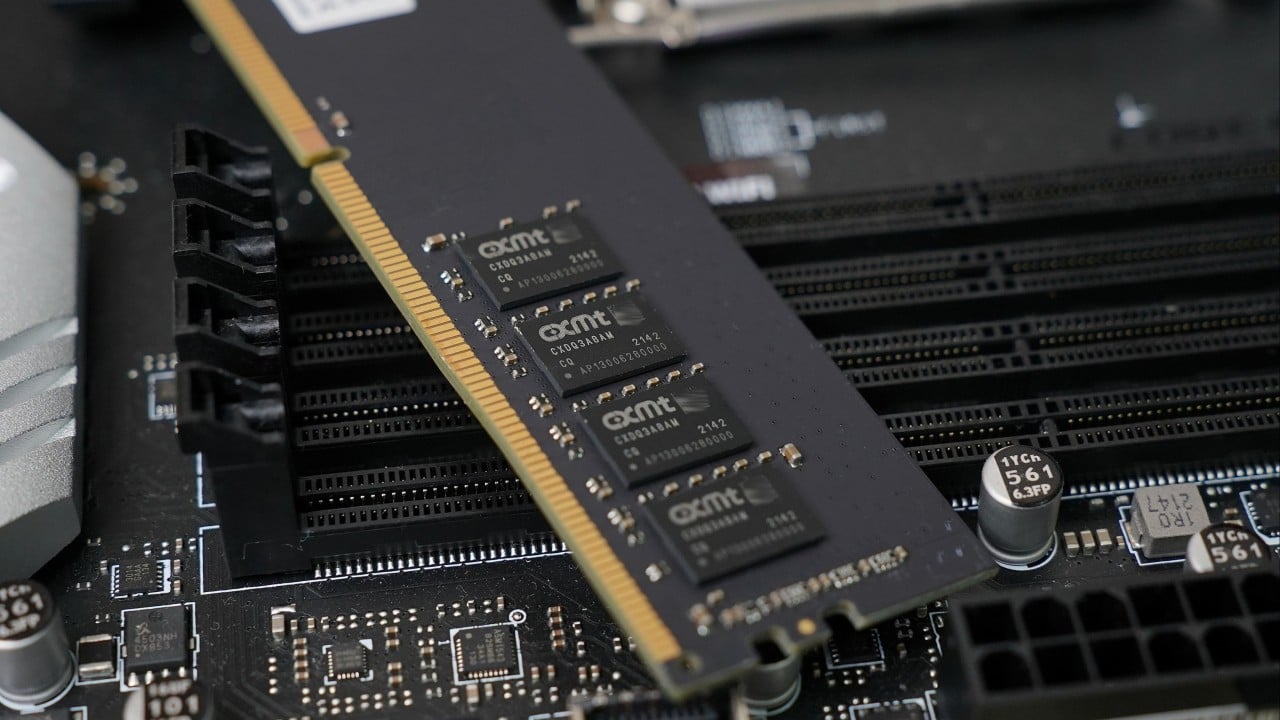
China’s memory chip makers aren't just participating in the global market anymore. They’re coming for the throne. If you’ve looked at the price of SSDs or mobile storage lately, you’ve felt the ripples of a massive shift happening in factories across Hefei and Wuhan. Giants like ChangXin Memory Technologies (CXMT) and Yangtze Memory Technologies Corp (YMTC) are no longer the "budget" alternatives people laughed at five years ago. They’re now the primary reason established titans in South Korea and the US are looking over their shoulders.
The strategy is simple and brutal. Aggressive capacity expansion meets deep price cuts. Analysts across the board see the writing on the wall. By flooding the market with competitive DRAM and NAND flash, Chinese firms are forcing a fundamental reset of how much we pay for data storage. It’s a high-stakes play for market share that’s working better than most Western executives care to admit. If you liked this piece, you should read: this related article.
The Massive Expansion You Can't Ignore
Wait until you see the production numbers. CXMT is reportedly aiming to double its output. We’re talking about a jump from roughly 120,000 wafers per month to something closer to 240,000 or even 300,000 in the near future. That’s not a small incremental update. That’s a declaration of war on the supply-demand balance.
When you dump that much silicon onto the market, prices drop. It’s basic economics. But for Chinese firms, it isn't just about the money today. It’s about being indispensable tomorrow. They want to be the default choice for every smartphone, laptop, and server farm in Asia and beyond. By expanding capacity while the global economy is still shaky, they're positioning themselves to capture the next upswing in demand. For another look on this development, see the recent update from The Next Web.
I’ve seen this play out before in the solar panel industry. A decade ago, Chinese manufacturers scaled up so fast that they wiped out most of the global competition on price alone. The memory market is more technically complex, sure, but the playbook remains the same. Scale first. Profit later.
Why Lower Prices Don't Mean Lower Quality Anymore
There’s a lingering myth that Chinese chips are somehow "lesser." It’s a dangerous assumption for competitors to make. YMTC’s Xtacking technology is a legitimate innovation that allows for higher bit density without making the chips physically larger. They aren't just copying Micron or Samsung; they're finding different ways to solve the same engineering problems.
When CXMT offers LPDDR5 at a 15% or 20% discount compared to the big three, they aren't selling junk. They’re selling a product that meets the spec for 90% of the world’s consumer electronics. For a mid-range smartphone maker in Shenzhen or even a PC builder in Europe, that price gap is the difference between a profitable quarter and a loss.
Buying "good enough" at a significantly lower price point is how you win the mass market. The top-tier AI servers might still demand the highest-end HBM3e memory from SK Hynix, but the vast majority of the world runs on standard DRAM. That’s where the volume is. That’s where China is winning.
Navigating the Geopolitical Minefield
It’s impossible to talk about this without mentioning trade restrictions. The US has thrown everything but the kitchen sink at these companies. Export bans on lithography equipment were supposed to stall them out. It didn't.
Instead of folding, these companies doubled down on domestic supply chains. They’re working with local toolmakers to replace Western tech. While they might still be a generation behind on the most advanced nodes, they’ve mastered the "legacy" nodes that still power the bulk of the world's electronics.
The irony? The more the West restricts their access to high-end tech, the more these companies focus on dominating the high-volume, mid-range market where they can exert the most price pressure. It’s a classic case of unintended consequences. You try to cut off the head, and the body just gets stronger and leaner.
The Impact on Samsung and SK Hynix
The South Korean giants are in a tough spot. They have higher overheads and shareholders who actually demand profits. They can't just engage in a race to the bottom indefinitely. When CXMT and YMTC slash prices, Samsung has two choices. They can cut their own prices and tank their margins, or they can cede market share.
Right now, we’re seeing a bit of both. The big players are trying to pivot toward high-margin AI memory like HBM to escape the price war in consumer NAND and DRAM. But AI is a tiny slice of the total market volume. You can't run a multi-billion dollar semiconductor business on AI chips alone. You need the bread-and-butter sales of phone memory and PC RAM.
Analysts suggest that if Chinese firms reach a 10% to 15% global market share in DRAM, they’ll have enough leverage to dictate pricing for the entire industry. We’re getting very close to that tipping point.
What This Means for Your Next Upgrade
If you’re a consumer, this is actually great news in the short term. You’re going to see 2TB and 4TB NVMe drives becoming the standard rather than a luxury. You'll see budget phones shipping with 12GB of RAM because the chips are cheap enough to include.
But there’s a catch. If the Chinese giants successfully drive out competitors or force them to scale back production, we could end up in a situation where the market is less diverse. For now, enjoy the price war. It’s the most consumer-friendly thing to happen to the PC industry in a decade.
The Strategy for Staying Competitive
If you’re a business owner or an IT buyer, you need to be smart about your procurement. Don't just look at the brand name on the sticker. Look at the controller and the NAND type.
- Diversify your vendors. Don't get locked into a single ecosystem.
- Watch the spot market. Prices are volatile right now because of this influx of Chinese supply.
- Test for your specific use case. Many "budget" Chinese modules perform identically to "premium" brands in real-world workloads.
The shift is happening whether we like it or not. The "Made in China" label on a memory module used to be a warning sign. Today, it’s a sign that the market is finally getting some much-needed competition. Keep your eyes on the quarterly shipment reports. The numbers don't lie, and they’re all pointing in one direction.
Start auditing your hardware supply chain today. If you aren't at least evaluating these newer players, you’re likely overpaying for your storage. The gap between "premium" and "value" is closing fast, and the winners will be the ones who stop overthinking the brand name and start looking at the price-to-performance ratio. Don't wait for the next price hike to rethink your strategy. Get ahead of it now.