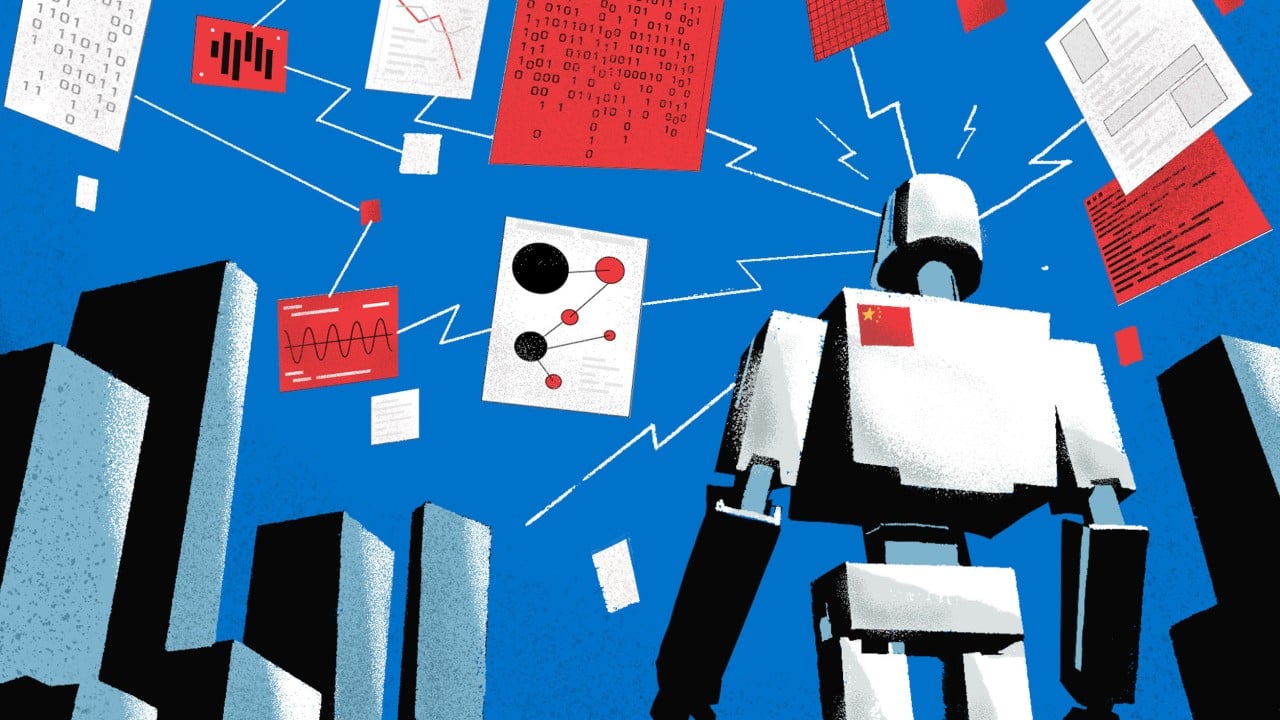
You've probably seen the viral clips. A sleek, bipedal Chinese humanoid robot walks smoothly across a factory floor, bends down, and lifts a plastic box with terrifying precision. It looks like the future arrived early.
Then you watch the unedited security footage of the same machine trying to peel a banana, thread a standard USB-C cable into a recessed port, or handle a live wire bundle that isn't sitting at the exact millimeter coordinate specified in its training set.
It fails. It drops things. It freezes. Sometimes, it violently crushes the object it was meant to hold gently.
That gap right there explains why Chinese humanoid robots face a massive obstacle. Humans are still mostly better.
The Assembly Line Illusion
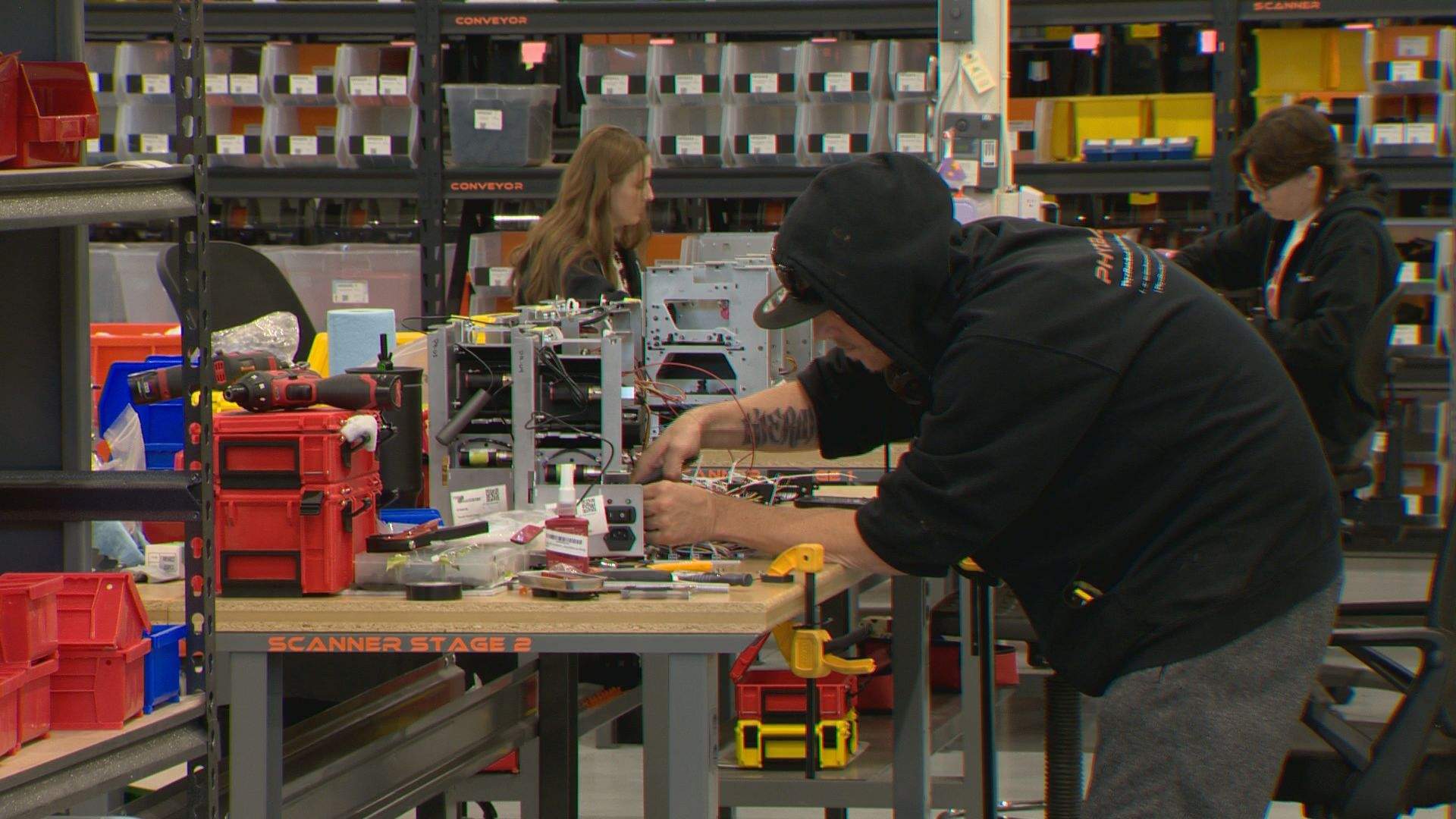
Walk into any modern electronics manufacturing plant in Shenzhen or Dongguan, and you'll see armies of specialized machines. They solder circuit boards faster than you can blink. They place microscopic components with absolute accuracy. They don't need two legs, a face with LED eyes, or an expensive artificial intelligence model running on power-hungry GPUs to do it.
Yet, massive venture capital funds and state-backed initiatives across China keep pouring billions into humanoid general-purpose robots. Why? Because the factory of tomorrow supposedly needs to adapt to spaces built for people.
Here is the dirty secret of manufacturing. Human environments aren't actually standardized. A worker drops a wrench on an angle. A cardboard box arrives slightly crushed. A cable twists differently than the one in the yesterday morning batch.
A traditional robotic arm stops and throws an error code. It lacks situational awareness. Chinese robotics firms like Unitree, Fourier Intelligence, and UBTECH want their humanoid machines to bridge that gap. They want machines that can think on their feet, adjust grip strength on the fly, and reason through physical chaos.
They are making incredible technical leaps. Sensor fusion, lightweight actuators, and reinforcement learning algorithms have advanced faster in the last three years than the previous three decades.
Yet biology still wins.
The Physics Problem You Can't Code Away
Look down at your own hands. You have roughly twenty-seven bones, dozens of joints, and an intricate web of mechanoreceptors providing continuous haptic feedback to your brain at lightning speed. You can feel the exact texture of a greasy bolt, the slight give of a rubber gasket, and the thermal temperature of a soldering iron before you even touch it.
Current humanoid robot hands are shockingly crude by comparison.
Most models use multi-fingered end-effectors driven by tendon cables or tiny internal motors. To match human dexterity, engineers have to cram dozens of motors into a forearm the size of a baguette. That generates massive amounts of heat. It drains lithium-ion batteries in less than two hours.
And then there is weight. A human hand weighs very little. A robotic hand with equivalent strength often weighs several kilograms. When you swing a heavy mechanical arm around, momentum takes over. Sudden stops require massive amounts of energy and structural reinforcement.
You can throw all the neural networks you want at the problem. You can train your vision-language-action models on petabytes of synthetic data. Physics remains undefeated. Until energy density and material science catch up, mechanical hands will feel clumsy compared to flesh and bone.
Training in Simulation Versus Reality
The race to commercialize Chinese humanoid robots relies heavily on simulation. Companies train millions of virtual robot bodies in digital twin environments for thousands of hours before deploying code to physical hardware.
It sounds efficient. It scales well. But the real world is messy.
Simulation environments struggle with friction coefficients, dust, humidity, and the chaotic unpredictability of organic materials. A virtual apple feels the same every time. A real apple varies in firmness, moisture, and weight distribution. When a humanoid robot trained entirely in simulation steps onto a dusty warehouse floor in Guangzhou, reality bites back immediately.
I spoke with automation engineers who spent months trying to get bipedal robots to walk reliably across uneven concrete covered in fine particulate debris. The sensors miscalculate. The foot slip registers late. The control loop panics.
Humans don't need millions of simulation iterations to pick up a wet rag. We learn physical intuition through childhood play, falling down, and touching hot stoves. We possess a generalized physical common sense that current artificial intelligence simply mimics rather than truly understands.
The Economic Reality Check
Let us talk about money.
Building a high-end humanoid robot costs a fortune. Even with China's unrivaled hardware supply chain and government subsidies driving down component costs, a reliable bipedal robot still costs tens of thousands of dollars. Many prototypes run into the hundreds of thousands.
Now look at labor economics. A human assembly line worker in regional China costs a fraction of that annual capital expenditure, doesn't require a cooling system, repairs themselves when they get a papercut, and can communicate complex nuances with coworkers using a glance.
Robots make financial sense only when humans are scarce, wages skyrocket, or the task is genuinely hazardous to health. While China faces a rapidly aging population and a shrinking workforce, the transition timeline is frequently exaggerated by breathless tech PR releases.
Companies aren't buying thousands of humanoids for general factory work yet. They are buying a few dozen for marketing stunts, research labs, and highly controlled pilot programs.
Where the Hardware Actually Wins
None of this means Chinese humanoid robotics is a dead end.
The breakthrough won't happen because robots replace humans across the board. It will happen because they take over specific, grueling tasks where human ergonomics fail. Think of inspection work inside narrow petrochemical pipelines, disaster response in radioactive zones, or heavy lifting in environments with toxic fumes.
In those hyper-specific niches, humans aren't better anymore because humans simply cannot survive the environment.
Companies that survive this hype cycle are already pivoting away from pure general-purpose theater toward task-specific durability. They are building robots that might have wheels instead of legs when wheels make more sense, or stationary torsos bolted to mobile bases instead of flashy bipedal struts that waste battery power trying not to tip over.
Stop expecting a mechanical butler to fold your laundry anytime soon. The human hand, backed by millions of years of evolutionary engineering, remains the undisputed king of physical interaction.
Embrace the limitations. The future of automation isn't about copying humans point-for-point. It is about figuring out where mechanical persistence finally outweighs biological fatigue.
Take a close look at your next warehouse delivery. A human put it there. And for a long time coming, a human will still do it better, cheaper, and faster than any machine walking on two legs.