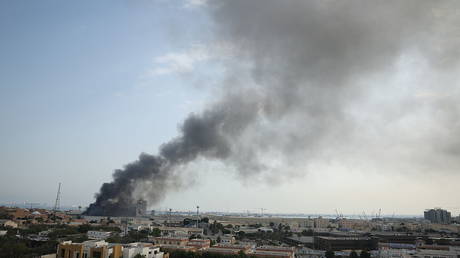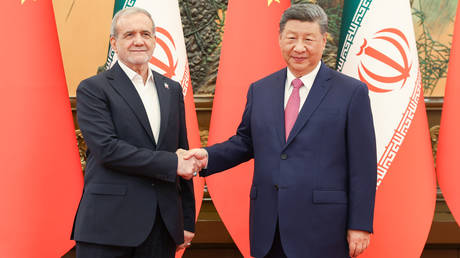
China’s play in the Middle East has always been about the checkbook, not the rifle. As smoke rises over Tehran following the February 2026 strikes, the narrative that Beijing will swoop in to rescue its "comprehensive strategic partner" is hitting a wall of cold, hard reality. You’ve probably heard the talk about the $400 billion deal or the "axis of resistance" involving Russia and China. It makes for a great headline. But if you look at how Beijing is actually moving its pieces right now, it’s clear they aren't planning a rescue mission. They're planning an exit strategy.
The death of Supreme Leader Ali Khamenei and the ensuing chaos hasn't triggered a Chinese military mobilization. Instead, it triggered a WeChat notice. Beijing’s embassy in Iran didn't tell its citizens to stand their ground; it told them to get out via Azerbaijan and Turkmenistan. Over 3,000 Chinese nationals have already fled. This tells you everything you need to know about China's "all-weather" friendship. When the weather gets this bad, Beijing stays indoors.
The Oil Trap and the Hormuz Bottleneck
China’s biggest headache isn't the survival of the Iranian regime. It’s the 50-kilometer-wide strip of water known as the Strait of Hormuz. Roughly 13% of China's total sea-borne oil imports come from Iran, often relabeled as "Malaysian blend" to dodge sanctions. Even more comes from the neighboring Gulf states like Saudi Arabia and the UAE.
If the conflict spills over and Iran decides to play its "trump card" by mining the Strait, China’s energy security doesn't just stumble—it breaks. Insurance premiums for tankers have already hit a six-year high this week. For Beijing, the calculation is simple: a weakened Iran that is totally dependent on China is a win, but a dead Iran that takes the global oil market with it is a catastrophe.
China has spent years building the Gwadar port in Pakistan specifically to bypass these maritime choke points. The plan was to pipe Iranian oil directly into Western China. But pipelines don't work when the source is in the middle of a regime collapse. For now, Beijing is leaning on its Strategic Petroleum Reserves and hoping Russia can pick up the slack, even though Moscow is already stretched thin by its own priorities.
Strategic Opportunism Over Solid Alliances
Don't mistake Chinese investment for a security guarantee. Beijing’s relationship with Tehran is what experts call "strategic opportunism." They love the discounted oil and they love that Iran keeps the U.S. military distracted and "bloodied" in the desert. Every carrier the U.S. diverts from the Indo-Pacific to the Persian Gulf is a win for the People’s Liberation Army in the South China Sea.
But there’s a limit. China hasn't offered Iran a single security guarantee. While they’ve sold Tehran air defense components and dual-use tech, they haven't sent a single soldier. Beijing’s "Peace through Development" model assumes there is a government left to develop. If the Islamic Republic falls, Beijing will be the first to call the new guys to ask if the oil contracts still stand. They did it in Libya, they did it in Afghanistan, and they’ll do it in Tehran.
The Fear of a Pro-Western Successor
What keeps Xi Jinping up at night isn't the fate of the Ayatollahs, but the nature of what comes next. A Western-aligned government in Tehran would be a disaster for China's "Belt and Road" ambitions. It would turn a key node of Eurasian connectivity into a U.S. outpost.
There's also the domestic "demonstration effect." If a general strike and mass protests can topple a long-standing autocracy in Iran, the CCP grows nervous about the rumblings in its own provinces. This is why you see China's Foreign Minister Wang Yi calling for "social stability" in Iran. They aren't worried about Iranian lives; they’re worried about the precedent of a successful revolution.
What China stands to gain
- Deals on the cheap: A desperate, isolated Iranian regime (or its remains) will sell assets for pennies on the dollar.
- U.S. Distraction: A prolonged "quagmire" for Trump in the Middle East prevents the full "Pivot to Asia."
- RMB Dominance: Since Iran is locked out of the dollar system, they use the renminbi (CIPS), helping Beijing's goal of dethroning the greenback.
What China stands to lose
- Infrastructure: Billions in BRI investments could be vaporized or nationalized.
- Diplomatic Face: After brokering the Saudi-Iran deal in 2023, failing to prevent a war makes Beijing look like a lightweight mediator.
- Energy Prices: A permanent spike in oil costs would cripple China's manufacturing-heavy economy.
The Balancing Act is Ending
For years, China played both sides. It bought oil from Iran while building "Vision 2030" infrastructure for the Saudis. But the 2026 crisis is forcing a choice. Israel and the Gulf states are China’s second-largest trading partners in the region. Beijing cannot afford to alienate Riyadh and Abu Dhabi to save a sinking ship in Tehran.
The most likely move? Watch for a surge in "shuttle diplomacy." China will try to act as the "stabilizing force" not because they want peace, but because they want the tankers to start moving again. They'll support a transition of power that includes the IRGC (Islamic Revolutionary Guard Corps) or other "pragmatic" elements who are willing to keep the oil flowing to the East.
If you're watching the markets, keep an eye on the China-Pakistan Economic Corridor (CPEC) developments. If Beijing starts redirecting funds from Iranian projects toward Central Asian routes, you'll know they've officially given up on the current regime. For now, expect a lot of "profound concern" from Beijing, but very little actual help for Tehran.
Keep your eye on the Shanghai Futures Exchange oil prices—that's where the real story of this war is being written.