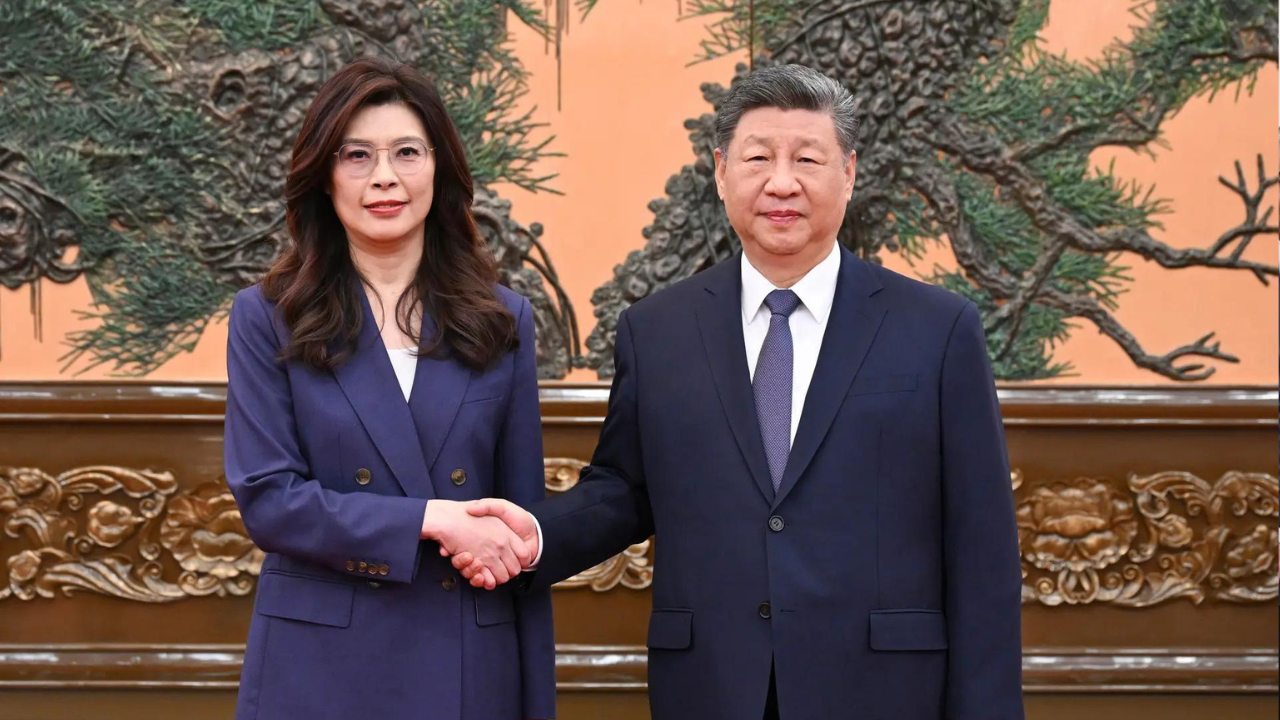
Beijing just dropped a list of "gifts" for Taiwan that sounds more like a strategic play than a sudden change of heart. After years of freezing out the island with trade bans and military drills, China says it's ready to resume direct flights to cities like Xi’an and Urumqi and stop blocking Taiwanese seafood. Honestly, it’s a classic move: bypass the current government in Taipei and talk directly to the opposition.
If you’re wondering why this matters now, it’s because the timing isn't accidental. This announcement follows a high-profile meeting between Chinese President Xi Jinping and Cheng Li-wun, the head of Taiwan’s opposition Kuomintang (KMT) party. By rolling out these 10 new incentives, Beijing is trying to prove that life is better for Taiwan—economically at least—when the KMT is in the room. You might also find this related story interesting: Why Peru Presidential Elections Are a Total Mess This Year.
The carrot after years of the stick
For the last several years, China’s strategy has basically been "economic warfare lite." They banned Taiwanese pineapples, grouper fish, and squid, usually citing "pests" or "safety standards" that miraculously appeared right when political tensions peaked. Now, they're suddenly willing to ease those inspection standards.
The new measures include: As extensively documented in detailed coverage by USA Today, the effects are worth noting.
- Direct flights to mainland hubs including Xi’an and Urumqi.
- Seafood imports are back on the table, specifically aquaculture products that have been languishing in Taiwan.
- Tourism perks for residents of Shanghai and Fujian province to visit Taiwan.
- Media exchange where "healthy" Taiwanese TV dramas and animations can finally be aired on the mainland.
It sounds great on paper for a Taiwanese fisherman or a travel agent. But there’s a massive catch. Beijing specifically noted that these trade eases are built on the "political foundation" of opposing Taiwan independence. It’s not just about trade; it's a loyalty test.
Why the current Taiwan government isn't buying it
Taipei’s Mainland Affairs Council isn't exactly popping champagne. They’ve already labeled these concessions "poisoned pills" dressed as gifts. The reality is that while Beijing is talking to the KMT, it’s still completely ghosting Taiwan’s actual leader, President Lai Ching-te.
China calls Lai a "separatist" and refuses to acknowledge his administration. This creates a weird, dual-track reality. On one hand, you have Chinese fighter jets flying near the island daily. On the other, you have Beijing offering to buy more fish and let more tourists in. It’s a transparent attempt to split public opinion in Taiwan before the 2026 local elections.
Taiwan’s government has been telling businesses for years to diversify and stop relying so heavily on the Chinese market. They know that what Beijing gives today, it can take away tomorrow with a single press release about "bugs" in a fruit shipment.
The logistics of the flight resumption
Don't expect those flights to Xi’an to start tomorrow. There's a major logistical hurdle: Taiwan still has strict rules for mainland visitors. Currently, most Chinese citizens need to hold a resident visa from a third country—like the U.S. or the UK—just to apply for a Taiwanese tourist visa.
Beijing wants the "full resumption" of flights, but that requires both sides to agree on technicalities that haven't been touched in years. Without official government-to-government talks, which Beijing refuses to have with the ruling DPP, these flight plans might stay stuck on the runway for a while.
What this means for the average person
If you’re in the travel or export business in Taiwan, this is a bit of a "wait and see" moment. The KMT is framing this as a huge win for peace and the economy. They want to show that they are the only ones capable of talking to Beijing and lowering the temperature.
But for most people, the skepticism is real. We've seen this cycle before. Beijing uses trade as a dial—turning it up when they want to influence an election and turning it down when they want to punish the leadership.
Don't bank your entire business strategy on this "thaw." If you’re an exporter, keep looking at markets in Southeast Asia or the West. If you’re a traveler, keep your plans flexible. Beijing’s outreach is a tactical shift, not a change in their long-term goal of unification.
Watch for how the Taiwanese government responds in the coming weeks. If they choose to match some of these gestures, we might actually see those flight paths open. If not, this will just be another footnote in the long, complicated history of cross-strait optics.