The era of the "big freeze" is over, but don't expect a group hug. If you've been watching the diplomatic dance between Canberra and Beijing lately, you've seen the handshakes and the high-level visits. In 2025, Prime Minister Anthony Albanese made his way to Beijing, and we saw the highest-level Chinese delegation hit Australian soil since before the pandemic. On the surface, things look fixed. Underneath? It's a different story.
The reality for 2026 isn't about "getting back to normal." It's about a new, uncomfortable kind of stability. Scholars in China are currently describing the relationship as "pragmatic" and "realistic." That's academic speak for: "We need your dirt, and you need our money, so let's try not to yell at each other for five minutes."
The Iron Ore Trap and a Fractured Economy
Australia still ships a staggering amount of iron ore to Chinese ports. In the 2024-25 period, two-way trade hit $309 billion. China takes about 24 percent of everything Australia sells to the world. But the leverage is shifting.
Beijing is currently obsessed with "resource security." They're tired of being beholden to the Big Three miners—BHP, Rio Tinto, and Fortescue. Since late 2025, the China Mineral Resources Group (CMRG), a massive state-backed buying entity, has been flexing its muscles. They've started blocking specific grades of Australian ore, like BHP’s Jimblebar fines, to manipulate prices and prove a point.
It's not just about bullying tactics, either. China is pouring money into the Simandou project in Guinea. By the end of 2026, that project is expected to pump out 20 million tons of high-grade ore. It’s a direct shot at Australia's dominance. Every dollar the iron ore price drops translates to a $500 million hit to the Australian treasury. 2026 is the year Canberra realizes that the "iron bridge" connecting the two nations has some serious structural cracks.
Security Frictions and the American Shadow
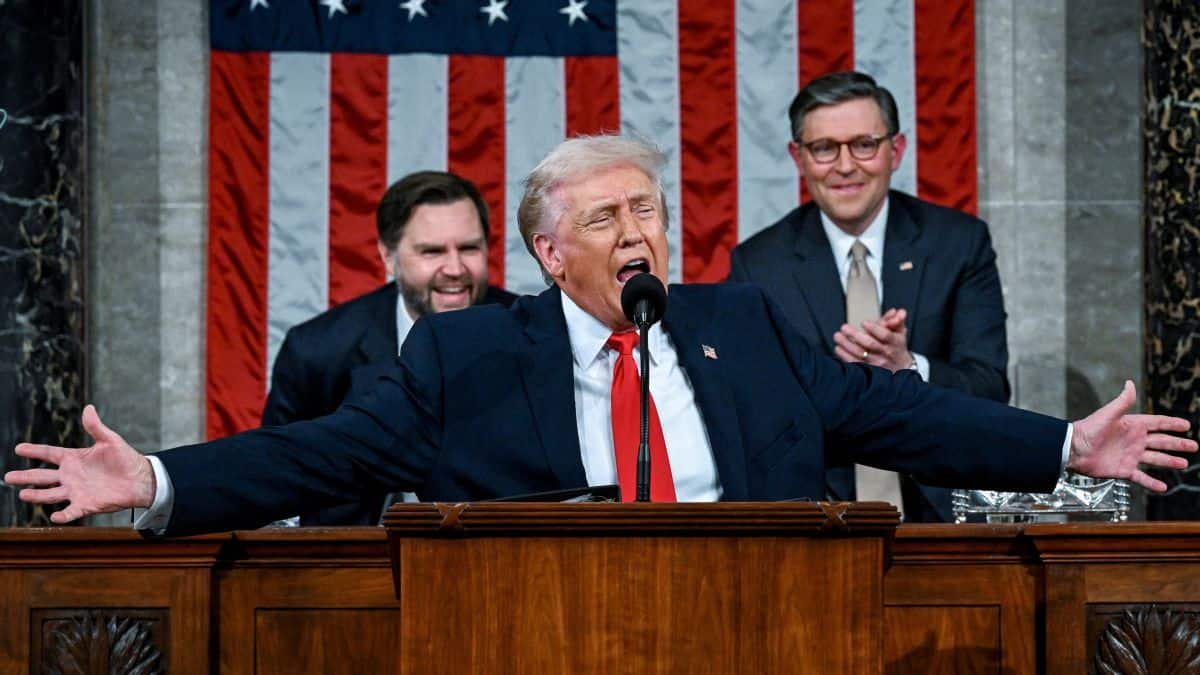
If trade is the glue, security is the solvent. You can't talk about China-Australia relations without talking about the United States. In 2025, the return of Donald Trump to the White House sent shockwaves through the region. While some thought this might push Australia closer to China, the opposite is happening.
The AUKUS alliance remains a massive thorn in Beijing's side. Chinese experts at institutions like Sun Yat-sen University see Australia as a "strategically conflicted" actor. They view Canberra as a sub-contractor for American "containment."
- South China Sea Standoffs: We’re seeing more "unsafe" encounters. In October 2025, a Chinese jet released flares near an Australian plane. These aren't accidents; they're signals.
- The Pacific Influence War: China is signing security pacts with Pacific Island nations. Australia is countering with deals in Papua New Guinea and Tuvalu.
- Cyber Warfare: Allegations of state-sponsored hacking targeting Australian infrastructure haven't stopped just because the diplomats are talking again.
Despite the "stabilization" narrative, 71 percent of Australians still see China as a security threat. Half of the population thinks a hot conflict is a real possibility within three years. You don't fix that kind of public distrust with a few photo ops in the Great Hall of the People.
The University Pivot and Human Capital
One area where the relationship is actually maturing is education. For years, Australian universities treated Chinese students like a "cash cow" for undergraduate business degrees. That's changing in 2026.
The focus has shifted to "hardwood maturity." We're seeing more PhD and Masters students coming over. In late 2025, 76 percent of Chinese enrollments were in higher education, focusing on agritech, green energy, and healthcare.
But even here, there’s a catch. Beijing is pushing "technical self-reliance." They want their students to bring home specific skills that serve Chinese industrial policy. Meanwhile, Australian security agencies are looking at every research partnership with a magnifying glass, terrified of intellectual property theft. It’s a "mature" relationship, sure, but it's one where both sides are constantly checking each other's pockets.
Navigating the 2026 Minefield
If you're an Australian business leader or a policy wonk, the "she'll be right" attitude won't cut it anymore. The "positive trend" Premier Li Qiang talks about is fragile. It depends entirely on whether both sides can keep their cool when the next military flare-up happens in the South China Sea.
The Chinese economy is slowing. Youth unemployment there hit 16.9 percent recently. A desperate Beijing is a volatile Beijing. They’ve extended visa exemptions for Australians and restored direct flights, but these are low-cost concessions. On the big stuff—like the de-dollarization of iron ore trade—they aren't budging.
Stop waiting for the relationship to return to the "Golden Era" of 2014. It's gone. 2026 is about managed competition. It's about cooperating on climate change because we have to, while building better submarines because we're afraid.
What you should do next:
- Diversify: If 100% of your export revenue comes from the mainland, you're a hostage to fortune. Look to Southeast Asia and India now.
- Wargame: Run scenarios for a sudden 20% tariff hike or a total shipping blockade.
- Audit Partnerships: If you're in research, ensure your IP protections are 2026-ready, not 2010-ready.
The track is slippery. Stay alert.