A badge isn't a license to rewrite reality. When federal authorities launched Operation Metro Surge, flooding Minnesota with thousands of officers, they promised law and order. Instead, the streets of Minneapolis saw unprecedented chaos, escalating tensions, and ultimately, gunfire.
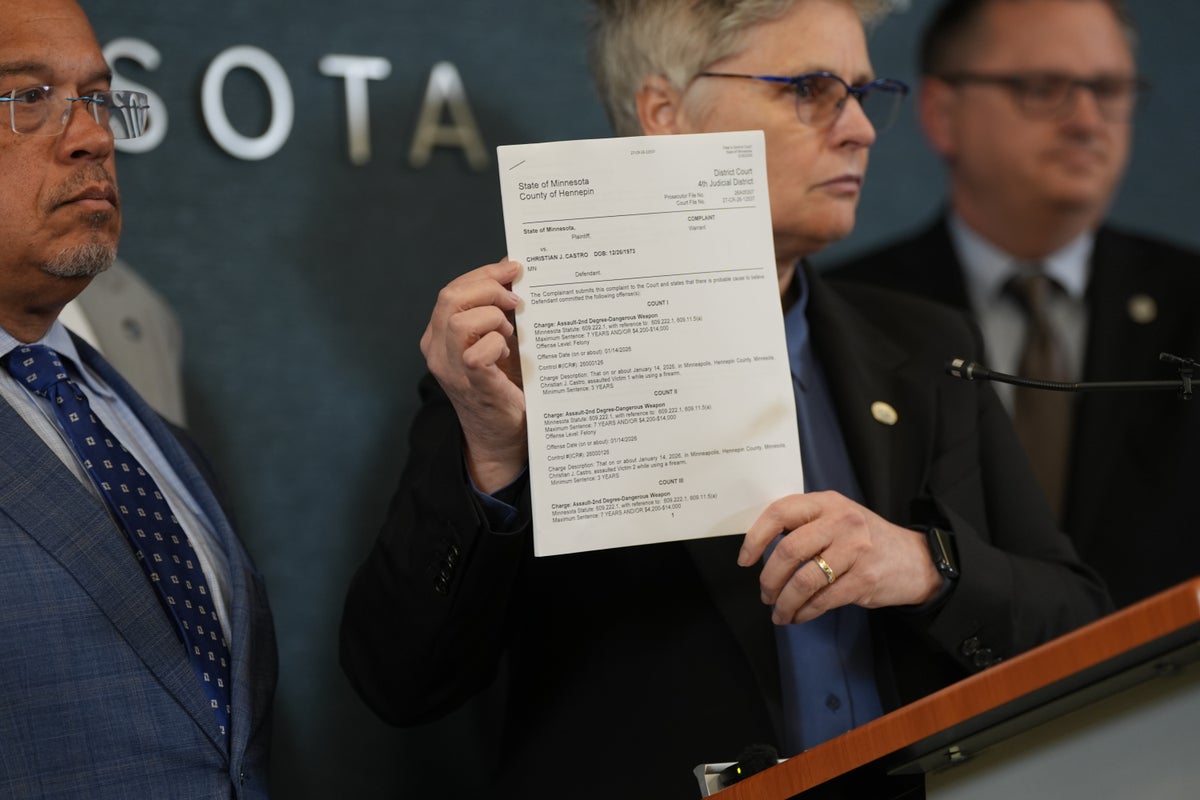
On Friday, that chaos caught up with 52-year-old Christian Castro. The Immigration and Customs Enforcement (ICE) agent was tracked down and arrested in Texas after spending 11 days on the run from Minnesota prosecutors. He faces four counts of second-degree assault and one count of falsely reporting a crime.
The arrest marks a staggering turning point in a high-stakes jurisdictional war between local prosecutors and the federal government. It blows the lid off a deeper culture of impunity that local authorities are finally forcing into the light.
The January 14 Doorstep Shooting
The prosecution's case against Castro centers around an incident on January 14. According to court records, Castro and another officer chased Alfredo Alejandro Aljorna to a duplex in north Minneapolis where he lived. Aljorna's roommate, Julio Cesar Sosa-Celis, was outside.
As the situation escalated, both men retreated inside their home for safety. Castro didn't stop at the threshold. Instead, prosecutors say he fired his weapon directly through the closed front door.
The bullet ripped through the wood and struck Sosa-Celis in the thigh. Inside the duplex, multiple family members, including young children, cowered as gunfire shattered their home. Both victims, who are Venezuelan immigrants, were legally present in the United States.
The Shovel and Broom Narrative That Collapsed on Camera
What happened right after the shooting is where the case turns from a reckless use of force into a coordinated cover-up.
Federal authorities immediately painted the victims as violent instigators. They claimed that Sosa-Celis and Aljorna viciously assaulted an officer with a broom handle and a snow shovel, forcing Castro to fire in self-defense. Based on those official reports, federal charges were slapped on the two immigrants.
Then the video emerged.
A city-owned security camera captured the entire sequence from a distance. The footage shows a completely different reality. A man holding a snow shovel near the street quickly runs back toward the house, tossing the shovel completely out of the way into the yard. Another man sprints up, trips on the sidewalk, recovers, and rushes inside. While a brief, ten-second scuffle occurs near the steps, the video completely undermined the narrative that officers were facing a deadly assault with household tools.
ShotSpotter audio and the surveillance footage proved the men were already inside behind a shut door when Castro opened fire. A federal judge swiftly threw out the charges against the two men, and ICE Director Todd Lyons eventually admitted that two agents lied about what actually happened.
The Legal War Between Minnesota and Washington
Hennepin County Attorney Mary Moriarty didn't mince words after the Texas arrest, calling it a critical step toward accountability. But the road to this arrest was paved with fierce institutional resistance.
"Today's arrest is a critical step forward in our prosecution of Mr. Castro."
— Mary Moriarty, Hennepin County Attorney
When local charges were filed, ICE officials fired back, labeling Moriarty's prosecution "unlawful and nothing more than a political stunt." The Department of Homeland Security (DHS) maintains that local authorities lack the jurisdiction to prosecute federal officers for actions taken while on duty.
Minnesota leaders disagree entirely. The friction has reached a boiling point. The county recently sued the federal government just to gain access to basic evidence, investigative files, and ballistics data from Operation Metro Surge.
To bypass the federal stonewalling, Minnesota's Bureau of Criminal Apprehension (BCA) took matters into their own hands. Investigators tracked Castro's movements to Texas. They coordinated with the DHS Office of the Inspector General—which acts as an independent watchdog separate from ICE—and the Texas Rangers to arrest him on the ground.
A Systemic Pattern of Surge Violence
Castro isn't an isolated case. He's actually the second federal agent charged by Hennepin County prosecutors over conduct during this specific federal crackdown.
Just last month, local prosecutors charged immigration agent Gregory Donnell Morgan Jr. with assault for allegedly pointing his service weapon at terrified passengers inside a car on a Minnesota highway. Morgan turned himself in last week.
The county is also actively investigating the high-profile shooting deaths of U.S. citizens Renee Good and Alex Pretti, both killed by federal officers during the exact same enforcement surge. Those fatalities sparked massive local protests and widespread unrest across the Twin Cities.
Navigating Your Rights During Federal Law Enforcement Actions
The breakdown of protocol during Operation Metro Surge highlights a dangerous reality. When federal agencies flood a city, the lines of accountability get blurred. If you or someone you know encounters immigration or federal law enforcement, knowing immediate, actionable legal steps is vital.
- Document Everything Safely: Video footage is often the only thing that stands between an innocent person and a falsified charge. If it's safe to do so, record interactions or identify nearby city and commercial security cameras.
- Do Not Consent to Searches: If officers are at your doorstep without a warrant signed by a judge, you do not have to open the door. Ask them to slide any paperwork under the door.
- Remain Silent and Ask for a Lawyer: You have the right to remain silent. Plainly state, "I am choosing to remain silent and I want to speak to an attorney." Say nothing else.
- Report Misconduct Quickly: If local rights are violated, bypass the local branch of the agency involved. File formal complaints directly with independent oversight bodies like the DHS Office for Civil Rights and Civil Liberties or local county attorney offices, which have shown they are willing to investigate independently.