The floor of a classroom should hold nothing more dangerous than a dropped crayon or a forgotten lunchbox. In the southern villages of Lebanon, where the hills roll toward the horizon in shades of dusty olive and scorched earth, these buildings once echoed with the rhythmic chanting of multiplication tables. Now, they echo with the metallic clatter of heavy boots and the grim discovery of things that have no business being near a chalkboard.
When Israeli soldiers moved through the doorway of a schoolhouse recently, they didn't find students huddled over exams. They found a silence so heavy it felt physical. The air inside didn't smell like pencil shavings. It smelled of oil, cold steel, and the chemical tang of explosives. Meanwhile, you can find similar developments here: The Sky Above the Atacama.
War has a way of twisting the familiar into something unrecognizable. A desk is no longer a place for a child to dream; it becomes a barricade. A storage closet is no longer for extra paper; it becomes a cache for rocket launchers. This shift—the transformation of a sanctuary into a warehouse for destruction—is the most silent tragedy of the current escalation.
The Geography of Disruption
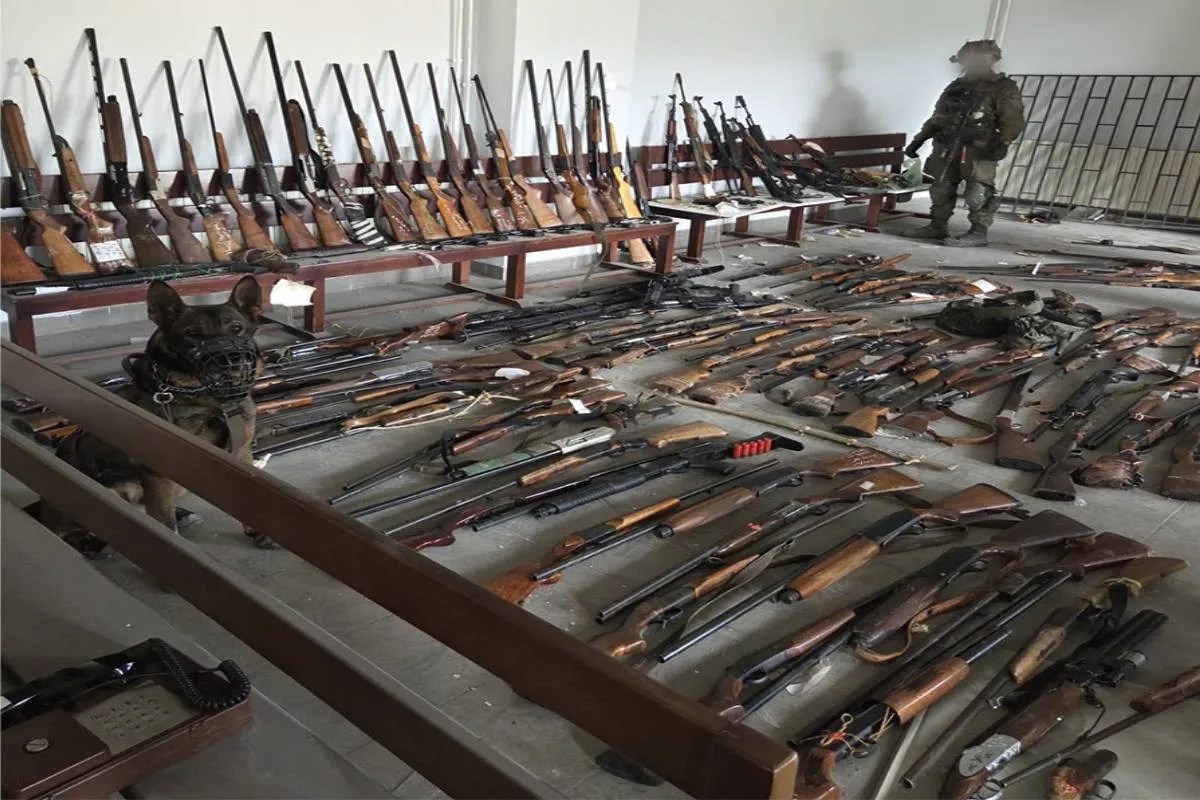
The soldiers moved with a calculated twitchiness. Every corner held a shadow that could be a person or a trap. In the basement, the light from their tactical torches cut through the gloom to reveal the "wealth" of the modern battlefield. Thousands of rounds of ammunition. Specialized grenades. Anti-tank missiles leaning against walls where colorful posters of the alphabet used to hang. To see the complete picture, check out the recent report by TIME.
It is easy to look at a map and see a strategic point. It is harder to look at a photograph of a missile crate sitting on a floor tiled for hopscotch and reconcile the two worlds. The Israeli military described the scene as a massive find, a "nest" of weaponry that posed a direct threat to the communities just across the border. To them, it was a tactical victory, a dismantling of a launchpad.
But for the families who used to walk their children to this gate, the discovery is a different kind of blow. It signifies that the places they considered sacred are now legitimate targets. When a school becomes a fortress, the concept of a "safe zone" evaporates. It leaves a vacuum where trust used to live.
The Weight of the Hardware
Consider the sheer logistics of what was found. We aren't talking about a few stray rifles. This was a stockpile designed for a prolonged, high-intensity conflict. Mortars, explosive vests, and sophisticated communication gear. Moving this amount of hardware into a civilian structure isn't an accidental oversight. It is a deliberate choice to weave the machinery of death into the fabric of daily life.
The soldiers who cleared the building reported an "alert" status that never quite de-escalated. Every crate opened was a gamble. Every door kicked was a question. The destruction left in the wake of the following exchange wasn't just structural. Yes, walls were scorched and windows were shattered by the kinetic energy of the raids, but the deeper damage is the loss of the building's identity.
Can you ever really teach a child to read in a room where a rocket was once stored? The ghosts of the conflict linger in the architecture.
The Invisible Stakes of the Borderlands
The conflict between Israel and Hezbollah isn't just about territory or politics. It is about the psychological ownership of the landscape. When one side uses a school to hide its teeth, and the other side enters that school to pull them out, the civilian population is caught in a pincer movement of trauma.
The "heavy destruction" mentioned in official reports usually refers to concrete and rebar. It rarely accounts for the loss of the future. Every school converted into a combat outpost is a year of education stolen. It is a generation of children who learn that books are secondary to bullets. The facts of the raid are clear: weapons were found, the site was neutralized, and the soldiers moved on.
The story, however, stays behind. It stays in the dust that settles over the empty shells of the rocket launchers and the torn pages of a notebook found under a pile of debris.
The Echo in the Valley
The hills of southern Lebanon are old. They have seen empires rise and fall, and they have absorbed the blood of countless skirmishes. But there is something uniquely jarring about the modernization of this ancient violence. The weapons found in that school were high-tech, lethal, and ready for immediate deployment.
The Israeli forces reported that the cache was intended for a "large-scale infiltration" or a coordinated strike. This isn't just a defensive posture; it is an invitation to chaos. By clearing the school, the military claims they prevented a massacre. By using the school, the militants ensure that the war remains inseparable from the people.
The irony is as thick as the smoke hanging over the border. In the attempt to protect one's own, the very infrastructure of the "other" is gutted. It becomes a cycle where the school is the shield, the school is the target, and eventually, the school is just a ruin.
The Cost of the Cache
The sheer volume of the haul—the "arms depot"—serves as a grim inventory of what modern warfare requires. It requires space. It requires secrecy. It requires the exploitation of the most vulnerable locations.
When the reports filtered out about the "alert" the soldiers felt upon seeing the scale of the weaponry, it wasn't just about the danger of a fire-fight. It was the realization of how deep the roots of this conflict have grown. They aren't just on the surface; they are under the floorboards of the kindergarten.
The military operation ended with the seizure of the equipment and the neutralization of the immediate threat. The "destruction" was, in their view, a necessary byproduct of removing a cancer from the community. Yet, as the smoke clears, the question remains of what is left for the people who don't carry guns.
They are left with a landscape where the most innocent places are the most dangerous. They are left with the knowledge that their children’s desks were once used to steady a barrel.
The soldiers have moved to the next objective. The weapons are being cataloged in a warehouse far away. The school stands empty, a hollowed-out shell of an idea. The chalk dust has finally settled, but it is buried under a layer of soot that no eraser can touch.