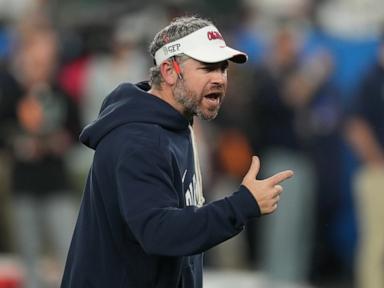
The ritual of casting the preseason AP Top 25 poll into a College Football Playoff bracket serves as a mid-August sedative for football fans starved for action. It transforms the chaotic, fluid nature of college football into a neat, predictable grid. Yet, anyone who has spent enough time covering the sport knows this exercise is fundamentally flawed. It assigns a level of mathematical certainty to what is essentially a collection of opinions, hunches, and historical biases. Mapping out matchups like Ole Miss against Texas A&M or Texas Tech facing Indiana based on these early polls ignores the reality of how these programs actually perform once the humidity breaks and the conference schedules begin to grind them down.
The preseason AP poll operates as a momentum machine. Teams like Georgia or Ohio State start near the top because they occupy the space of historical excellence, effectively hoarding spots that younger, rapidly improving programs must claw through to reach. When media members build a hypothetical bracket around these numbers, they reinforce a status quo that often fails to account for the radical volatility of a twelve-team playoff era. We are witnessing the birth of a system where the bracket itself is a marketing tool rather than a reflection of competitive standing.
The Flaw of Static Seeding
The primary danger of treating preseason rankings as a blueprint for the postseason is the assumption of internal consistency. A team ranked fifteenth today is not the same entity that will walk onto the field in November. Injuries occur, coaching staffs adjust, and the physical toll of a Power Four schedule separates legitimate contenders from preseason darlings who were merely benefiting from a favorable non-conference slate.
Consider the path of a program like Texas Tech. In a theoretical bracket, their seeding implies a level of defensive stability that hasn't been proven under pressure. If they find themselves matched against a team like Indiana in a hypothetical playoff scenario, the entire conversation shifts toward the specific weaknesses of that mid-season moment, not the abstract ranking they held in August. These projections fail because they lock teams into a performance trajectory they have not yet earned.
The bracket is not a fixed asset. It is a living, breathing creature that feeds on upsets and defensive meltdowns. By trying to force the preseason AP Top 25 into a playoff format, analysts are effectively betting on the past to dictate the future. This is how you end up with narratives about "snubs" before a single kickoff has occurred. You are creating a reality that doesn't exist, assigning value to programs that have yet to face the crucible of their own conference play.
Why the Twelve Team Format Changes Everything
The expansion to a twelve-team field was sold to the public as a method to bring parity to the sport. In reality, it has shifted the focus toward a broader range of teams, but it has not eliminated the bias inherent in early-season polls. The committee that ultimately decides the fate of these teams will not be looking at the preseason AP rankings. They will look at strength of schedule, head-to-head results, and the state of a team's roster in late November.
The discrepancy between the bracket enthusiasts and the reality of the committee room is wide. When you see projections pairing Ole Miss and Texas A&M, you are seeing a romanticized version of the sport where geography and prestige dictate the path to the national title. Real life is messier. A late-season loss to a sub-.500 conference opponent destroys a resume far more effectively than a high preseason ranking protects it. The poll is a social contract among media members, not a predictive metric of on-field dominance.
The Illusion of Conference Strength
One of the biggest pitfalls in these early brackets is the over-reliance on conference reputation. Analysts frequently inflate the value of SEC or Big Ten teams simply because those conferences carry the weight of historical dominance. This creates a feedback loop where the preseason rankings justify the bracket, and the bracket justifies the ranking.
When you analyze the potential for a team like Indiana to challenge established programs, you have to move past the logo on the helmet. The modern game is defined by the transfer portal and the speed at which a roster can be completely rebuilt. A team that finished in the bottom half of the standings last year can be a legitimate playoff threat by October if they hit the right targets in the portal. The preseason AP Top 25 is designed to account for tradition, but tradition is a poor predictor of results in an era where rosters are in constant flux.
Look at the schedules. The teams that survive the grind are not always the ones with the most talent on paper, but the ones with the most depth and the healthiest starting quarterbacks. A bracket based on preseason rankings assumes everyone stays healthy. It assumes the coaching staff that looked brilliant in September hasn't been figured out by defensive coordinators in October. It is a house of cards.
Betting on Chaos
There is a certain comfort in the order of a bracket. It gives the season a beginning, middle, and end. It allows fans to talk about "what if" scenarios that fill the dead air of the offseason. But the real story of the season is almost never what we predict. It is found in the games that blow up the bracket by the third week of September.
When you strip away the hype, you are left with the hard work of scouting, recruitment, and player development. These are the factors that decide championships, not the consensus of a few dozen writers who spend their summers looking at last year's records. If you want to know which teams are actually going to make the playoff, watch how they handle the first road game against an unranked opponent. Watch how their secondary holds up when the opposing quarterback starts hitting deep routes.
The obsession with these early-season projections reveals more about the media's need for a narrative than the reality of the sport. We want to know who is going to win before they have played. We want the bracket to be fixed so we can spend the next four months debating the nuances of the seeds. But the brilliance of college football, the reason it draws millions of viewers every Saturday, is the inherent refusal of the players and coaches to follow the script.
The season is coming. The rankings will be exposed. The bracket will break. Stop waiting for the projection to become reality and pay attention to what happens when the ball is actually in the air. That is the only poll that matters.