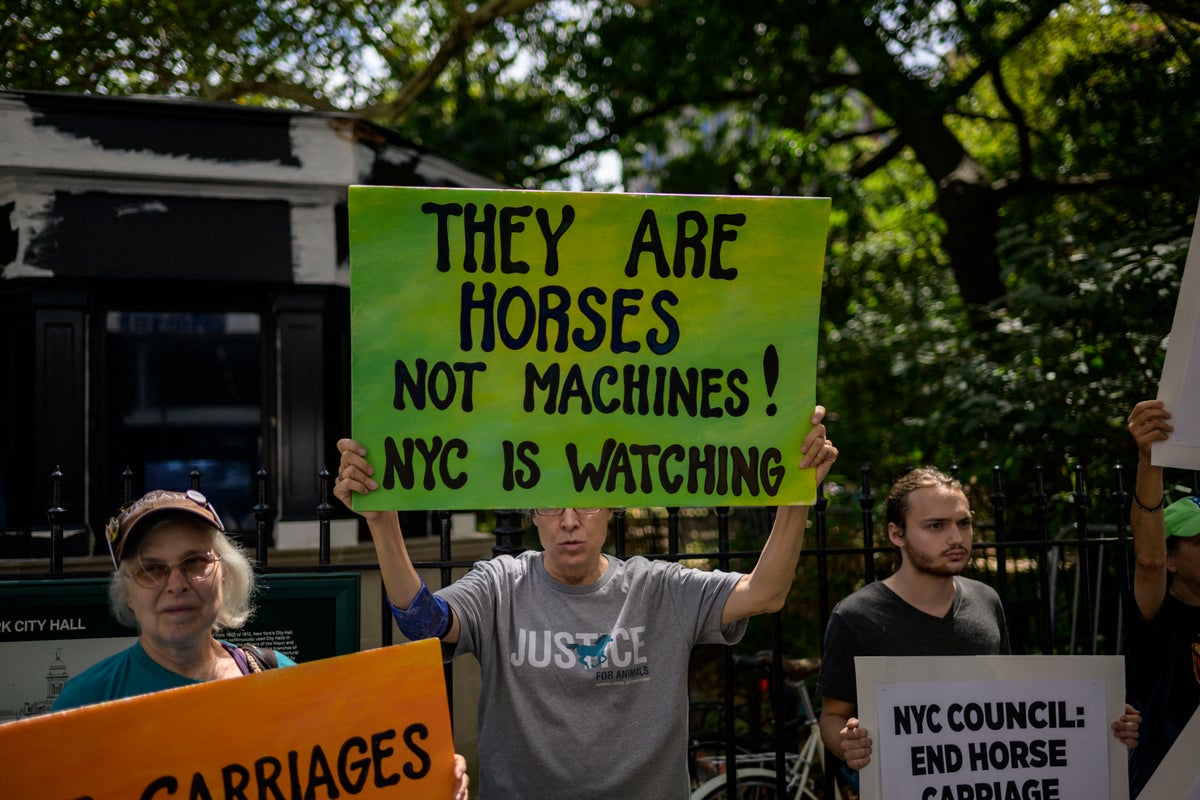
A standard necropsy report recently confirmed that a carriage horse collapsed and died in Central Park after ingesting a toxic plant. While the immediate medical cause of death points to accidental poisoning, this diagnosis merely scratches the surface of a deeply flawed urban industry. The sudden death has reignited a fierce, decades-old battle between animal rights advocates demanding an outright ban and carriage operators fighting to protect their livelihoods. To view this incident as an isolated case of a horse eating the wrong weed is to miss the entire systemic failure operating in plain sight on New York City streets.
The reality of operating a equine-reliant tourism business in a modern metropolis involves a collision of concrete, traffic fumes, extreme weather, and archaic oversight. When a horse dies, the official cause of death is often treated as the final word. It shouldn't be.
The Illusion of the Isolated Incident
Every time a carriage horse collapses in Manhattan, a predictable public relations script unfolds. Industry representatives point to freak accidents, pre-existing conditions, or, in this latest instance, the unpredictable chewing habits of a large herbivore. Animal welfare organizations counter with immediate calls for legislative bans, utilizing viral video footage to maximize public outrage.
This polarized gridlock obscures the operational environment that makes these incidents inevitable. Carriage horses do not pasture in Central Park. They live in multi-story stables in Hell's Kitchen and travel along some of the most congested asphalt corridors in the world to reach their workplace.
The toxic plant narrative offers a convenient scapegoat. It shifts the blame from human oversight to natural happenstance. Horses are notoriously selective grazers when given access to proper pasture; they rarely consume lethal quantities of toxic weeds unless they are undernourished, bored, or foraging out of desperation in poorly maintained urban green spaces.
The Urban Foraging Risk
In a controlled environment, a horse has ready access to clean timothy hay and clean water. In Central Park, horses are frequently hitched for hours, standing on asphalt, exposed to the public.
- Limited Movement: Standing pinned to a carriage restricts natural behaviors.
- Opportunistic Eating: A horse may nibble on low-hanging branches, perimeter hedges, or weeds growing through cracks in the stone walls out of sheer stress or boredom.
- Public Interaction: Well-meaning tourists frequently feed the animals unauthorized treats, discarding debris near the staging areas.
To say the horse simply ate a bad plant ignores the fact that the animal was placed in a position where eating toxic urban flora was its only variance in a day spent on pavement.
The Economic Engine of a Nineteenth Century Relic
To understand why this industry persists despite decades of protests, international scrutiny, and shifting public sentiment, one must follow the money. This is not just a quaint tradition. It is a highly lucrative, politically connected trade.
The carriage industry operates as a closed shop, protected by powerful labor unions and a romanticized image that NYC Tourism entities aggressively market. A single ride can cost upwards of $150 for a brief loop through the park. With hundreds of thousands of tourists visiting annually, the cumulative revenue generated by these stables runs into tens of millions of dollars.
+--------------------------+-------------------------------+
| Operational Factor       | Economic Reality              |
+--------------------------+-------------------------------+
| Average Ride Cost        | $110 - $160 per 20-30 minutes |
| Regulatory Oversight     | Department of Consumer Affairs|
| Stable Location Value    | Prime Manhattan Real Estate   |
+--------------------------+-------------------------------+
The real estate footprint alone creates immense pressure. The stables housing these horses sit on land that developers have eyed for decades. This creates a defensive siege mentality among owners, who view any admission of operational flaw—even an accidental poisoning—as a existential threat that could lead to the revocation of their medallions. Consequently, transparency is the first casualty whenever an animal's health is compromised.
Regulatory Failure Under the Bright Lights
The Department of Health and the Department of Consumer and Worker Protection share the responsibility of monitoring the welfare of New York’s carriage horses. This dual-agency oversight creates a bureaucratic grey zone where meaningful enforcement frequently falls through the cracks.
Inspectors are tasked with checking stable conditions, verifying veterinary records, and ensuring that horses are not worked in extreme temperatures. However, the rules governing when a horse must be pulled from service are notoriously vague and difficult to enforce in real-time on a crowded street corner.
Temperature Loopholes
Current regulations dictate that horses cannot work when the temperature exceeds 90 degrees Fahrenheit or drops below 19 degrees.
What the official weather station reports at Central Park is often vastly different from the actual heat index on the black asphalt of Central Park South. The radiating heat from vehicles and pavement can easily push the ground-level temperature well past 100 degrees on a mid-summer afternoon.
A horse operating under these conditions experiences rapid dehydration and systemic stress. A stressed, dehydrated horse is far more susceptible to the effects of mild toxins that a healthy, unstressed animal might otherwise tolerate or process through its liver without lethal consequences. The necropsy may list the plant toxin as the killer, but the underlying physiological vulnerability caused by the working conditions is the true accomplice.
The Veterinary Blind Spots
Determining the exact cause of death in a horse that collapses in an urban environment is an intricate science, often compromised by politics. A standard necropsy looks for specific biomarkers, tissue damage, and plant matter within the digestive tract.
When a toxic compound is found, the investigation usually stops there. It is a neat, legally binding conclusion that absolves the handlers of direct cruelty charges.
What these reports rarely analyze is the chronic cortisol levels of the animal, which indicate long-term stress. They do not fully account for the impact of inhaling particulate matter from bus diesel exhaust for eight hours a day. The respiratory health of these horses is systematically compromised by their environment, affecting their overall metabolic resilience.
   [Chronic Urban Stress]
             │
             ▼
   [Compromised Immune System] ──► [Vulnerability to Mild Toxins] ──► [Sudden Collapse]
             │
             ▼
   [Reduced Metabolic Function]
Veterinary experts who do not depend on the carriage industry for their livelihood routinely point out that horses are herd animals requiring socialization, open space, and soft ground to maintain joint and psychological health. The forced isolation of a stable stall and a concrete work track creates a baseline of poor health that makes any secondary ailment—like the ingestion of a toxic weed—far more likely to be fatal.
The Failed Promise of the Electric Carriage
Every time a tragedy like this occurs, politicians dust off the same proposed solution: replacing the live horses with vintage-style electric brass-era replicas. This alternative is presented as a win-win that preserves the tourism revenue and the drivers' jobs while removing animals from the equation.
Yet, the legislation never passes. The transition fails because it underestimates the core appeal of the industry. Tourists do not pay $150 to sit in a fake old car; they pay for the proximity to a living animal, an increasingly rare novelty in a digitized world.
The carriage drivers' union has successfully argued that electric vehicles would destroy the historic character of the park and bankrupt the drivers who have invested hundreds of thousands of dollars into their horse medallions. This argument carries weight with city council members wary of alienating organized labor. The result is a perpetual stalemate where the animals remain trapped between economic inertia and political cowardice.
Beyond the Toxins
The death of a horse in the heart of the America's largest city should not be treated as an unfortunate footnote in municipal maintenance. It is a stark reminder that some historical practices cannot be humanely integrated into a modern infrastructure.
Blaming a stray plant in Central Park for the death of a working animal is an exercise in misdirection. The plant may have provided the lethal dose, but the true cause of death is an urban environment that transforms a majestic prey animal into a commercial prop. Until the city addresses the fundamental incompatibility of equine biology and Manhattan traffic, the next collapse is merely a matter of time. The industry will continue to hide behind veterinary technicalities while the fundamental realities of abuse and exploitation remain on full display.