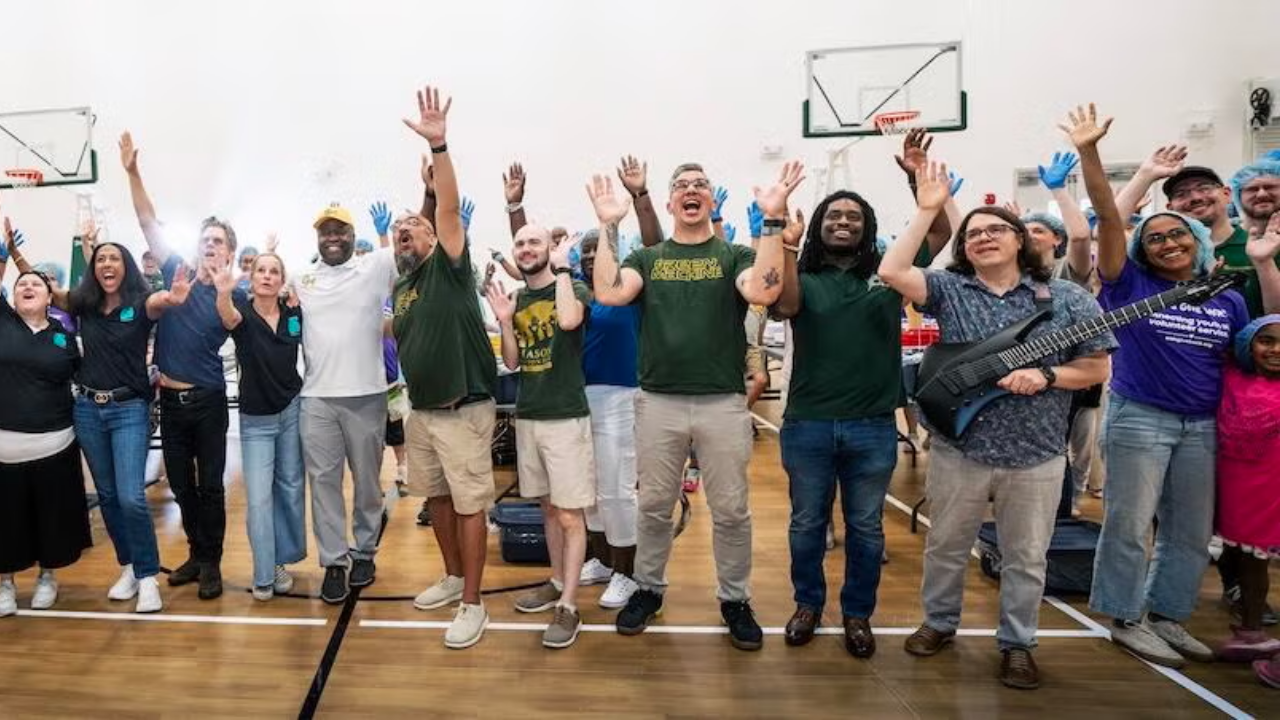
One hundred volunteers. Thirty-five thousand meals. Four hundred mental health kits.
Put a beloved Hollywood actor like Kevin Bacon in front of a folding table, add a film crew, and the entertainment press will print the press release word for word. It reads like an unassailable triumph of human kindness. Who could possibly argue with feeding hungry people and distributing mental health resources? Read more on a similar topic: this related article.
Anyone who has actually run a supply chain, managed a nonprofit budget, or studied aid economics.
The mainstream coverage of celebrity-led packing events—including the recent mobilization by Kevin Bacon's SixDegrees.org—treats volunteer labor as an automatic net positive. That is the lazy consensus. In reality, high-profile packing events are frequently the most expensive, least efficient way to deliver basic goods to people in crisis. They optimize for donor dopamine and media impressions, not for the person receiving the box. More reporting by The New York Times explores comparable views on the subject.
When you peel back the feel-good PR, you find an uncomfortable truth about modern philanthropy. Most of these events exist to make the people in the room feel virtuous, while quietly burning capital that could have fed three times as many people.
The Math Nobody Prints in the Press Release
Let’s look at the operational mechanics of a standard corporate or celebrity meal-packing event.
You rent a venue, or you clear out a massive studio space. You ship in bulk pallets of dry goods—usually rice, soy protein, dehydrated vegetables, and vitamin powder. You bring in hairnets, heat sealers, scales, cardboard boxes, and tables. Then, you recruit 100 untrained volunteers, many of whom are high-net-worth donors, influencers, or corporate sponsors who require catering, security, photography, and event management.
I have sat in boardrooms where foundations approved six-figure budgets for a single afternoon of "community engagement" just to pack goods that an automated industrial facility in the Midwest could have bagged in forty-five minutes for a fraction of the cost.
Consider the unit economics. A commercial co-packer running automated vertical form-fill-seal machines processes thousands of pouches per hour with near-zero contamination risk and pennies per unit in labor overhead. When you replace industrial automation with 100 amateur volunteers working a three-hour shift, your cost per meal skyrockets. Even when the labor is "free," the event production, freight, insurance, and supervision costs are not.
The press celebrates the headline number: 35,000 meals. They never ask what those 35,000 meals cost to assemble, or how many meals could have been purchased directly from local regional food banks with the event's production budget.
The Illusion of the "Mental Health Kit"
The second half of the headline—400 mental health kits—exposes an even deeper flaw in crisis philanthropy.
What actually goes into a "mental health kit" packed by volunteers on an assembly line? Usually, it is a drawstring bag containing a stress ball, a printed list of crisis hotline numbers, a journal, some tea bags, and maybe a sleep mask.
Calling a bag of trinkets a mental health intervention borders on offensive. People experiencing acute psychological distress, housing instability, or trauma do not need a scented candle and a laminated card with an 800 number they could have found on Google. They need clinical hours. They need licensed social workers, medication access, psychiatric beds, and stable housing.
Distributing 400 wellness goodie bags generates fantastic B-roll for social media. It allows sponsors to claim they are "tackling the mental health crisis." Meanwhile, the community clinics down the street are turning patients away because they cannot afford to pay a licensed therapist $85,000 a year.
Why Celebrities Love the Assembly Line
To understand why this model persists despite its inefficiency, you have to understand what a celebrity foundation actually sells.
Kevin Bacon founded SixDegrees.org on a brilliant conceptual hook: everyone is connected, and small actions ripple outward. Unlike traditional grant-making foundations that quietly wire money to vetted organizations, personality-driven charities rely on visibility. If there is no photo opportunity, there is no earned media. If there is no earned media, the donor pipeline dries up.
This creates a structural trap. You cannot take a compelling photograph of a wire transfer. You cannot get People magazine to cover an ACH payment to a regional food bank's wholesale purchasing account.
So charities invent physical theater. They create an assembly line where cameras can capture famous faces wearing branded t-shirts, smiling over bins of dry rice. The physical act of packing a box serves as a proxy for impact.
The Donor Empathy Trap
Psychologists and behavioral economists—most notably Paul Slovic and the researchers behind Effective Altruism—have documented this phenomenon for decades. Humans are terrible at processing scale, and we are easily seduced by tangible, proximate actions.
We feel better handing a sandwich to one person than funding a supply-chain software upgrade that prevents 10,000 pounds of produce from rotting in a warehouse. The software upgrade saves thousands more lives, yet it feels cold and bureaucratic. The sandwich feels human.
Celebrity packing events weaponize this cognitive bias. They give wealthy donors and corporate sponsors a tactile, two-hour experience where they can touch the food, high-five a movie star, and leave believing they solved hunger for the week.
The Hidden Damage of Top-Down Aid
When outside organizations pack pre-selected boxes of food and kits, they violate the foundational rule of modern humanitarian aid: cash is almost always superior to in-kind goods.
Organizations like GiveDirectly and the Center for Global Development have spent years proving this through randomized controlled trials. When you give people—or local community organizations—unrestricted cash instead of pre-packaged boxes, three things happen immediately:
- Zero Waste: You do not ship rice to a community that needs fresh produce, infant formula, or culturally appropriate staples.
- Local Economic Stimulus: Buying food through local grocers and regional agricultural networks keeps money circulating inside the struggling neighborhood rather than enriching national packaging vendors.
- Dignity and Autonomy: A family struggling to make ends meet knows whether they need diabetes-friendly groceries, diapers, or bus fare to get to a job interview. A celebrity packing team in Los Angeles or New York does not.
Imagine a scenario where a neighborhood restaurant loses its roof in a storm. The community needs lumber, drywall, and cash to pay local carpenters. Instead, a celebrity coalition shows up with 100 volunteers and spends $50,000 hand-painting inspirational rocks to place around the rubble. The volunteers leave feeling inspired. The restaurant still has no roof.
That is what happens when aid is designed around the emotional needs of the giver rather than the operational needs of the receiver.
Answering the Questions Nobody Wants to Ask
Whenever someone critiques a celebrity charity initiative, the defenders immediately pull out a predictable set of talking points. Let’s dismantle them one by one.
"Isn't doing something better than doing nothing?"
No. Not when "doing something" actively diverts money, attention, and logistical bandwidth away from interventions that actually work.
In economics, this is called opportunity cost. Every dollar spent renting a convention hall, printing event banners, and shipping bulk dry goods across state lines is a dollar stolen from direct food procurement. Furthermore, local food pantries often bear the hidden burden of these events. They have to dedicate paid staff time to unloading, sorting, storing, and distributing thousands of awkwardly packaged kits that may not match their inventory systems or client needs.
"Doesn't celebrity involvement raise awareness and bring in new money?"
Sometimes, yes—and this is the one legitimate defense of the model. If Kevin Bacon’s involvement brings $500,000 in new corporate sponsorships that would otherwise have gone toward Super Bowl ads or executive bonuses, the net capital pool grows.
However, raising new money does not excuse spending it poorly. A celebrity can easily lend their name, host a high-ticket fundraising gala, shoot a viral campaign video, and then hand 100% of the net proceeds directly to local food banks and clinical mental health providers without ever setting up a single folding table. You can capture the marketing power of fame without building a Rube Goldberg machine of amateur labor.
"What about the value of getting volunteers involved in their communities?"
Volunteerism is valuable when the labor is actually needed. Food banks desperately need volunteers to sort donated produce, drive delivery vans for homebound seniors, and staff intake desks. Soup kitchens need line cooks and dishwashers. Crisis hotlines need trained listeners willing to take the 2:00 AM shift on a Tuesday.
Notice what all those roles have in common: they are unglamorous, recurring, and hard to photograph. Nobody invites the entertainment press to watch a volunteer scrub commercial baking sheets for four hours. Yet that dishwashing shift creates ten times more operational value for a shelter than standing in a celebrity assembly line stuffing stress balls into drawstring bags.
The Uncomfortable Downside of Pure Efficiency
To be completely honest, stripping the theater out of philanthropy comes with a massive risk: people might stop giving.
If every nonprofit operated like a cold, hyper-efficient logistics firm, charitable giving would plummet. Humans are emotional creatures. We give because we want to belong to a tribe, signal our values, and feel a visceral connection to a cause. If you tell corporate sponsors they cannot bring their employees to a fun packing party, and instead ask them to quietly wire money to cover a shelter's municipal water bill, half of those sponsors will walk away.
The tragedy of modern philanthropy is that nonprofits are forced to pander to donor vanity just to keep the lights on. They have to build elaborate, inefficient circus acts—galas, fun runs, packing parties—because raw, unglamorous competence does not sell tickets.
How to Actually Help Without the Circus
If you run a company, manage a foundation, or simply want to put your own time and money where it counts, stop falling for assembly-line philanthropy. Here is how you deploy resources like an insider instead of a tourist:
- Fund the Boring Overhead: When you donate to a food bank or mental health clinic, explicitly restrict your gift to general operating expenses. Let them pay their warehouse managers, fix their refrigerated trucks, and cover their electric bills. That infrastructure is what moves millions of meals a year.
- Buy Wholesale, Not Retail: Never buy canned goods at a grocery store for a food drive. A regional food bank can purchase food at roughly 10 to 20 cents per pound through agricultural networks and wholesale distributors. Your $50 buys ten cans at the supermarket; that same $50 buys 250 pounds of food through a food bank's supply chain.
- Volunteer Where the Cameras Aren't: Call your local shelter or food pantry and ask what shift nobody wants to work. Show up on a rainy Wednesday morning, lift heavy boxes without taking a selfie, and do it again next month.
- Demand Outcome Metrics, Not Output Metrics: Stop celebrating outputs (boxes packed, kits assembled, volunteers mobilized). Start demanding outcomes (caloric deficits reduced, clinical therapy sessions funded, patients housed).
Celebrities are not going to stop hosting packing events anytime soon. The PR machine is too lucrative, and the headlines are too easy to write. Thirty-five thousand meals sounds heroic on a morning talk show, and four hundred mental health kits looks great in an Instagram carousel.
Just do not confuse good public relations with good logistics. The next time you see a room full of famous faces wearing hairnets and smiling over piles of bagged rice, look past the cameras and ask the only question that matters in aid work: how many more people could we have fed if we had just left the cameras at home and wired the cash?