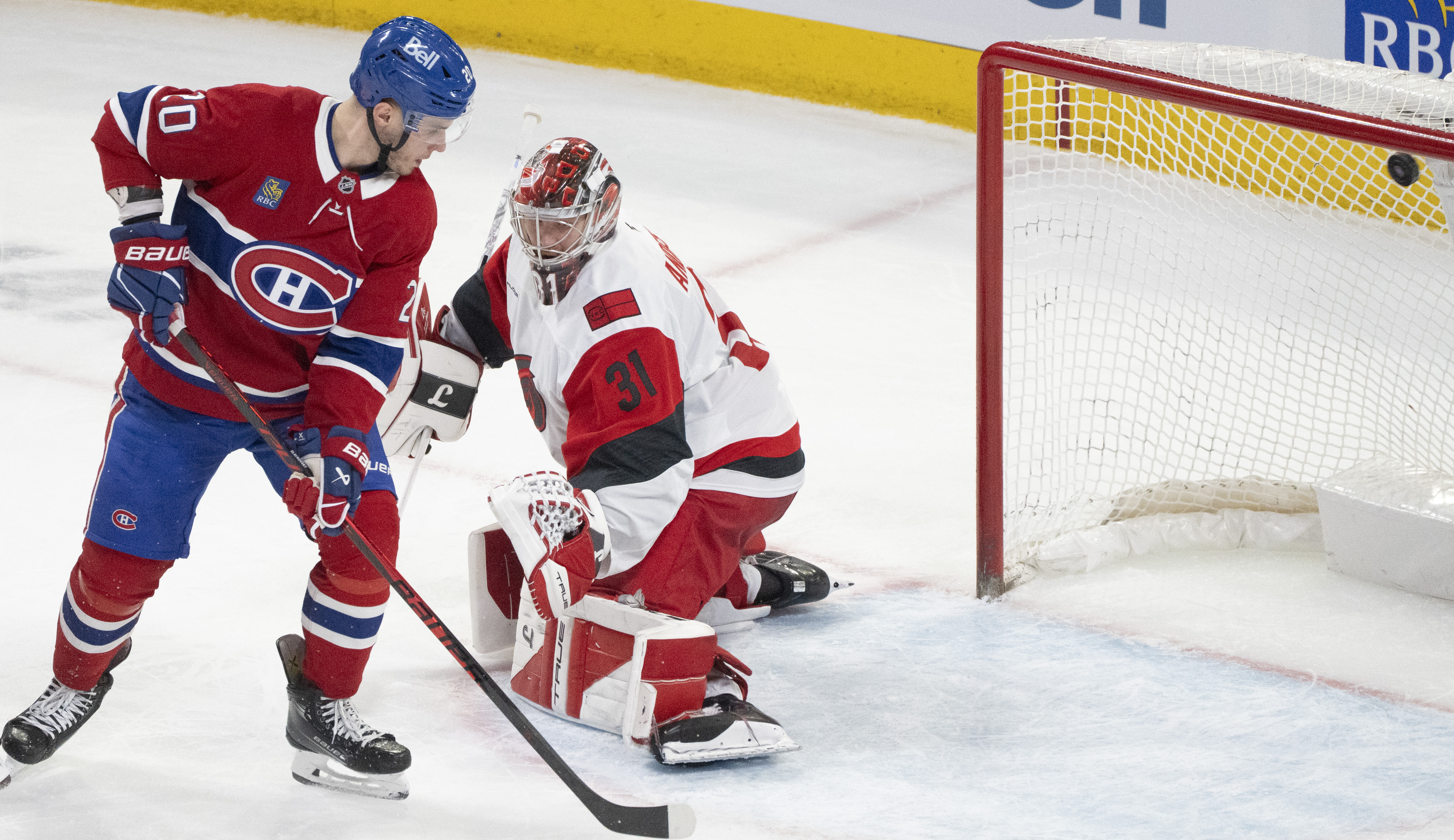
The scoreboard at the Bell Centre read 5-2. The fans went home happy. The local media spent the morning praising the "resilience" and "grit" of a rebuilding Montreal Canadiens roster that managed to take down a heavyweight Carolina Hurricanes squad.
They are all wrong.
If you’re a Canadiens fan celebrating this win, you aren’t paying attention to how modern dynasties are actually built. This wasn’t a "statement win." It was a classic example of a basement-dwelling team winning the wrong game at the absolute worst time. While the "Call of the Wilde" crowd swoons over a few highlight-reel goals, anyone with an analytical lens sees a team sabotaging its own long-term health for a meaningless Tuesday night dopamine hit.
The Myth of the Culture Win
The most tired trope in hockey media is that young teams "need to learn how to win" by beating contenders. This is a fundamental misunderstanding of the NHL's current economic and competitive structure. Winning a random game in March or April against a Carolina team that is essentially playing on cruise control before the playoffs does not build "winning culture."
It builds mediocrity.
In the salary cap era, the only way to escape the "mushy middle" is through elite, game-breaking talent. You don't find that talent at pick 11 or 15. You find it in the top three. By grinding out a victory against a superior Hurricanes team, the Canadiens did nothing but hurt their lottery odds. They traded a 5% better chance at a generational superstar for a headline in a Wednesday morning newspaper that nobody will remember by Friday.
I have watched franchises languish in the NHL’s basement for a decade because they refused to commit to the teardown. They kept "playing the right way" and "showing heart" until they played themselves right out of the elite talent pool.
Carolina Didn't Lose—They Just Didn't Care
The narrative suggests Montreal "hustled" their way to a victory. Let's look at the reality of the Hurricanes' situation. Rod Brind'Amour’s team is a machine designed for the postseason. Their underlying metrics—Corsi, Fenwick, and Expected Goals For ($xGF$)—consistently rank them at the top of the league.
When a team like Carolina loses to a team like Montreal, it isn't because the underdog found a "blueprint" to beat them. It’s because the favorite had an off-night in a long 82-game grind. To suggest Montreal has "closed the gap" based on 60 minutes of high-variance hockey is statistically illiterate.
In a seven-game series, the Hurricanes would dismantle this Montreal roster in five games, maximum. This win was an anomaly, a statistical blip that the "optimists" are trying to frame as a turning point. It isn't.
The Goaltending Trap
Samuel Montembeault played out of his mind. Again.
While the crowd chants his name, the front office should be sweating. Reliant goaltending is the ultimate mask for a flawed defensive system. When your goalie stops 38 of 40 shots, it hides the fact that your defenders are consistently losing puck battles and failing to clear the zone.
If Montreal wants to be a serious contender in 2027 or 2028, they need to know if their defensive structure actually works. They can't know that when a goalie is bailng them out of high-danger scoring chances. Every time Montreal wins a game they were statistically supposed to lose, they lose a day of honest evaluation.
Why the "Young Core" Narrative is Flawed
We hear it every broadcast: Nick Suzuki and Cole Caufield are the future. They are excellent players, but look at the rosters of the last five Stanley Cup champions.
- Vegas: Eichel, Stone, Pietrangelo.
- Colorado: MacKinnon, Makar, Rantanen.
- Tampa Bay: Kucherov, Point, Hedman, Vasilevskiy.
The Canadiens have "very good" pieces. They do not have "franchise-altering" pieces. By winning these "character" games, they are ensuring they never get the chance to draft a Cale Makar or a Nathan MacKinnon. Suzuki is a phenomenal second-line center on a championship team; forcing him to be the "The Guy" because you’re too proud to tank is a disservice to his career and the fans' patience.
The Cost of the "Upset"
Let’s talk about the draft lottery. The difference between picking 4th and picking 9th is astronomical in terms of "Expected Value" ($EV$) of the player's career.
Imagine a scenario where Montreal finishes two points higher in the standings because of this "roar back" win against Carolina. That move from 5th to 7th in the lottery odds could be the difference between drafting a perennial All-Star and a reliable third-pairing defenseman.
Is a 5-2 win in March worth that? Absolutely not.
Stop Asking if They Can Compete
People keep asking, "When will the Canadiens be ready to compete with the big dogs?"
They’re asking the wrong question. The real question is: "When will the Canadiens stop being satisfied with moral victories?"
Brutal honesty: This roster, as currently constructed, is a bubble team at best for the next three years. To break that cycle, you need to stop celebrating the wins that actually set you back. You need to embrace the uncomfortable truth that losing now is the only path to winning later.
The Hurricanes aren't crying about this loss. They’re looking at their playoff seeding. Montreal, meanwhile, is patting itself on the back for a victory that effectively lowered the ceiling of its own rebuild.
If you want to build a winner, you don't celebrate "grit" in a lost season. You look at the 5-2 scoreline and realize you just traded a piece of the future for a meaningless pat on the back.
Burn the tape. Stop celebrating. Start losing.



:no_upscale())