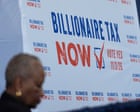
The lazy consensus on California’s proposed billionaire tax is a masterpiece of economic fiction.
Turn on the news or read any standard analysis, and you are fed the same predictable script. Proponents paint a picture of a progressive utopia where taxing the unrealized net worth of ultra-high-net-worth individuals closes the budget deficit, funds public schools, and fixes infrastructure. Critics run the standard playbook, warning of an immediate "millionaire exodus" to Texas or Florida.
Both sides are asking the wrong question.
The mainstream debate treats wealth as a giant, static swimming pool of cash sitting in a bank vault in San Francisco, waiting to be skimmed. It assumes that wealth taxation is a simple logistical challenge of collection.
Having spent two decades restructuring corporate assets and watching how capital moves under regulatory pressure, I can tell you the reality is far more volatile. The proposed tax—which aims to levy an annual fee on net worth exceeding specific thresholds, including unrealized capital gains—is not just economically flawed. It is mathematically impossible to execute without destroying the exact asset bases it intends to skim.
The competitor articles want to discuss the fairness of the tax. Let us discuss the physics of the money.
The Liquidity Myth: Taxing Ghosts
The fundamental flaw of any wealth tax rests on a misunderstanding of what a billionaire's wealth actually is. It is not cash. It is equity.
When a state proposes a 1% or 1.5% annual tax on a net worth of $1 billion, it is proposing a tax on paper value. Imagine an entrepreneur who owns 30% of a publicly traded tech company. The stock surges on speculation, bumping their paper net worth to $2 billion. Under the proposed framework, they owe California $20 million in cash.
Where does that cash come from?
To pay a multi-million-dollar tax bill on unrealized gains, founders must sell blocks of their own stock annually. This triggers an immediate feedback loop:
- Forced Selling: Annual, non-market-driven liquidations signal weakness to the public markets, depressing the stock price.
- Taxing a Downward Spiral: The state forces the sale of the asset, lowering the asset's value, which reduces the tax revenue collected the following year.
- Loss of Control: Founders are systematically stripped of voting control over their own enterprises, shifting governance to institutional Wall Street firms that care nothing for California's local economy.
For private companies and pre-revenue startups, the problem shifts from problematic to catastrophic. How do you value a private biotech company with zero revenue but a $500 million valuation based on a recent Series B funding round? The valuation is a guess made by venture capitalists. Yet, the state expects the founder to pay cash taxes on that guess.
To fund that tax bill, the private founder must take a cash distribution from the company—money directly diverted from research and development, payroll, and expansion—or sell shares to secondary buyers at a massive discount. The tax starves growing companies of the exact liquidity required to scale.
The Valuation Nightmare: IRS Failures Magnified
Proponents look at the proposal and ask: "How hard can it be to value these assets?"
The answer is that it routinely paralyzes the federal government, and California lacks the infrastructure to handle it. The Internal Revenue Service (IRS) has fought valuation wars with wealthy estates for decades. When a billionaire passes away, establishing the value of their private businesses, real estate portfolios, intellectual property, and fine art collections takes years of litigation.
Now imagine California attempting to perform this exact auditing miracle every twelve months for thousands of residents.
The administrative state required to enforce a wealth tax would consume an absurd percentage of the revenue generated. You are talking about a permanent army of specialized forensic accountants, real estate appraisers, and corporate valuation experts employed by the Franchise Tax Board (FTB). Every single year, the state and the taxpayer will enter a multi-year legal battle over what a specific piece of commercial real estate or a proprietary patent is worth on December 31st.
By the time the valuation is settled in court, the market will have shifted, rendering the data obsolete. The system will clog its own courts, incentivize aggressive accounting maneuvers, and yield a fraction of the projected revenue.
The Hidden Casualty: The Death of the Venture Ecosystem
The true risk to California is not that twenty high-profile billionaires pack up their private jets and move to Austin. That makes for good headlines, but it misses the macro shift.
The real danger is the complete destruction of the early-stage venture ecosystem.
Silicon Valley operates on an unwritten contract: talent takes massive risks, works for below-market cash salaries in exchange for equity, and hopes for a massive liquidity event down the road. If you introduce an annual tax on the paper value of that equity before it ever converts to cash, you break the machine.
Imagine an engineer who joins an early-stage artificial intelligence startup. The company receives a high paper valuation during a funding boom, making the engineer's stock options worth $10 million on paper. The engineer cannot sell these shares; they are locked up, and there is no public market. Under a strict wealth tax model that captures illiquid equity, that engineer faces a massive cash tax bill on money they cannot spend.
The predictable outcome? Top-tier engineering talent and venture funds will stop forming companies within California borders. You do not just lose the current crop of billionaires; you prevent the next generation of industry-defining companies from ever being born in the state. Capital is hyper-mobile. Innovation is even more mobile.
The Exit Tax Injunction Illusion
To counter the threat of capital flight, policymakers have floated the concept of a long-tail exit tax—a mechanism that continues to tax former residents on their wealth for years after they leave the state.
This is where the political rhetoric completely detaches from constitutional reality.
The United States Constitution contains explicit protections regarding interstate commerce and the right to travel. A state attempting to project its taxing authority over a citizen who has legally severed residency, bought a home in another state, and registered to vote elsewhere faces an immediate, insurmountable hurdle under the Due Process Clause and the Commerce Clause.
The moment California attempts to collect an annual wealth tax from an individual living in Nevada, the legal challenges will stall the program. The state will be tying up its budget projections in speculative revenue that federal courts are highly likely to strike down as an extraterritorial overreach. Relying on an exit tax to balance a budget is an exercise in fiscal irresponsibility.
The Volatility Machine: Budgeting on a Rollercoaster
California already suffers from one of the most volatile tax bases in the developed world. Because the state relies heavily on progressive income taxes and capital gains realized during market peaks, its budget swings wildly from massive surpluses to staggering deficits based on the performance of the tech sector.
Adding a wealth tax linked to the market capitalization of tech companies injects pure adrenaline into this volatility loop.
When the stock market booms, the state budget will project massive surpluses based on inflated asset prices. The legislature will immediately commit that paper money to permanent, recurring public programs. Then, the market correction arrives. A 30% drop in tech stocks erases billions in paper wealth overnight. The state's projected revenue vanishes into thin air, leaving those new public programs completely unfunded.
A wealth tax forces the public sector to gamble its fiscal stability on the daily fluctuations of the stock market. It is the opposite of sustainable governance.
What to Expect Instead
If you want to understand where this policy actually leads, ignore the press releases from both political extremes. Look at the data from the European countries that pioneered this exact experiment.
In 1990, twelve European nations had wealth taxes. Today, almost all of them have repealed them. France, Sweden, and Germany discovered that the revenue collected was vastly outweighed by the administrative costs, capital flight, and the reduction in overall economic output. France's wealth tax famously caused an exodus of capital that ultimately forced President Emmanuel Macron to scale it back significantly, converting it into a narrow tax on real estate.
The contrarian truth is simple: California's proposed billionaire tax is a political product designed for public consumption, not a functional economic policy. It relies on the illusion that wealth is static, valuations are simple, and capital is trapped.
The reality will be an administrative quagmire, permanent litigation, and a systematic chilling effect on the startup ecosystem that has funded the state for forty years. If passed, it will not redistribute wealth; it will simply force that wealth to rewrite its zip code before the first tax bill ever arrives.