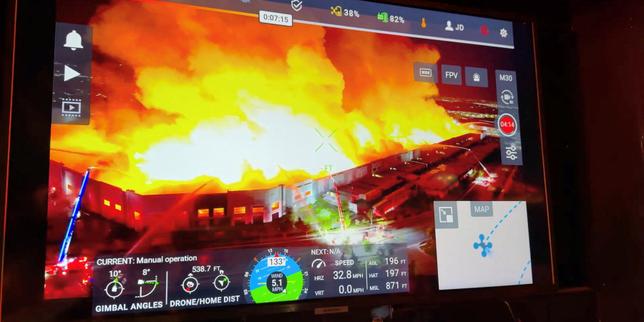
Massive flames just gutted a major distribution hub in San Bernardino, California, and honestly, it's a sight that looks more like a disaster movie than a typical Thursday morning. When a warehouse full of paper products catches fire, you aren't just looking at a property loss. You're looking at a fuel source that burns with incredible intensity and stays hot for days. Local fire crews in Southern California were hit with a nightmare scenario this week when an industrial park became a literal furnace.
If you think this is just about lost bathroom tissue, you’re missing the bigger picture. These facilities aren't just sheds; they’re the nerve centers of the West Coast supply chain. When one goes down, the ripples hit every grocery store shelf within a five-hundred-mile radius. We saw how fragile this system was back in 2020. This fire is a stark reminder that our "just-in-time" delivery world is one spark away from a localized shortage.
How a Paper Warehouse Becomes a Tinderbox
Firefighters in San Bernardino County faced a wall of heat that basically melted the structural steel of the building. Think about what’s inside a paper distribution center. It’s not just the product itself. You’ve got thousands of wooden pallets, plastic shrink wrap, and cardboard packaging. All of that is high-energy fuel. Once the roof collapses—which happened quickly in this case—the fire gets a fresh supply of oxygen and becomes almost impossible to extinguish from the outside.
Heavy equipment had to be brought in to move the smoldering debris because water alone won't cut it. The tightly packed rolls of paper create "hot spots" that can burn for a week. I’ve seen similar industrial fires where the heat is so intense it creates its own weather system, sucking in wind from the surrounding streets. It’s a brutal, exhausting job for the crews on the ground.
The Real Cost of Industrial Accidents
The San Bernardino fire isn't an isolated event. California has seen a string of these massive warehouse blazes over the last few years. While the cause of this specific fire is still under investigation by local arson and fire units, the patterns are usually the same. Faulty electrical systems, malfunctioning heavy machinery like forklifts, or even lithium-ion battery failures in warehouse equipment are common culprits.
The economic hit is massive. We’re talking about:
- Millions of dollars in ruined inventory.
- Total loss of specialized logistics infrastructure.
- Immediate disruption to regional trucking routes.
- Massive insurance hikes for every other business in the industrial zone.
When a building this size goes up, the smoke plume carries particulate matter across several counties. Local health departments had to issue warnings because breathing in the "ash" from burnt industrial chemicals and processed paper isn't the same as sitting by a campfire. It's toxic.
Why Fire Suppression Systems Often Fail
People always ask why the sprinklers didn't just put it out. In a warehouse with 40-foot ceilings, the heat has to reach a certain threshold to trigger the heads. By the time the water starts flowing in a "high-pile storage" environment, the fire is often already moving faster than the system can handle. If the fire starts in a corner where the pressure is low, or if the racking system blocks the water’s path, the building is basically toast. It's a design flaw in how we store goods in the modern era. We stack things so high that we create canyons of fire that no sprinkler can reach effectively.
What This Means for Your Local Store
Don't expect your favorite brand of 2-ply to vanish overnight, but do expect local logistics to get messy. Retailers rely on these regional hubs to replenish stock every 24 to 48 hours. When a major node in that network burns down, the trucks have to be rerouted to facilities in Arizona or Northern California. That adds fuel costs, driver hours, and delay.
It’s a classic example of why the supply chain is so brittle. We’ve traded redundancy for efficiency. We have fewer, larger warehouses instead of many smaller ones. It’s cheaper for the corporations until something like this happens. Then, the lack of a "Plan B" becomes everyone's problem.
Protecting Your Business from Secondary Losses
If you operate a business near an industrial fire zone, you need to act fast. Ash and smoke damage can ruin electronics and HVAC systems even if the flames never touch your building.
First, shut down your external air intakes immediately. You don't want that particulate matter getting into your clean rooms or office spaces. Second, document everything. If your deliveries are delayed or your storefront is covered in soot, start the paper trail for your insurance claim now. Most people wait until the fire is out, but by then, the "event" is technically over in the eyes of many adjusters.
Check your local air quality index (AQI) before sending employees back into a building near a recent industrial blaze. If you can smell it, you’re breathing it. Industrial fires involve more than just wood and paper; they involve adhesives, plastics, and treated materials that require professional remediation. Don't just wipe it down with a damp cloth and assume it's fine.
Stay updated through the San Bernardino County Fire Department's official channels for road closures and evacuation orders. If you're in the path of the smoke, keep your windows shut and your air purifiers on high. The cleanup for a site this size will take months, not weeks.