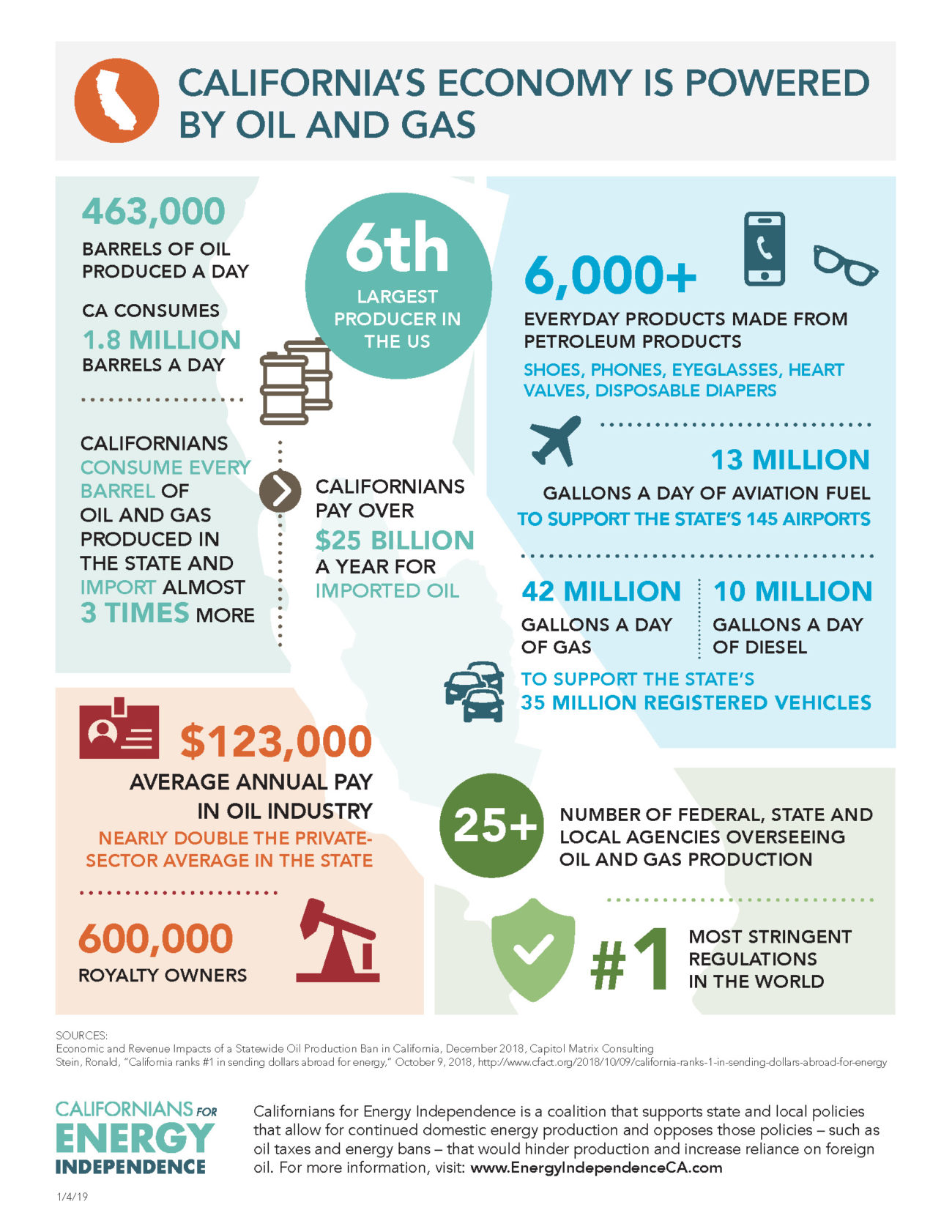
The local oil lobby is selling you a fairy tale wrapped in a flag. They want you to believe that if California just cranked open the valves in Kern County, the state would suddenly become an island of energy security, protected from the whims of Middle Eastern despots and global price shocks.
It is a lie. For a deeper dive into this area, we recommend: this related article.
The "stifling local production" narrative is built on a fundamental misunderstanding of how the global energy market functions. It ignores the chemistry of refining, the physics of logistics, and the cold, hard math of a globalized commodity market. When industry shills argue that domestic drilling equals lower prices at the pump for Californians, they aren't just wrong; they are actively insulting your intelligence.
The Refining Lie: Not All Oil Is Created Equal
The biggest secret in the oil business is that California’s refineries aren't built to run on California’s oil. For further context on the matter, comprehensive analysis is available at Forbes.
Most of the crude sitting under the Central Valley is "heavy" and "sour"—thick, viscous sludge packed with sulfur. To turn that into the ultra-clean gasoline required by California’s strict environmental standards, you need a specific type of refinery configuration. Many of the state's facilities have spent decades and billions of dollars optimizing their "coking" units to handle specific blends from abroad.
If we suddenly doubled local production, the refineries couldn't just "switch it on." They would have to export the local crude and continue importing the lighter, sweeter stuff they actually need to make your car run.
Imagine a baker who specialized in sourdough. If you dump ten tons of rye flour on his doorstep, he doesn't suddenly start making more sourdough. He has to sell the rye to someone else and keep buying the wheat he needs. That is the California oil "crisis" in a nutshell. We are a state that exports what we have and imports what we use. Increasing production doesn't change the plumbing; it just increases the volume of the trade.
The "Vulnerability" Myth: Geography Is Destiny
The argument that California is "vulnerable" because it imports oil assumes that we have a choice. We don't.
California is an "energy island." We are physically cut off from the massive pipeline networks that crisscross the rest of the United States. The Rocky Mountains and the Sierra Nevada act as a giant wall. There are no major crude oil pipelines bringing Permian Basin oil from Texas or Bakken oil from North Dakota into the Golden State.
This means every drop of oil that isn't produced locally must arrive via tanker or rail. This is the "Brent Crude" reality. California prices are pegged to global markets, not the West Texas Intermediate (WTI) prices you see on the news. Even if we drilled every square inch of the state, the price of that oil would still be determined by the global market.
Why? Because no driller is a charity. If a driller in Bakersfield can sell a barrel to a refinery in South Korea for $80, they aren't going to sell it to a refinery in Long Beach for $60 just because they share a zip code.
The False Choice: Local Drilling vs. Foreign Dictators
The most emotional argument used by the industry is the "moral" one: Why buy oil from countries that hate us when we can get it from our own backyard?
It’s a powerful line. It’s also complete nonsense.
In a globalized market, oil is fungible. When you reduce the global supply by shunning one source, you tighten the market for everyone. But more importantly, "local" oil is owned by multinational corporations, not the citizens of California. These companies have a fiduciary duty to their shareholders to maximize profit. They do not care about your commute. They do not care about "energy independence" unless it’s a talking point that helps them get a permit to drill in a protected area.
I have seen companies spend $50 million on PR campaigns about "energy security" while simultaneously shuttering local wells because the global price dropped by $5. They aren't patriots; they are arbitrageurs.
The Real Cost of the Status Quo
Let's talk about the math they hide from you.
The "externalities"—a fancy economic term for "stuff we make you pay for instead of us"—of local oil production are staggering. We aren't just talking about carbon. We’re talking about:
- Water Scarcity: Steam injection, the primary method for extracting California’s heavy oil, uses massive amounts of water in a state that is perpetually on the brink of a drought.
- Orphan Wells: There are thousands of wells in California that are no longer productive. The companies that owned them often vanish through bankruptcy, leaving the taxpayer to foot the multi-billion-dollar bill for plugging them.
- Subsidence: In parts of the Central Valley, the ground is literally sinking because we’ve sucked so much fluid (oil and water) out from under it. This destroys roads, bridges, and canals.
When you add those costs back into the "cheap" local oil, the price per gallon would make your eyes bleed. The industry wants the profits privatized and the risks socialized. That isn't a business model; it's a heist.
The Technological Pivot Nobody Wants to Admit
The internal combustion engine is a legacy technology. The oil industry knows this, which is why they are fighting a frantic rearguard action to keep us tethered to the pump.
They frame the transition to electric vehicles or hydrogen as a "luxury" or an "experiment." It’s actually a move toward true energy autonomy. You cannot drill your way to independence when the price is set in London or Riyadh. You can, however, generate your own electrons.
Every solar panel installed and every battery storage facility built is a direct hit to the "vulnerability" the oil lobby loves to moan about. The sun doesn't care about OPEC. The wind doesn't have a king.
The contrarian truth? The fastest way to "energy security" is to make oil irrelevant to the daily lives of 40 million people.
The Crude Reality of Market Logic
If California "unleashed" its oil production tomorrow, here is exactly what would happen:
- Global supply would increase by a fraction of a percent.
- The global price of oil might—might—drop by a few cents.
- California gas prices would stay exactly where they are because of our isolated geography, specialized refining needs, and high taxes.
- Corporate earnings for three or four major players would hit record highs.
That’s it. That is the entire "solution" the industry is begging for.
Stop asking how we can produce more oil. Start asking why we are still dumb enough to believe that producing more of a 19th-century commodity will solve 21st-century problems.
The "vulnerability" isn't that we don't drill enough. The vulnerability is that we are still addicted to a fuel that requires us to be at the mercy of a global market we cannot control. The oil lobby isn't trying to save California; it's trying to keep the patient on life support while they charge by the hour.
Rip the needle out.