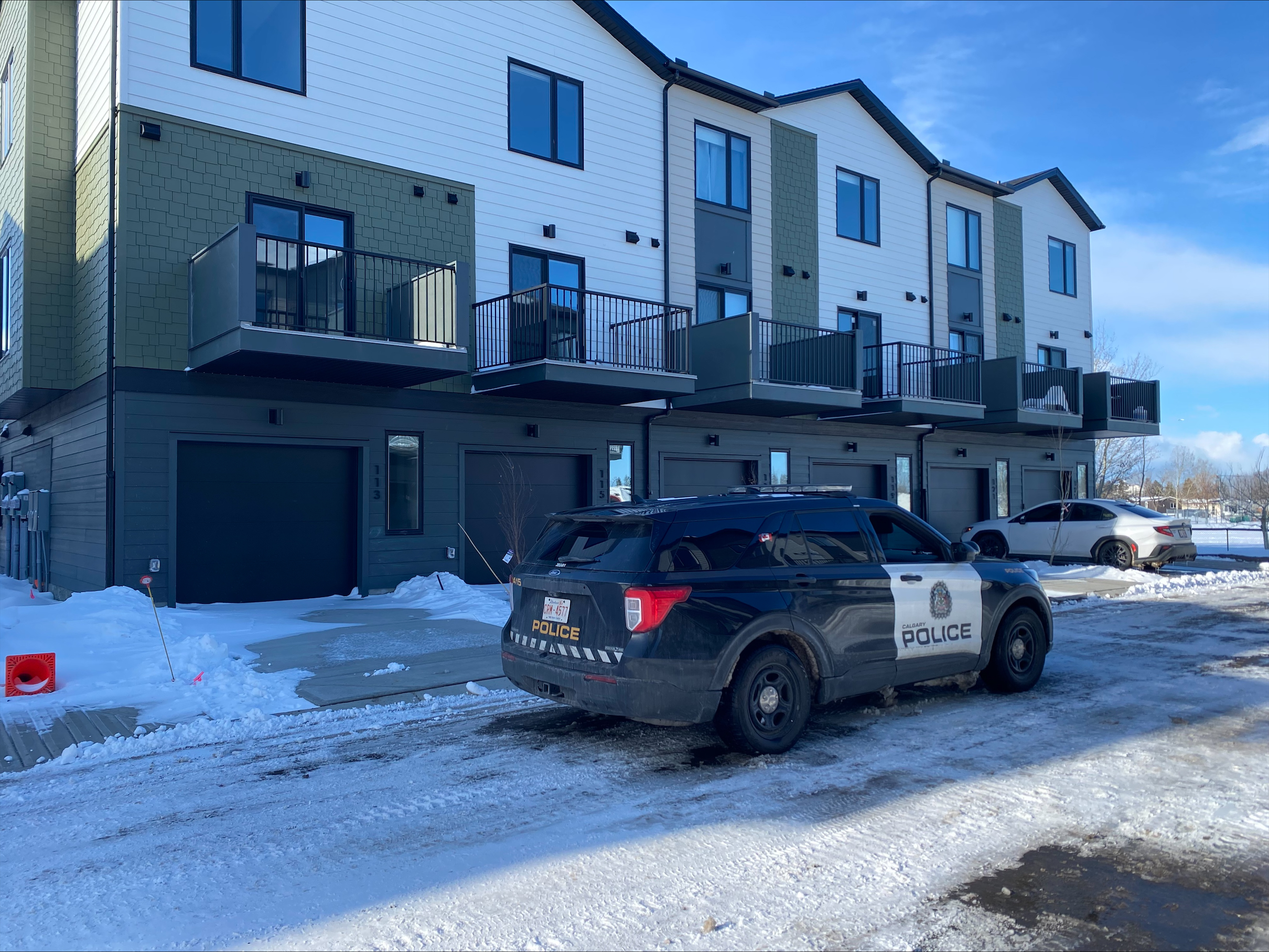
The pre-dawn silence of Calgary’s Beltline district shattered early Friday morning when a targeted shooting left one person dead, marking another violent chapter in what local authorities describe as a precise, calculated attack. This was not a stray bullet or a random act of street-level chaos. The Calgary Police Service confirmed the victim was specifically hunted, a detail that shifts the narrative from general public safety concerns to the far more complex reality of organized, intentional executions in broad daylight.
Emergency crews rushed to the scene near 10th Avenue and 1st Street S.W. around 3:00 a.m. after reports of gunfire echoed through the high-density residential and commercial hub. They found a man suffering from gunshot wounds; despite the rapid intervention of paramedics, he was pronounced dead. The shooter had already vanished into the urban maze.
The Precision of Targeted Hits
When police use the word targeted, they are signaling to the public that there is no immediate threat of a mass shooter. However, for those living in the inner city, that word carries its own weight of dread. A targeted hit implies surveillance, a known motive, and a level of brazenness that suggests the perpetrators have little fear of the city's surveillance network or the proximity of the District 1 police headquarters.
This isn't about a bar fight gone wrong. Investigative experience suggests these incidents often stem from long-standing friction within the illicit economy. Whether it involves the drug trade, debt collection, or retaliatory gang violence, the "targeted" label means the victim was a checkbox on a list. The shooter chose that specific time and that specific corner because it offered the highest probability of success and the cleanest path for an exit.
The Beltline Under Pressure
The Beltline has long been Calgary’s crown jewel of densification, a mix of glass towers, trendy eateries, and historic sandstone. But beneath the surface of urban renewal, the neighborhood is grappling with a visible increase in social friction. Residents have reported a rise in open-air drug use and erratic behavior, creating a volatile environment where professional criminal activity can more easily blend into the background noise of a restless city.
Calgary isn't the sleepy prairie town it once was. As the city grows, it inherits the sophisticated criminal infrastructure typical of larger metropolitan centers like Vancouver or Toronto. The geography of the Beltline makes it an ideal theater for these operations. It provides quick access to the Crowchild and Deerfoot arterial routes, allowing a getaway vehicle to be kilometers away before the first 911 call is even processed by dispatch.
The Intelligence Gap
The primary challenge for the Calgary Police Service (CPS) Homicide Unit in these cases is the wall of silence that typically follows a targeted hit. Unlike random acts of violence where witnesses are eager to help, targeted shootings often involve victims and associates who operate outside the traditional bounds of the law.
Information becomes a currency. Those who saw the shooter or know the motive often calculate the risk of talking to police against the risk of being labeled an informant. This creates an intelligence gap that can stall investigations for months. Detectives are left relying on digital forensics—CCTV footage from nearby condos, dashcam recordings from passing Uber drivers, and "ping" data from cellular towers—to build a circumstantial map of the suspect's movements.
Resource Allocation and the Reactive Cycle
There is a hard truth about urban policing that officials rarely state plainly: the police are almost always in a reactive cycle. Even with increased patrols in the Beltline, a two-man car cannot be on every corner. A planned hit takes seconds to execute. By the time the sirens are audible, the tactical advantage has already shifted entirely to the perpetrator.
This raises uncomfortable questions about the effectiveness of current deterrents. If the threat of life imprisonment isn't enough to stop a 3:00 a.m. execution in a well-lit, populated area, then the city must look at the root drivers of the violence. We are seeing a generation of offenders who view the judicial system’s "revolving door" with indifference. If the risk-to-reward ratio of the crime favors the violence, the violence will continue.
The Economic Shadow
Violence of this nature is rarely untethered from economics. Calgary’s position as a distribution hub for Western Canada makes it a high-stakes environment for organized crime. When a "hit" occurs, it is often the final step in a business dispute where the commodities are human lives and prohibited substances.
The victim, whose identity remains withheld pending next-of-kin notification and a formal autopsy by the Office of the Chief Medical Examiner, is now a data point in a grim annual tally. For the investigators, the task is now to strip away the victim’s recent history to find the point of conflict. Who were they talking to? What was their financial status? Were they recently released from custody? These are the breadcrumbs that lead to a suspect.
Public Safety vs. Public Perception
The police are tasked with a dual mission: solve the crime and manage the fear. By quickly labeling the shooting as targeted, they attempt to lower the collective blood pressure of the neighborhood. But this is a double-edged sword. While it reassures the average citizen that they aren't the primary mark, it also reinforces the idea that the city is a playground for professional criminals.
A city that accepts targeted hits as a routine part of urban life is a city in decline. The presence of forensic teams bagging shell shots outside a luxury apartment complex isn't just a crime scene; it's a failure of the social contract. Residents who pay premium rents for the "inner-city lifestyle" find themselves living in a high-definition police procedural.
The Forensic Horizon
The autopsy, scheduled for early next week, will provide the technical details—caliber, trajectory, distance. But the real work is happening in the cyber-crime labs. Modern hits are often telegraphed on encrypted messaging apps or sparked by social media disrespect. The "why" is likely buried in a cloud server or a deleted thread.
As the sun rose over the Beltline on Friday, the yellow tape was the only thing marking the spot where a life ended. The cleaners eventually washed the sidewalk, and the morning commuters reclaimed the space. But the underlying tension remains. Until the CPS can break the cycle of retaliation, the next targeted shooting isn't a matter of if, but where.
Demand more than just the "targeted" reassurance from local officials. Look for the arrest records, the seizure of illegal firearms, and the disruption of the networks that make these 3:00 a.m. sirens a recurring soundtrack of Calgary’s nights.