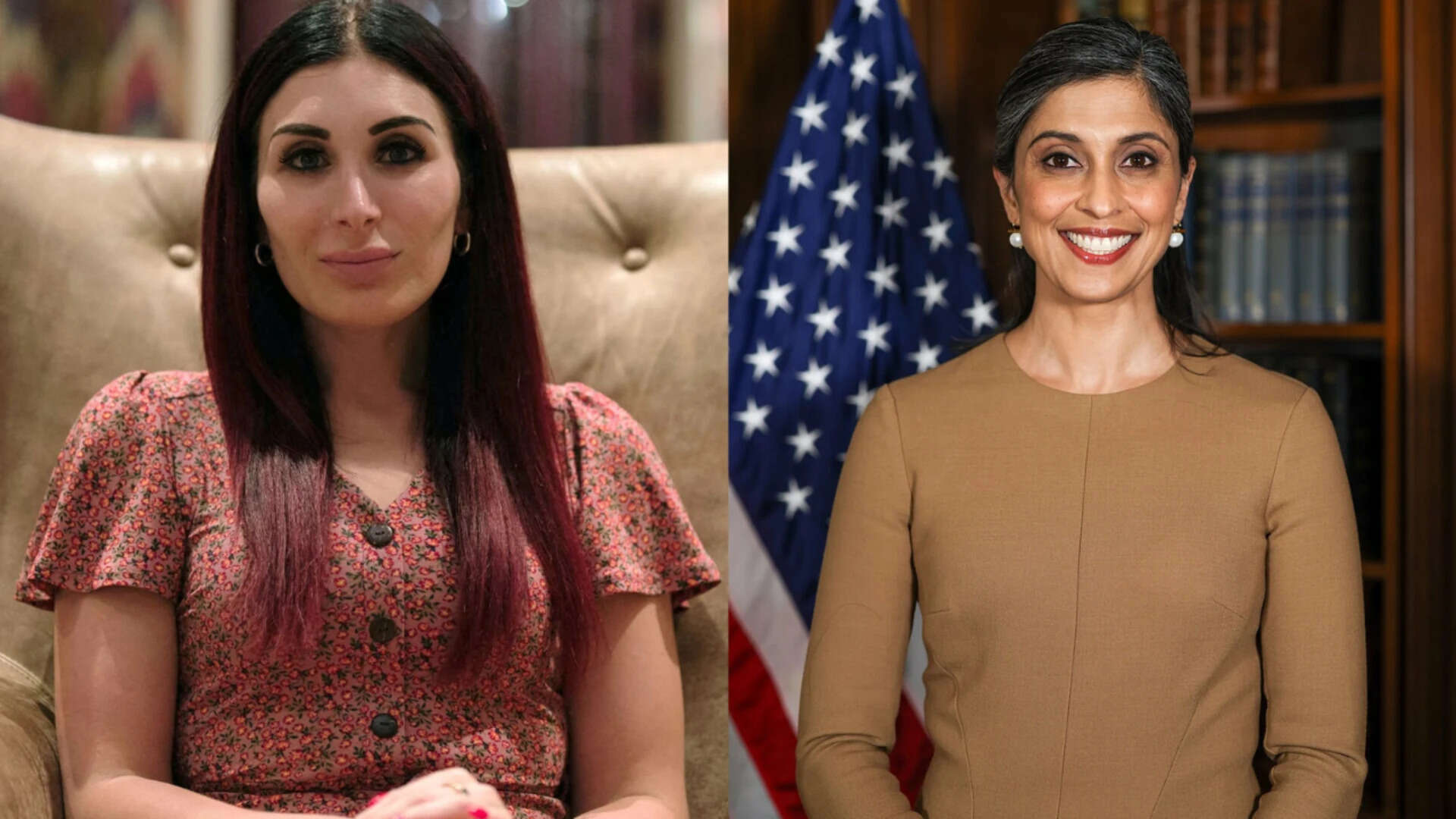
Right-wing activist Laura Loomer unexpectedly defended Usha Vance, wife of Republican vice-presidential nominee JD Vance, against online attacks targeting her heritage. Loomer argued that the "brown Hindu woman" was facing unwarranted backlash, a move that surprised many given Loomer's own history of aggressive, nationalist rhetoric. This defense is not a sudden shift toward progressivism, but rather a tactical maneuver within a fractured political ecosystem. By shielding Usha Vance, figures on the far-right are attempting to draw a line between acceptable national identity and unacceptable political opposition, protecting their coalition's inner circle while maintaining aggressive stances against outsiders.
The Friction Inside the Coalition
Political coalitions are rarely harmonious. When JD Vance joined the Republican ticket, his family immediately entered a intense public spotlight. Usha Vance, an accomplished attorney and the daughter of Indian immigrants, became a primary target for various factions online. Some attacks originated from the political left, focusing on her corporate legal work. Far more complicating, however, were the attacks from the extreme right fringe, where some commentators questioned whether a practicing Hindu could genuinely represent an American nationalist movement.
Loomer stepped into this specific friction point. She explicitly denounced the racial and religious criticism directed at Usha Vance, asserting that personal faith and ethnic background should not disqualify someone who supports the broader political agenda.
This creates a distinct tension. The far-right has spent years utilizing identity politics as a weapon against opponents. Watching those same weapons turn inward against the spouse of a vice-presidential candidate forced a rapid recalibration.
The defense serves a dual purpose. It protects the executive ticket from being dragged down by fringe bigotry that alienates moderate voters. Simultaneously, it attempts to redefine the boundaries of the movement. The message is clear: loyalty to the political objective supersedes ethnic or religious purity, at least for those at the top of the pyramid.
Weaponized Selective Protection
The concept of selective protection is common in high-stakes political strategy. It allows commentators to maintain their aggressive credentials while projecting an image of fairness when it suits their strategic needs.
- In-Group Immunity: Members of the political inner circle receive fierce defense regardless of how their background conflicts with standard movement rhetoric.
- Out-Group Targeting: Identical cultural or religious traits are weaponized against political opponents to mobilize the base.
- Strategic Moderation: Occasional defenses of diversity allow figures to push back against accusations of systemic prejudice while changing none of their core positions.
This dynamic operates like a corporate compliance mechanism. When a high-profile asset is threatened by the unpredictable elements of the base, media figures step in to enforce discipline. Loomer's intervention was less about defending pluralism and more about maintaining order within the ranks. It establishes a hierarchy where political utility dictates who receives protection and who remains a target.
The Real Demographics of the Modern Electorate
The political calculation relies heavily on shifting demographics. The American electorate is changing rapidly, and strict adherence to a monocultural vision of nationalism is mathematically unsustainable in a national election.
Strategists understand that suburban voters, particularly college-educated professionals, look at treatment of figures like Usha Vance as a litmus test. If the movement appears overtly hostile to a successful, highly educated woman of immigrant descent, it risks permanently alienating a crucial voting bloc. The defense is a calculated nod to these voters, an attempt to signal that the movement is more inclusive than its loudest internet commentators suggest.
The Limits of Political Shielding
This defensive strategy has clear limitations. A single statement or a series of social media posts cannot easily erase years of rhetoric designed to stoke cultural anxieties.
The friction between the populist base and the elite leadership remains highly volatile. While top-tier figures can demand a truce regarding the family of a vice-presidential nominee, they cannot fully control the online ecosystem they helped build. The fringe elements that drive engagement often refuse to follow the script when strategic moderation is suddenly required.
This creates a recurring problem for political managers. They must constantly calibrate their messaging, pushing boundaries to energize radical supporters while scrambling to put out fires when those same supporters target internal assets. The defense of Usha Vance highlights this instability. It shows a movement forced to police its own followers to protect its political viability.
The reality of modern political warfare means that alliances are purely transactional. Usha Vance's protection lasts exactly as long as her husband's political utility remains high. If the political winds shift, the protective shield can disappear just as quickly as it was deployed, leaving the targets exposed to the very forces currently being held at bay.