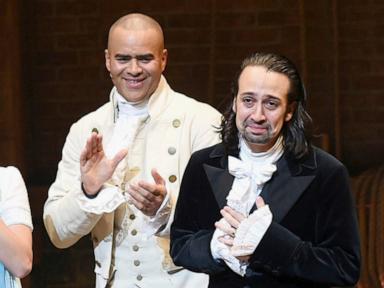
The Broadway box office is a brutal machine that eats sentimentality for breakfast. When news broke that Christopher Jackson would step back into the boots of George Washington, the production framed it as a triumphant homecoming. Fans cheered. Social media spiked. The official press releases leaned heavily on nostalgia, painting a picture of an artistic family reuniting for the sheer joy of the craft.
But theater is a business, and Broadway in the mid-2020s is a high-stakes survival game.
Bringing back an original cast member from a decade-old cultural phenomenon is rarely just an artistic choice. It is a strategic deployment. As running costs skyrocket and tourism patterns shift, producers are finding that the old formulas for sustaining long-running mega-hits are cracking under pressure. The return of Christopher Jackson to Hamilton represents something far deeper than a victory lap. It is a calculated corporate maneuver designed to stabilize a flagship brand, re-engage a drifting local demographic, and solve a systemic casting crisis that is currently plaguing high-profile commercial theater.
The Burning Economics of Long Running Hits
Long-running Broadway shows usually follow a predictable lifecycle. The original cast creates the lightning in a bottle. They win the Tonys, dominate the late-night television circuit, and drive ticket prices to astronomical heights on the secondary market. Then, inevitably, they leave. The show enters its maintenance phase, relying on the strength of the brand itself rather than individual star power to fill the seats. For years, Hamilton was considered immune to the gravity that eventually pulls down every major musical. It ran on pure momentum, turning replacement casting into a production line of exceptional, yet less famous, talent.
That momentum is hitting the wall of economic reality.
The post-pandemic theatrical economy has permanently altered the math of keeping a show open. Weekly running costs for a massive hip-hop musical—factoring in a live band, a large ensemble, stagehands, wardrobe, and prime commercial real estate in the Theater District—have swollen by an estimated 20 to 30 percent compared to a decade ago. At the same time, the reliable pipeline of international and domestic tourists has become more volatile. A show can no longer survive simply because it is a household name. It needs to actively give audiences a reason to buy a ticket today instead of next year.
When a production reaches this inflection point, it faces a stark choice. It can cut costs, which often diminishes the quality of the performance and triggers a downward spiral in reputation. Or it can inject a massive dose of cultural relevance back into the building.
The George Washington Problem and the Institutional Memory Crisis
To understand why Jackson specifically was drafted back into service, you have to look at the unique demands of the role he originated. George Washington in Hamilton is not merely a supporting character. He functions as the show's emotional and vocal anchor. The track requires a rare combination of booming, authoritative baritone vocals, precise comedic timing in dramatic spaces, and an innate, unteachable stage presence that commands immediate respect from an audience.
Finding actors who possess this exact toolkit is difficult. Keeping them in a show for a long time is almost impossible.
Typical Lifespan of a Broadway Lead Role:
[Original Cast: 12-18 Months] ---> [First Tier Replacements: 9-12 Months] ---> [The Maintenance Cycle: 6 Months or Less]
The theater industry is currently experiencing a massive drain of mid-career musical theater talent. The explosion of streaming television networks and regional film production centers has created an alternative job market that is far more lucrative and physically forgiving than the eight-shows-a-week grind of Broadway. An actor with the gravitas to play Washington can make double the weekly Broadway production minimum by securing a recurring role on a prestige television drama, without risking vocal blowout every night.
Consequently, long-running shows are trapped in a cycle of rapid turnover. When a role changes hands every six months, institutional memory degrades. The subtle nuances of the staging get lost. The chemistry between the leads becomes mechanical. By bringing Jackson back, the producers are not just buying a name for the marquee; they are buying an instructor-level understanding of the show's DNA. His presence on stage forces the rest of the company to elevate their performances, instantly correcting the drift that naturally happens to any script that has been repeated thousands of times.
Devaluing the Brand or Saving the Box Office
Within the theatrical community, the move has sparked a quiet but intense debate regarding the long-term health of Broadway casting ecosystem. Some casting directors and independent producers view the reliance on original cast members as a short-term band-aid that creates a long-term problem.
The argument against the practice is simple. By suggesting that a show is only at its best when the people who created it are on stage, you inherently devalue the hundreds of actors who step into those roles during the maintenance years. It sends a message to the theater-going public that the current cast is a second-tier version of the real thing. If audiences believe that they need to wait for an original star to return to get the definitive experience, they will stop buying tickets during the regular casting cycles.
Furthermore, it closes the door on the next generation of performers. Broadway has always relied on the replacement cycle to discover new stars. Denying a rising actor the chance to play a career-defining role because a producer wants to cash in on a nostalgia wave threatens the development of the talent pool.
The counter-argument, championed by the accountants, is that without these occasional infusions of star power, there might not be a show left for the next generation to inherit. The numbers do not lie. When an original star returns to a long-running show, the box office response is almost instantaneous. Grosses typically jump by hundreds of thousands of dollars a week. In an environment where a bad month can force a premature closing notice, the ethical arguments about talent development quickly give way to the realities of payroll and theater rent.
The Shift in Who Buys the Tickets
The decision to bring Jackson back also signals a major shift in who Hamilton is trying to market to right now. For the first five years of its run, the show was sustained by high-paying tourists and wealthy tri-state area residents who were willing to shell out four figures for a premium seat. That demographic has largely seen the show. Many have seen it multiple times.
The current battleground for ticket sales is the local, frequent theater-goer—the Broadway subscriber, the industry insider, and the dedicated fan base that lives within driving distance of Manhattan. These are the people who keep shows alive during the brutal winter months of January and February when tourism dries up.
Broadway Audience Segmentation Challenge:
+-----------------------------------+-----------------------------------+
| Tourist Market (Saturated)        | Local Repeat Market (Targeted)    |
| - Seeks the brand name            | - Seeks unique event status       |
| - Often buys months in advance    | - Buys closer to performance date |
| - High awareness, low urgency     | - Motivated by casting changes    |
+-----------------------------------+-----------------------------------+
A casual tourist from Ohio does not particularly care who is playing George Washington; they just want to see Hamilton. But a theater enthusiast from Brooklyn cares immensely. For that local demographic, a standard performance is no longer an event. A performance featuring Christopher Jackson, however, becomes an unmissable theatrical moment. It transforms a routine evening of theater into a historical document.
The Strategy Behind the Stunt
Casting stunts are as old as Broadway itself. Chicago has turned the practice into an art form, rotating a endless carousel of pop stars, talk show hosts, and internet celebrities through the roles of Roxie Hart and Billy Flynn to keep the box office humming.
What makes the Hamilton strategy different is that it rejects the superficiality of the celebrity cameo in favor of artistic authority. The production is not hiring a TikTok influencer who needs to be hidden in the ensemble during the difficult musical numbers. They are hiring the blueprint.
This distinction is vital for maintaining the artistic integrity of a property that prides itself on its revolutionary status. If Hamilton started casting reality television stars, the brand would instantly cheapen. It would signal to the public that the show had entered its twilight years, descending into the realm of tourist trap entertainment. By bringing back Jackson, the show achieves the same box office spike that a celebrity cameo would provide, while simultaneously reinforcing its reputation as a serious, uncompromising piece of art.
It is a luxury that very few productions possess. To pull this off, a show must have existed long enough to generate nostalgia, yet remain relevant enough that its original stars still carry significant cultural weight. Wicked has done this occasionally. The Lion King cannot, as its actors are hidden behind elaborate masks. Hamilton is uniquely positioned to treat its own history as a resource to be mined when economic conditions dictate.
The End of the Untouchable Musical
The return of Christopher Jackson proves that no musical, regardless of its historical significance or initial box office dominance, is truly safe from the changing tides of commercial theater. The era of the completely bulletproof show is over. Every production must now be actively managed, curated, and occasionally disrupted to survive in a market that has grown increasingly intolerant of financial mediocrity.
This deployment of nostalgia is a clear indication of how the business will operate moving forward. Expect to see more long-running hits reaching backward to leap forward. The line between the history of a show and its present-day marketing strategy has completely dissolved.
When Jackson takes the stage and delivers Washington's soaring exit number, "One Last Time," the audience will erupt in applause, reacting to the emotional resonance of a great actor revisiting his signature role. But behind the scenes, in the quiet offices of the producers, the applause will be tracked on a spreadsheet. The success of this run will determine how long the show can maintain its grip on the Richard Rodgers Theatre, and whether the ghosts of Broadway's past will become the permanent guardians of its financial future.