Heat. That is the first thing you notice before the smoke even reaches your eyes.
Even on a calm morning in the Persian Gulf, the air presses against your chest like a damp wool blanket. Salt crusts the railings before noon. Engine vibrations hum through the soles of your boots until you stop hearing them and start feeling them in your teeth. For generations, sailors and traders have moved through the Strait of Hormuz knowing the water is narrow, warm, and unforgiving. A funnel of turquoise and dark blue where vast tankers inch past rocky headlands while a massive share of the world’s seaborne oil and liquefied natural gas passes through a corridor that squeezes down to roughly twenty-one miles wide at its narrowest points, with shipping lanes even tighter than that. You might also find this connected article interesting: The Spinning Wheel of Doom Inside Melbourne’s Digital Exam Halls.
When two oil tankers are struck by naval mines in the Strait of Hormuz and burn to ash after the explosions, a dry headline reduces the event to steel, crude, and coordinates. Two vessels hit. Fires sparked. Hulls blackened. A routine-sounding update on a crowded screen.
Yet a naval mine does not care about maritime law or diplomatic communiqués. It sits quiet and heavy beneath the surface, waiting for metal to pass within range—triggered by magnetic fields, acoustic signatures, pressure changes, or contact—and then it turns a floating city of steel and fuel into a furnace in a fraction of a second. As extensively documented in recent articles by NPR, the effects are worth noting.
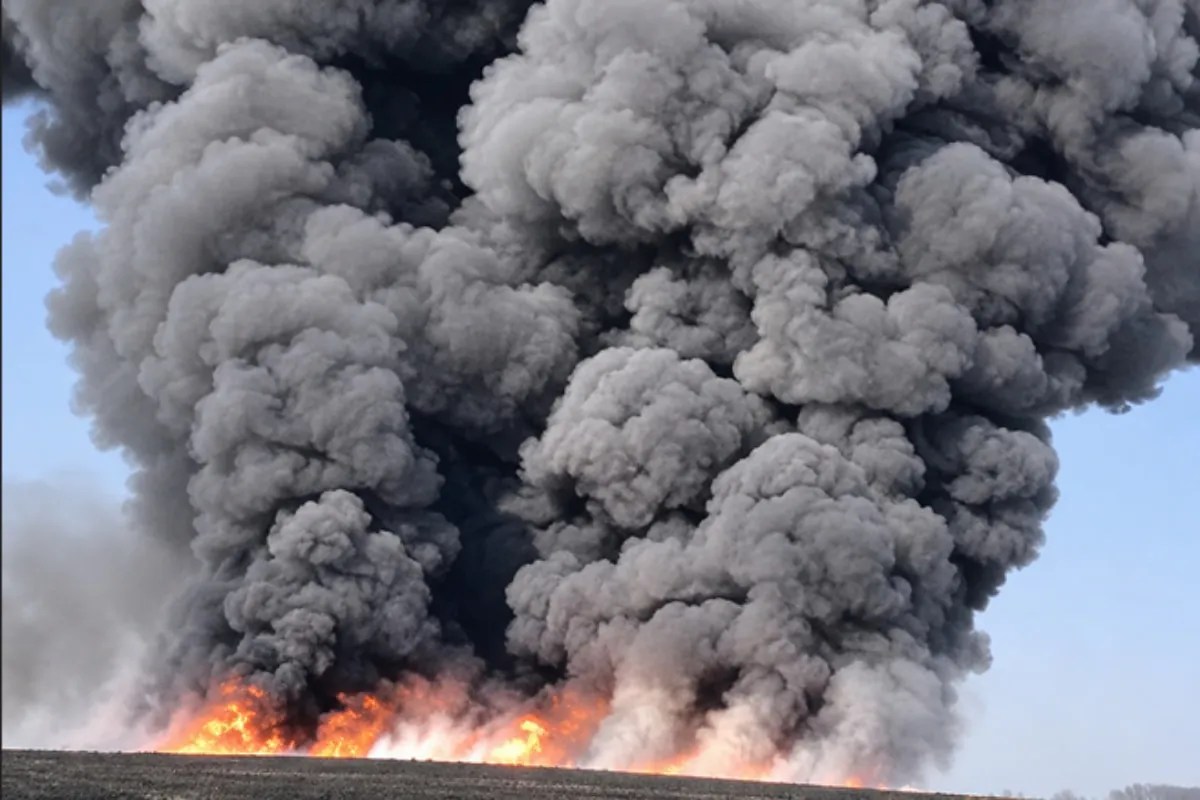
Consider what happens next: the shockwave travels faster than human thought, ripping plates apart before an alarm can finish its first breath, while crude oil ignites into a tower of black smoke visible for miles across flat water.
To understand why two burning tankers in this narrow waterway matter far beyond the Gulf, we have to look past the charred hulls and trace the invisible threads connecting a seaman’s boots to a household budget ten thousand miles away.
The Chokepoint That Holds the World’s Breath
Geography is stubborn. You can build pipelines, lay cables, and sign treaties, yet water still flows where the earth allows it.
The Strait of Hormuz links the oil-rich Persian Gulf with the Gulf of Oman and the open Arabian Sea. Roughly a fifth of global petroleum liquids consumption—and a major share of seaborne liquefied natural gas—typically moves through this waterway on an average day. There is no simple bypass for that volume. A few overland pipelines exist in the region, and they help at the margins, but they cannot casually swallow tens of millions of barrels a day overnight without bottlenecking elsewhere.
Now let us step into a hypothetical scenario to make the human reality concrete. Imagine a deck officer—let us call him Tariq—standing watch on the bridge wing of a tanker just before dawn. (Note: Tariq and this watch scene are a hypothetical illustration created to ground maritime operations in human experience, not a report of a specific crew member.)
Tariq has made this transit dozens of times. His hands know the cold steel of the binocular strap. He knows the smell of bunker fuel mixed with warm sea breeze. At four in the morning, the stars look sharp above dark water, and the radar screen glows green with dozens of blips—other tankers, support vessels, patrol craft, fishing dhows moving without lights. Every ship in those lanes is a giant trying to thread a needle while other giants move in the opposite direction.
When a naval mine detonates near a hull, there is no cinematic slow motion. There is a thud that climbs up through the deck plates, a sudden tilt that throws a man off balance, and then the roar of fire feeding on hydrocarbon vapor. Heat blooms across the skin instantly. Smoke turns daylight into bruised orange. Abandoning ship in warm, oil-slicked water under a pillar of flame is not an adventure; it is a desperate scramble for life rafts, roll calls on deck, burns treated in cramped medical bays, and phone calls to families who only see breaking news tickers and fear the worst.
Even when crews survive without catastrophic loss of life, the psychological weight lingers. You never step onto a moving deck the same way again after feeling a hull shudder from an underwater blast.
Beneath the Surface, Beyond the Headlines
Naval mines are an old weapon with a chillingly modern reach. Unlike a manned warship or a guided missile that requires continuous tracking, a sea mine is a patient ambush. Once laid in a shipping lane, it shifts the burden of risk onto every vessel that follows.
Think of a sea mine like a tripwire stretched across a dark hallway you are forced to walk through every day. Even if you make it past one wire, you cannot be certain another isn't waiting two steps ahead.
That uncertainty is why two tankers burning after mine strikes trigger a chain reaction far larger than the physical damage to two ships. Maritime insurers watch risk with cold precision. When mines appear in a vital corridor, war-risk premiums jump, sometimes overnight. Shipowners pause, reroute, or demand steep compensation before sending crews and multi-million-dollar cargoes into harm’s way.
And this is where many people—understandably—feel confused or distant. If you live far from the Gulf, why would an explosion at sea change what you pay at the pump, what your utility bill costs, or whether a factory slows down next month?
I will be candid: global energy markets are baffling even to seasoned analysts. Prices swing on rumors, satellite images, insurance notices, and shipping delays that have nothing to do with physical scarcity in your own town on that exact afternoon. It can feel frustrating—even unfair—that a blast in a distant strait can ripple into groceries, freight, and heating costs thousands of miles away.
Yet markets price fear and friction immediately. When a critical artery bleeds, even a partial constriction sends tremors through the whole body.
A History of Narrow Waters and Fragile Calm
Anyone who has studied maritime history knows the Strait of Hormuz has carried strategic tension for decades. During the Tanker War of the 1980s, commercial vessels were attacked and mined in the Gulf, forcing naval escorts, re-flagging operations, and painstaking mine-sweeping sweeps to keep commerce moving.
History does not repeat in an identical script, but human behavior and geography rhyme stubbornly. Whenever a narrow chokepoint becomes contested, three forces collide at once:
- Physical hazard: Mines, debris, and burning vessels create immediate danger to navigation and environment.
- Economic shock: Freight rates spike, insurance costs climb, and buyers scramble for alternative supply routes.
- Diplomatic brinkmanship: Every strike tempts retaliation, miscalculation, or escalation in waters where reaction times are measured in minutes.
Even a single burning tanker can foul the water with oil, threaten coastal ecosystems and desalination intakes along arid shores, and force vessels to loiter outside the strait while authorities assess whether channels are clear. Every hour a tanker waits at anchor costs money; every day a supply chain hesitates adds friction to global trade.
We often treat global trade as an invisible conveyor belt that hums quietly in the background until something jams. A naval mine in the Strait of Hormuz is a brutal reminder that the belt runs over real water, steered by real people, through places where politics and physics collide.
What Is Actually at Stake When Oil Burns
When two oil tankers burn after mine strikes, the fire consumes far more than cargo.
It burns trust in safe passage. It tests the nerve of seafarers whose labor keeps shelves stocked and engines turning across continents. It reminds governments how fragile energy security remains when so much supply funnels through so few nautical miles.
At the same time, panic is a poor guide. A single incident—even a dramatic and destructive one—does not automatically erase all energy supply overnight, nor does it mean every transit is doomed. Navies sweep channels, commercial operators adapt routes, producers adjust flows, and diplomacy scrambles to contain fallout.
Still, dismissing the event as "just another Middle East flare-up" misses the point just as badly as panicking. When naval mines strike commercial ships in the Strait of Hormuz, the warning light is real. The human cost on deck is immediate. The economic ripple is tangible.
Look out over dark water at night when the horizon disappears and only running lights tell you where another ship is moving. Out there, in the quiet before an explosion, every hull carries weight, every mile carries risk, and the smallest spark can turn calm sea into fire.