Eighteen is an age obsessed with lines. Straight lines on graph paper, clean lines on application portals, deadlines drawn in permanent ink across academic calendars. Society treats youth as a straight highway, where veering onto a gravel shoulder feels like a catastrophic failure of navigation. For decades, the cultural consensus handed down to teenagers across Canada was simple and inflexible. Graduate high school. Accumulate debt. Sit in a lecture hall. Enter the knowledge economy.
Nobody told you about the copper pipes. Nobody told you about the electrical grid humming silently behind drywall, or the foundation settling beneath suburban homes, or the sheer, breathless vulnerability of an infrastructure built by an aging workforce that is quietly retiring en masse.
Meet Liam.
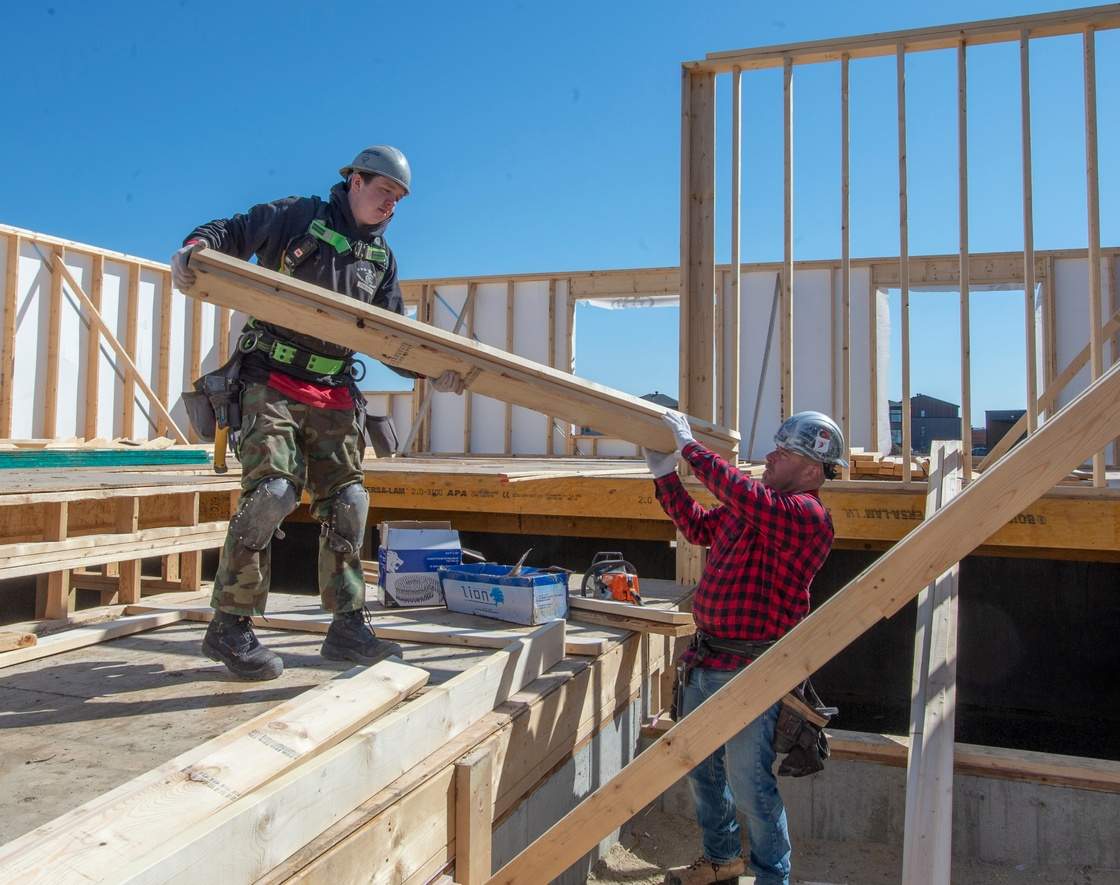
Liam is nineteen, standing in a basement in Hamilton, Ontario, wiping sweat from his forehead with the back of a calloused hand. Around him, the air smells of PVC cement, damp earth, and hot solder. Six months ago, Liam was staring at a university acceptance letter and a spreadsheet of projected student loans that made his stomach knot into a fist. He had spent twelve years being told that his mind was his only asset, as if his hands were merely tools designed to tap plastic keys on a laptop screen while breathing stale indoor air for forty hours a week.
Then he found out about the program.
Across Canada, a quiet structural earthquake is underway. Ministries, labor unions, and private contractors are waking up to a stark mathematical reality. The country is growing faster than it can shelter itself. Construction cranes punctuate the skylines of Toronto, Vancouver, Calgary, and Halifax, but the people required to turn architectural blueprints into physical reality are vanishing. For years, vocational training was treated as a fallback option, a consolation prize for students who did not fit the sterile mold of academic perfection. That cultural fiction is finally shattering under the weight of economic necessity.
Paid skilled trade placement programs are stepping into the void.
To understand why this shift matters so deeply, you have to look past the political press releases and examine what it actually means to be a young person stepping onto a job site today. Historically, entering a trade meant navigating a labyrinth of unpaid or poorly compensated probationary periods, archaic hazing rituals, and the terrifying financial gamble of buying thousands of dollars in specialized tools before earning your first legitimate paycheck. It was an exclusive club with an unnecessarily high barrier to entry, guarded by gatekeepers who assumed you should suffer simply because they had suffered decades earlier.
That model is dying. It had to.
When programs are structured to pay youth while they learn, the psychological equation changes entirely. Suddenly, dignity is not deferred until graduation day. It arrives on Friday afternoon, folded neatly into the stub of a direct deposit that reflects actual sweat and tangible output.
Consider the modern economic reality for Canadian youth. Rent in major urban centers devours paychecks before they even clear the banking app. Groceries cost a small fortune. The traditional university path, while enriching and necessary for many professions, leaves a trail of financial anxiety that takes a decade to outrun. When a nineteen-year-old can enter an electrical, carpentry, plumbing, or sheet metal apprenticeship where their hours in the field translate directly into a living wage—while simultaneously accumulating accredited hours toward a Red Seal certification—the choice ceases to be a financial gamble.
It is not just about money. It is about agency.
Liam remembers his first week on the job site. He felt like an impostor, clumsy and slow, surrounded by veterans who communicated in grunts, hand signals, and decades of accumulated intuition. His mentor, a master electrician named Marcus with forearms like scarred oak branches, did not hand him a textbook or a lecture on circuit theory. Marcus handed him a pair of wire strippers and told him to strip ten feet of cable without nicking the copper strand inside.
"Feel the resistance," Marcus told him over the roar of a portable generator. "Your eyes will lie to you when you are tired. Your hands will tell you the truth."
That tactile reality is missing from modern white-collar education. We spend our formative years staring at flat screens, manipulating abstractions that evaporate the moment the Wi-Fi drops. There is something deeply grounding about holding a tool, making a precise cut, and watching a physical structure rise from nothing. At the end of the day, you can point to a wall, a circuit, a beam, and say, I did that. That wall will still be standing twenty years from now, sheltering families you will never meet.
Moreover, there is an invisible antidote to modern isolation hidden within the trades. We live in an era of unprecedented loneliness among youth, where remote learning and gig-economy apps trap individuals behind screens, severing communal bonds. On a construction crew, community is forged at 6:30 in the morning over tailgate coffee thermos and shared blueprints. You rely on the person beside you to hoist a beam or test a line. That shared accountability creates a profound sense of belonging that digital networks can never replicate.
The demographic statistics underscore the urgency. The Canadian Apprenticeship Forum estimates that tens of thousands of journeypersons will retire over the next decade. At the same time, municipal housing targets demand an unprecedented surge in residential and commercial construction. You cannot build homes with software algorithms. You cannot pour concrete with good intentions. You need human beings who know how to mix mortar, calibrate breaker panels, and weld steel beams under a freezing November sky in Edmonton or Winnipeg.
Yet, for generations, high school guidance counselors pushed university as the singular badge of intelligence. We stigmatized physical labor, framing it as the domain of those who could not hack it in the classroom. This was a profound cultural error. The modern trades require a high degree of spatial reasoning, complex mathematical literacy, and rigorous problem-solving skills. An electrician troubleshooting a faulty industrial control panel is essentially debugging a complex physical computer network carrying high voltage.
Paid placement initiatives attempt to correct this historical imbalance by bridging the gap between high school classrooms and union training halls. By offering financial support during the initial training phases, these programs remove the prohibitive startup costs that previously kept working-class youth from entering lucrative technical careers.
The shift is also transforming the demographics of the job site. For decades, the trades were an overwhelmingly homogenous boys' club. Today, young women are stepping onto sites in record numbers, bringing fresh perspectives and challenging outdated workplace cultures. Scholarships, targeted mentorship networks, and zero-tolerance policies for harassment are slowly reshaping an industry that desperately needed to modernize its human relations.
Critics sometimes worry about the speed of expansion. They ask whether fast-tracking youth into high-stakes environments compromises safety standards or craftsmanship. It is a fair question. Construction sites are dangerous places filled with heavy machinery, vertical drops, and heavy materials. That is why reputable placement programs pair structured classroom theory with rigorous on-site supervision. Safety is never an afterthought; it is the foundational language of the trade. You learn respect for the machine before you are ever allowed to operate it.
What happens when you give a generation of young people a clear, compensated path to mastery?
You get a cultural renewal. You get young women and men who skip the crushing cycle of burnout associated with endless gig-economy jobs and low-wage retail shifts, stepping instead into careers that offer union protection, secure pension plans, and wages that actually keep pace with inflation.
Liam is halfway through his first year now. His hands are calloused, his boots are permanently stained with drywall dust, and he sleeps soundly every single night. When he looks at a blueprint, he no longer sees a confusing maze of abstract lines. He sees a puzzle waiting to be solved, piece by piece, wire by wire.
The physical world is waiting to be repaired, expanded, and maintained. The generation currently stepping up to the tools is proving that intelligence does not only live behind a glass screen. Sometimes, it lives in the palm of your hand, gripping the handle of a hammer, ready to strike.