Tonight at 9:00 PM Eastern, Donald Trump will take to the airwaves to address a nation standing on the precipice of a full-scale regional conflagration. While the White House framing suggests a victory lap for Operation Epic Fury, the reality on the ground in the Persian Gulf tells a far more complicated story of stalled momentum and a fracturing international order. The president isn't just selling a war; he is attempting to rewrite the rules of American alliances while the Strait of Hormuz remains a graveyard of global commerce.
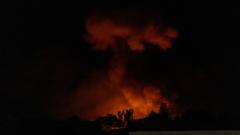
The immediate prompt for this address is the escalating conflict with Iran that began in late February. For five weeks, the world has watched a dual-track strategy of aerial bombardment and naval skirmishes aimed at dismantling Tehran’s nuclear infrastructure and its ability to project power. But as the smoke clears over Kharg Island, the administration faces a stark reality: Iran has not capitulated, and the "shock and awe" of 2026 has met the stubborn endurance of a regime that has spent forty years preparing for this exact scenario.
The Strategy of Forced Isolation
The core of Trump’s message tonight will likely center on his latest ultimatum to NATO. In recent days, the president has shifted from criticizing the alliance’s defense spending to outright questioning its utility in a world where European partners refuse to join "American" wars. His threat to withdraw from NATO is no longer a campaign trail rhetorical device; it is being used as a primary lever to force participation in the blockade of the Strait of Hormuz.
The European refusal to participate, led by British Prime Minister Keir Starmer, hinges on the legality of the initial strikes. While the U.S. and Israel maintain the operation was a preemptive necessity to stop a nuclear breakout, London and Paris have viewed it as an unsanctioned escalation. Trump’s response has been characteristically blunt, mocking the British Navy and telling Europe to "go get your own oil." This isn't just a diplomatic spat. It is the dismantling of the post-WWII security architecture in real-time, traded for a "pay-to-play" model of military cooperation.
Operation Epic Fury and the Illusion of Completion
Secretary of State Marco Rubio and Defense Secretary Pete Hegseth have spent the week insisting that the primary objectives of the war have already been met. They point to the destruction of the Iranian Air Force—a fleet largely comprised of 1970s-era American airframes—and the sinking of the Iranian Navy’s surface fleet. On paper, the U.S. has achieved total air and sea dominance.
However, dominance does not equal control. Despite the loss of their conventional navy, Iran has successfully utilized "swarm" tactics with unmanned aerial vehicles (UAVs) and ballistic missiles to turn the Persian Gulf into a no-go zone for commercial tankers. The closure of the Strait of Hormuz has removed 20% of the world’s oil supply from the market, sending gas prices to record highs and threatening a global recession.
The administration’s claim that the war could be over in "two to three weeks" ignores the asymmetric nature of the current phase. Iran’s regional affiliates, including the Houthis in Yemen and Hezbollah in Lebanon, have turned the conflict into a war of endurance. They are not fighting for territory; they are fighting to make the cost of American presence unbearable.
The Missing Peace in the Islamabad Dialogue
While Washington beats the drums of war, a quieter but perhaps more significant effort has been unfolding in Islamabad. Representatives from Saudi Arabia, Turkiye, and Egypt have been meeting to find a diplomatic off-ramp. These regional powers are the ones most directly impacted by the fallout, with Iran launching hundreds of missiles at targets across the Gulf Cooperation Council (GCC) states in retaliation for U.S. strikes.
Trump has publicly expressed confidence in a "deal," yet his demands remain "unrealistic and excessive" according to Iranian Foreign Ministry spokesperson Esmail Baghaei. The president wants a total Iranian surrender on its nuclear program and regional influence. Tehran, meanwhile, has signaled it will only reopen the Strait if the U.S. and Israel withdraw completely—a non-starter for the Netanyahu government in Jerusalem.
The Economic Brinkmanship
For the average American, the geopolitical shifts in the Middle East are secondary to the numbers on the gas pump. Trump’s primetime address must address the "roaring economy" that has suddenly hit a wall. The administration’s gamble was that a quick, decisive strike would lower energy costs by removing the Iranian threat permanently. Instead, the uncertainty has created a supply shock that the Strategic Petroleum Reserve cannot fix.
There is a glaring contradiction in the administration's messaging. Trump claims the U.S. will be "leaving very soon," yet he is simultaneously threatening to seize Iranian oil fields and blow up their electrical grids if a deal isn't reached. You cannot exit a war while threatening a massive expansion of its scope. This rhetorical whiplash is designed to keep Tehran off balance, but it is also keeping global markets in a state of paralysis.
The Risks of a Narrow Victory
If Trump declares "Mission Accomplished" tonight, it will be a narrow definition of the term. He may have successfully neutralized Iran’s conventional military assets, but he has also catalyzed a regional alignment that excludes the United States. Saudi Arabia and other Gulf states are already looking toward alternative partners like China and Russia to guarantee their long-term security, sensing that American protection is now contingent on the whims of a single administration’s domestic political needs.
The "brutal truth" of the Iran war is that military power has reached the limit of its utility. You can destroy a navy and an air force in a month, but you cannot bomb a regime into liking you, nor can you force allies to follow you into a conflict they believe is illegal.
Tonight, the president will likely focus on "America’s Warriors" and the "unrelenting force" of the U.S. military. He will skip over the fact that the Strait remains closed, the allies remain estranged, and the "eternal" leader in Tehran is still sitting in his palace. The address will be a masterclass in projection, framing a stalemate as a victory and a fracturing alliance as a "paper tiger" being discarded. Whether the public—or the markets—buy that narrative will determine the trajectory of the next four years.
Expect a definitive pivot toward isolationism. Trump is no longer interested in leading the West; he is interested in winning the war he started and getting out before the bills for reconstruction come due. The problem is that the Middle East rarely lets anyone leave that easily.