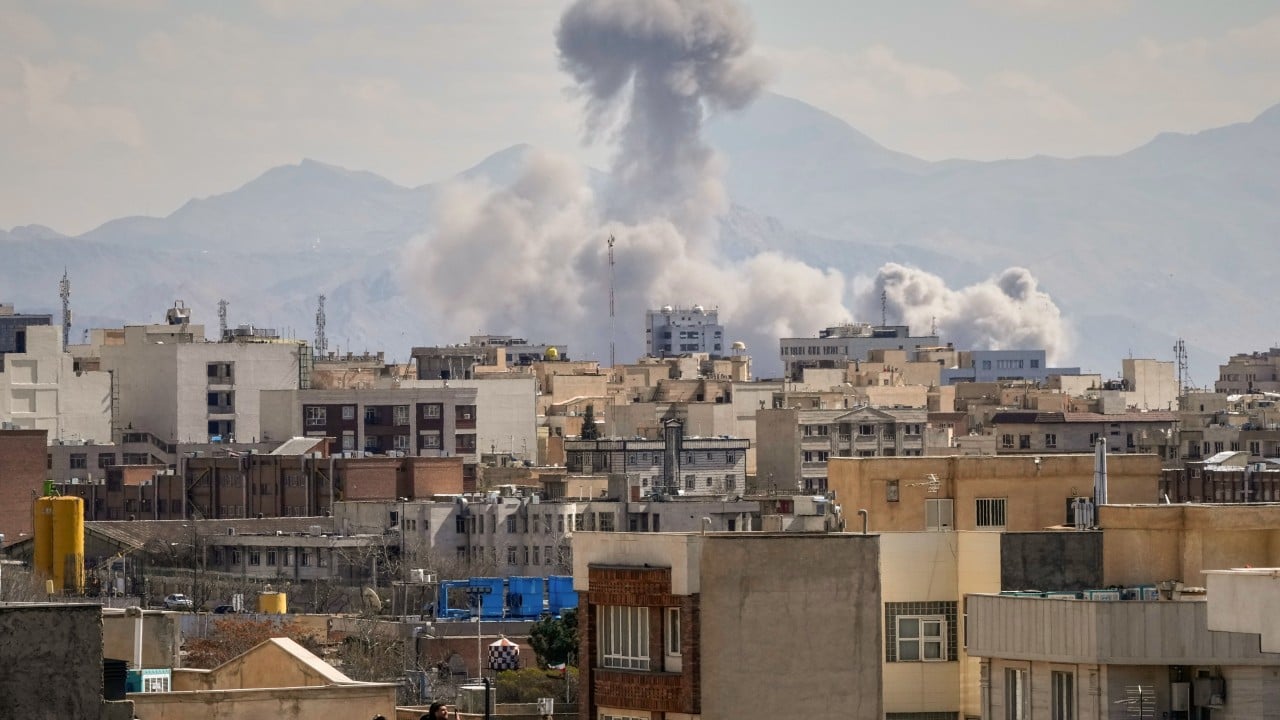
The explosions that rocked the Iranian capital early this morning were not just a military operation. They were a calculated demolition of a long-standing psychological barrier. While the official narrative from Israel describes a surgical strike against the "heart" of Tehran, the reality on the ground suggests a much more aggressive shift in the regional power dynamic. This wasn't a warning shot. It was a demonstration of absolute atmospheric dominance, intended to show that the Iranian security apparatus is essentially transparent to modern intelligence.
For decades, the Islamic Republic has relied on the concept of "strategic depth" to keep its enemies at arm's length. By funding proxies across the Levant and the Arabian Peninsula, Tehran ensured that any conflict would be fought on someone else's soil. Those days are over. The smoke rising from the city's military districts confirms that the front line has moved from the hills of Southern Lebanon and the deserts of Syria directly to the streets of the capital.
The Failure of the Iron Shield
Initial reports indicate that the strikes targeted specific manufacturing hubs for ballistic missiles and drone assembly plants. However, the most significant casualty wasn't a building or a centrifuge. It was the reputation of the Iranian air defense network. Despite billions spent on Russian-made S-300 systems and indigenous upgrades like the Bavar-373, the intruders moved through the sovereign airspace of a sovereign nation with what appeared to be total impunity.
Intelligence circles are already dissecting how such a massive breach occurred. It wasn't just about stealth technology. It was about a total electronic warfare blackout. When the first explosions hit, the local radar arrays were reportedly either jammed or feeding ghost images to their operators. This level of technical superiority creates a terrifying math for the Iranian leadership. If they cannot see the threat coming, they cannot defend the very institutions that keep the regime in power.
Why the Heart of the City Matters
Choosing to hit targets within the Tehran metropolitan area is a high-stakes gamble. Traditionally, these types of exchanges are kept to remote military outposts or nuclear sites deep in the desert to avoid mass civilian panic. By bringing the war to the capital, the objective is clearly to shatter the internal sense of security among the Iranian elite.
The "Heart of Tehran" isn't just a geographic location. It represents the nerve center of the Islamic Revolutionary Guard Corps (IRGC). This is where the orders are signed, where the money is moved, and where the ideological core of the state resides. When the windows rattle in North Tehran, the message isn't for the average citizen. It is for the generals and the bureaucrats who believed they were untouchable behind layers of concrete and propaganda.
The Myth of Proportionality
The international community often talks about "proportional response" as if it were a legal formula. In the brutal world of Middle Eastern geopolitics, proportionality is a myth. Success is measured by escalation dominance—the ability to hit the other side so hard that they realize any further retaliation would be suicidal.
Israel has discarded the old rules of the shadow war. Previously, both sides engaged in a "tit-for-tat" cycle of maritime sabotage, cyberattacks, and targeted assassinations. These were quiet, deniable actions. Today's strikes were anything but quiet. They were a loud, kinetic declaration that the era of the shadow war has been replaced by a state of open, albeit undeclared, high-intensity conflict.
The Hidden Cost of Tactical Success
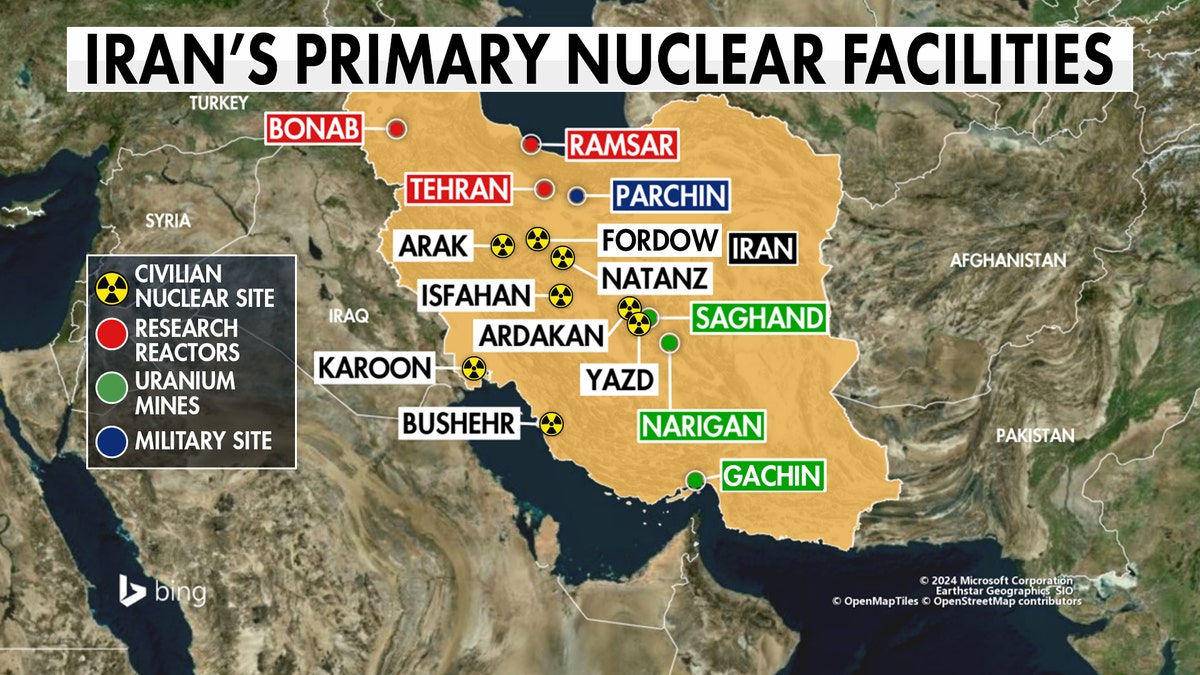
While the tactical execution of these strikes appears flawless, the long-term strategic fallout is far from certain. There is a fine line between deterring an enemy and cornering one. A regime that feels it has nothing left to lose may decide that its only path to survival is a full-scale, "breakout" dash toward a nuclear deterrent.
We have seen this pattern before. Every time a conventional military advantage is used to humiliate a regional power, that power looks for an asymmetrical equalizer. If the Iranian leadership concludes that their conventional defenses are useless against Western-aligned air power, their internal debate will shift rapidly toward the one weapon that guarantees no one will ever fly a sortie over Tehran again.
The Intelligence Gap
One factor that is being overlooked in the immediate aftermath is the role of human intelligence. You don't hit the "heart" of a city like Tehran without precise, real-time data on where the high-value assets are hidden. This suggests a level of penetration within the Iranian security services that should keep the regime's internal investigators awake for months.
The explosions weren't just the result of a pilot pulling a trigger. They were the culmination of years of deep-cover work, intercepted communications, and perhaps even defections within the IRGC itself. The technical hardware delivered the payload, but the human failure within the Iranian system allowed the gate to be opened.
A New Map of the Middle East
The geography of the region has been rewritten in a single night. The old "Resistance Axis" is currently reeling from a series of decapitation strikes and logistical disruptions. With the center of the web now under direct fire, the spokes—Hezbollah, the Houthis, and various militias in Iraq—find themselves increasingly isolated.
This creates a dangerous vacuum. If Tehran can no longer provide the "umbrella" of protection or the steady flow of advanced weaponry, these groups may become more unpredictable, not less. We are entering a phase where the centralized control of these proxy groups is breaking down, leading to a fragmented and chaotic security environment across several borders simultaneously.
The Economic Shrapnel
Beyond the physical destruction, there is the matter of the Iranian Rial. Every explosion in Tehran acts as a massive sell signal for the domestic economy. Capital flight, which was already a significant problem, will likely accelerate as the merchant class realizes that their assets are no longer safe in a city that can be targeted at will.
The Iranian government now faces a dual crisis: a military threat from without and an economic collapse from within. Historically, when faced with this combination, the regime tends to tighten its grip on the population, leading to increased domestic repression. The strikes may have targeted missile factories, but the collateral damage will be felt in the markets and the homes of millions of Iranians who are caught in the middle of a conflict they didn't choose.
The End of Strategic Patience
For years, the policy of the West and its regional allies was "strategic patience." The idea was to contain Iran through sanctions and diplomatic isolation while waiting for internal pressures to force a change in behavior. That policy died tonight.
The decision to strike the capital indicates that the time for waiting is over. The actors involved have decided that the risk of inaction is now greater than the risk of direct confrontation. This is a fundamental shift in the global security environment. We are no longer talking about "if" a major regional war could happen; we are watching the opening chapters of that war being written in real-time.
The smoke over Tehran will eventually clear, but the debris of the old order cannot be swept away so easily. The regime is now forced to choose between a humiliating retreat or an escalation that could set the entire region on fire. There are no easy exits from here.
Stockpiling air defense batteries won't fix the fundamental problem. You cannot defend a city against an enemy that already knows your secrets and has the tools to bypass your shields. The "heart" of the city was hit, and the pulse of the entire region has quickened in response.