The Billion Pound Subsea Gamble
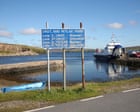
Shetland is eyeing a radical infrastructure overhaul to replace its aging ferry fleet with a network of subsea tunnels. Local councillors have thrown their weight behind plans to connect some of the archipelago’s largest islands, including Unst, Yell, Whalsay, and Bressay, to the mainland. The ambition is clear. By boring through miles of solid rock beneath the North Sea, the Shetland Islands Council hopes to reverse depopulation, stabilize isolated economies, and secure twenty-four-hour connectivity for communities currently dependent on the whims of weather and ferry timetables.
Yet, beneath the political enthusiasm lies a staggering financial and logistical reality. This is not just a local transport upgrade. It is an immense engineering gamble that will cost hundreds of millions—if not billions—of pounds, requiring funding commitments that neither Holyrood nor Westminster have yet guaranteed. Don't miss our recent coverage on this related article.
The Ferry Crisis Driving the Dig
To understand why Shetland is seriously considering tunneling under the ocean floor, one must look at the current state of its marine transport. The islands rely on an aging inter-island ferry service managed by the local council. These vessels are becoming increasingly expensive to maintain, fuel, and staff. Crew shortages routinely trigger cancellations, leaving islanders stranded, businesses paralyzed, and vital supply chains broken.
The status quo is broken. When a ferry breaks down or a storm rolls in, aquaculture companies cannot ship fresh salmon to market, and emergency medical services are forced to rely on helicopters. To read more about the history of this, NPR offers an in-depth summary.
The council faces a stark choice. They can spend hundreds of millions of pounds over the next two decades replacing the aging fleet with modern, low-emission vessels, or they can redirect those capital resources toward permanent fixed links. Tunnels represent a massive upfront expense, but they offer a lifespan of 120 years or more with significantly lower operational costs than a fleet of ships burning fuel and requiring round-the-clock crews.
Lessons From the Faroes
Proponents of the project point across the water to the Faroe Islands. The Faroese have successfully built a vast network of subsea tunnels, transforming their island economy and effectively eliminating geographic isolation. The Eysturoyartunnilin, which features the world’s first under-sea roundabout, proved that subsea boring through North Atlantic basalt is entirely feasible.
Shetland wants to replicate this model. The geological conditions are broadly similar, and the Faroese experience provides a blueprint for how fixed links can breathe life into dying rural communities. However, the Faroes operate under a different political and financial framework, utilizing a state-backed, toll-funded model that allows them to borrow heavily on international markets—a luxury the Shetland Islands Council does not currently possess.
The Financial Black Hole
Here is where the political rhetoric collides with hard economic reality. Shetland cannot fund this alone. Despite its historical association with North Sea oil revenues and the newer developments in green hydrogen and wind energy, the local authority’s capital reserves are finite.
Estimates for the proposed tunnels vary wildly, but conservative projections put the cost of a single fixed link at upwards of £100 million. Multiply that across four major islands, and the price tag quickly escalates into a territory that requires direct intervention from the Scottish and UK governments.
- Unst and Yell Tunnels: Vital for the spaceport on Unst and major salmon farming operations, but requiring extensive boring through complex rock formations.
- Whalsay Tunnel: Aimed at supporting the UK's richest fishing fleet, which currently experiences severe bottlenecking at the ferry terminals.
- Bressay Tunnel: Shorter, but logistically complex due to its proximity to the bustling commercial harbor of Lerwick.
Securing this level of external funding is an uphill battle. The Scottish Government is currently grappling with severe budgetary constraints and a backlog of mainland infrastructure commitments, including the long-promised dualling of the A9. Westminster, meanwhile, has shown interest through "Levelling Up" funds in the past, but long-term, multi-generational infrastructure commitments of this scale are notoriously difficult to lock down in shifting political climates.
Environmental and Engineering Hurdles
The physical act of boring beneath the seabed is a monumental task. Unlike the relatively predictable geology found in some continental tunneling projects, the bedrock beneath the North Sea channels around Shetland is complex, fractured, and unpredictable.
Water ingress is a constant threat. Engineers must inject specialized grouting into the rock face ahead of the drilling bits to seal fissures and prevent the sea from breaching the excavation zone.
[Seabed]
  |~~~~~~~~~~~~~~~~~~~~~~~~~~~ (Water Column)
============================== [Sea Floor]
  |=======[Fractured Rock Bed]======= (Grouting Zone)
  |   (Tunnel Boring Machine) -> [Future Roadway]
Furthermore, the environmental impact of disposing of millions of tons of excavated rock spoil cannot be ignored. While some of the material can be repurposed for harbor expansions or land reclamation projects, the transport and dumping of this waste pose localized ecological challenges that will inevitably face scrutiny from environmental regulators.
The Counter Argument
Not everyone in Shetland is convinced that tunnels are the panacea they are claimed to be. Critics argue that focusing entirely on fixed links risks neglecting the immediate, critical needs of the ferry service today. A tunnel takes a decade to plan, fund, and build. In the meantime, the existing ships are getting older, and the communities relying on them cannot wait ten years for a reliable connection.
There is also the question of tolls. The Faroese model relies on charging drivers a significant fee to cross beneath the waves. For Shetland residents accustomed to subsidized ferry fares under the Air Services Scheme and Road Equivalent Tariff, the introduction of high, permanent tolls could trigger fierce localized resistance, undermining the economic benefits the tunnels are supposed to deliver.
The Geopolitical Stakes
This infrastructure debate extends far beyond local commuting. Shetland sits at a highly strategic geopolitical crossroads in the North Atlantic. The waters surrounding the islands are vital for international subsea data cables, energy pipelines, and maritime security.
With the expansion of the SaxaVord Spaceport on Unst, the northernmost island is no longer just a remote outpost; it is a critical asset for the UK’s aerospace and defense sectors. Delivering heavy satellite components and rocket fuel via a vulnerable, weather-dependent ferry link is a glaring logistical liability. If Westminster views the Unst tunnel through the lens of national security and industrial strategy rather than simple rural transport, the political math changes entirely.
The council’s decision to back these plans is an admission that the old ways of connecting the islands are no longer viable in the twenty-first century. Whether this backing translates into actual drilling rigs breaking ground depends entirely on whether Edinburgh and London see Shetland as a remote periphery worth ignoring, or a vital economic powerhouse worth the investment.


