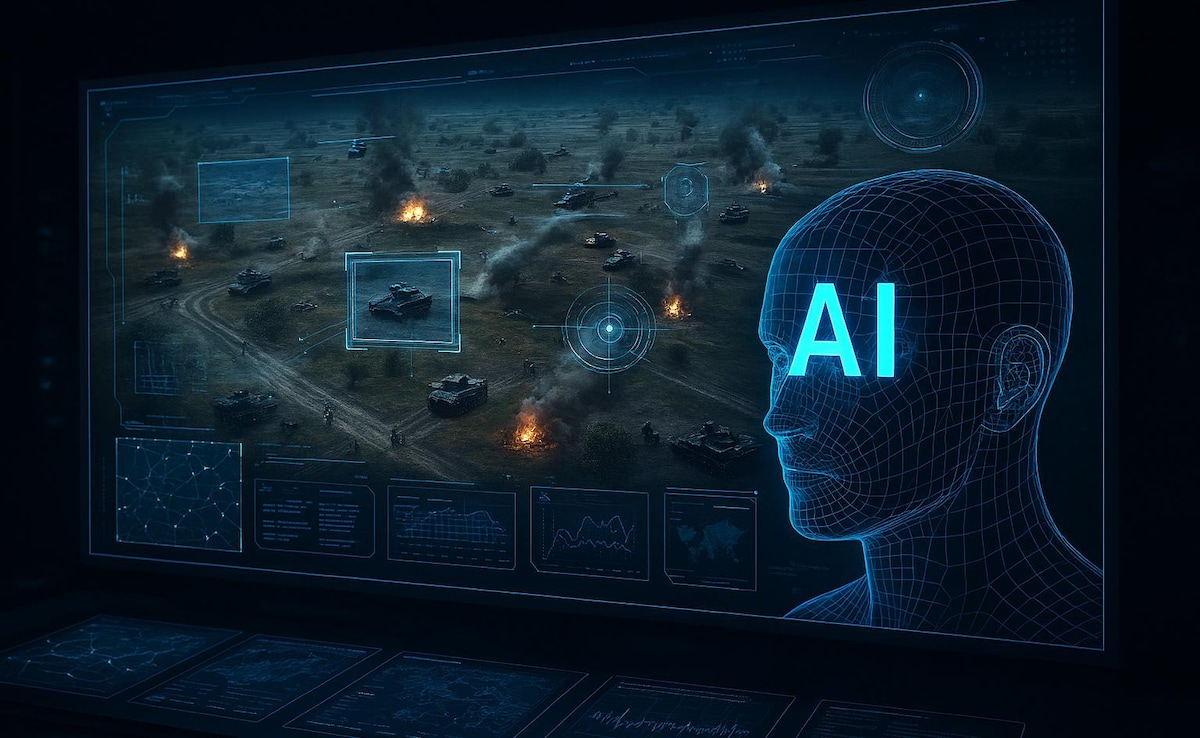
The United States military has officially breached the final gate between commercial software and the most sensitive secrets in the national security vault. On Friday, the Department of Defense finalized agreements with seven tech giants to deploy their artificial intelligence models within classified networks, a move that effectively ends the era of the military building its own proprietary "brain" in favor of renting the minds of Silicon Valley.
Google, Microsoft, Amazon Web Services, Nvidia, OpenAI, Oracle, and SpaceX have all signed on to the mission. Notably absent is Anthropic, the startup that famously tried to impose safety guardrails on the Pentagon and was subsequently labeled a "supply-chain risk" by Defense Secretary Pete Hegseth. The message from the E-Ring is clear: the military is no longer interested in debating ethics with its vendors. It is interested in winning.
The Death of the Proprietary Fortress
For decades, the Pentagon operated under a simple, if increasingly archaic, philosophy: if it’s vital to the mission, we build it here. That isolationism is dead. The sheer speed of large language model development made it impossible for the internal bureaucracy to keep pace. By the time a government-built model could clear a three-year procurement cycle, it was a museum piece.
Instead, the Department of Defense is now betting on a plug-and-play architecture. Under Secretary of Defense for Research and Engineering Emil Michael, a man who knows the Silicon Valley boardroom as well as he knows the Pentagon’s hallways, has spearheaded this transition. The logic is brutal. The military doesn't need to own the code; it needs to own the advantage the code provides. By bringing these seven companies into Secret (IL6) and Top Secret (IL7) environments, the military is attempting to fuse commercial innovation with the "kill chain."
This isn't just about faster emails or automated logistics. It is about "decision superiority." When a commander has seconds to identify a threat in the Indo-Pacific, they don't want a report; they want a synthesized target list filtered through the same neural networks that power the global economy.
The Anthropic Exile and the New Terms of Service
The most telling part of this deal is who isn't at the table. Anthropic’s exclusion serves as a warning to any tech firm that believes it can dictate the rules of engagement to the warfighter. Anthropic insisted on specific guardrails that would prevent its Claude models from being used in lethal autonomous weapons systems or for domestic surveillance.
The Pentagon’s response was a swift, bureaucratic decapitation. By branding the company a supply-chain risk, the Defense Department didn't just stop buying Anthropic’s software; it effectively blacklisted them from the future of American defense.
The companies that remained—OpenAI and SpaceX’s xAI among them—have effectively agreed to the "lawful use" clause. This is a vaguely defined legal catch-all that gives the military broad latitude to determine what constitutes a valid application of AI in the field. While these firms may maintain public-facing "AI Safety" manifestos, the classified reality is that the military now has the keys to the engine room.
Integration Without Insulation
The logistical hurdle of this expansion is immense. Moving commercial AI into classified systems is not a matter of simply installing an app. It requires the creation of secure "air-gapped" instances of these models that do not phone home to the public internet.
GenAI.mil, the military’s centralized platform, is the bridge. Over 1.3 million personnel are already using the unclassified version of this tool. The new deals move this capability behind the wire.
But this integration brings a terrifying new set of risks:
- Model Poisoning: If a commercial model is trained on data that an adversary has subtly manipulated over years, that bias is now baked into the classified decision-making process.
- The Black Box Problem: High-ranking officers are being asked to trust the outputs of algorithms that even their creators do not fully understand.
- Corporate Dependence: The U.S. military is now tethered to the financial health and technical roadmaps of private corporations. If Google pivots away from a specific architecture, the Pentagon may find its infrastructure suddenly obsolete.
The Shift to Open Source
Perhaps the most strategic move in Friday’s announcement was the inclusion of Nvidia and Reflection. Both companies represent a pivot toward open-source models. Unlike the "black box" systems of OpenAI or Google, open-source models like Nvidia’s Nemotron allow military developers to see the weightings and logic behind the AI.
This is the military’s attempt to regain a modicum of control. If they can’t build the foundation, they can at least inspect the blueprints. By diversifying across seven different providers, the Pentagon is also hedging against the failure or "wokeness" of any single platform. If one model refuses to provide a targeting solution due to a built-in safety filter, another—perhaps one less constrained by Silicon Valley social pressures—will be ready to take its place.
The 2026 Artificial Intelligence Strategy for the Department of War makes it clear that AI is now a "foundational enabler." It is no longer a tool; it is the environment in which all future conflict will occur. The military has stopped trying to out-innovate the private sector and has instead decided to consume it.
The price of this speed is a permanent reliance on the very tech giants the government is simultaneously trying to regulate. In the race for absolute decision superiority, the Pentagon has decided that the risk of being second is far greater than the risk of being dependent. The war of the future will be fought with algorithms rented from the same people who sell you cloud storage and search ads.
The line between the state and the silicon has never been thinner.