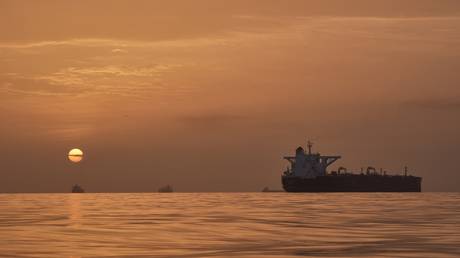
U.S. forces recently shot down a cluster of Iranian one-way attack drones targeting commercial shipping in the Strait of Hormuz, maintaining a fragile open corridor through the world's most critical energy chokepoint. While Washington presents these interceptions as routine defensive victories, they mask a deeper crisis. The tactical success of downing cheap, mass-produced unmanned aerial vehicles (UAVs) is burning through expensive Western air-defense stockpiles, while Tehran uses the encounters to stress-test American naval blockades and shift the legal framework of global maritime transit fees.
The immediate aftermath of the engagement saw U.S. Central Command (CENTCOM) quickly reassure the markets that international trade corridors remain open. However, looking at the exchange strictly through the lens of a successful defense misses the broader geopolitical mathematics at play.
The Economic Asymmetry of Modern Naval Warfare
Naval engagements in the Gulf region have exposed a glaring fiscal vulnerability for Western forces. Iran is deploying variants of its delta-wing loitering munitions, weapons that cost a fraction of a standard luxury vehicle to manufacture. They are built using commercial, off-the-shelf components, basic fiberglass hulls, and low-yield lawnmower-style engines.
To counter these rudimentary threats, American warships are forced to rely on interceptor missiles that cost millions of dollars per shot.
- The Attacker's Cost: An Iranian Shahed-class or similar one-way attack drone generally carries a production price tag between $20,000 and $40,000.
- The Defender's Cost: Standard shipborne defense systems, such as the RIM-162 Evolved SeaSparrow Missile (ESSM) or the RIM-66 Standard Missile-2 (SM-2), cost anywhere from $1 million to over $2 million per unit.
This hundred-to-one cost ratio represents an unsustainable long-term defensive posture. It is a war of economic attrition where the defender spends themselves into deficit while the attacker barely registers a dent in their military budget. Even when Close-In Weapon Systems (CIWS) like the radar-guided 20mm Phalanx cannon are used for terminal defense, the tactical risk increases significantly. Relying on a weapon with an effective range of less than two miles means letting an explosive payload get dangerously close to multi-billion-dollar naval assets and vulnerable commercial oil tankers.
Testing the Blockade and Refining the Tactics
Tehran is not launching these drones in a vacuum. The operations serve as live-fire intelligence-gathering missions designed to map the gaps in the U.S. naval blockade established earlier this year. Every drone flight forces American radar systems to activate, revealing their frequencies, processing speeds, and physical locations.
By analyzing how quickly U.S. warships respond to low-altitude profiles, Iranian military planners can adjust the flight paths, speed, and approach angles of future salvos. They are learning exactly how many simultaneous targets it takes to oversaturate a specific radar sector.
Furthermore, these drone launches act as a smoke screen for broader strategic maneuvers. Following recent drone shootdowns, U.S. forces were immediately forced to launch retaliatory strikes against coastal surveillance radar sites in Goruk and on Qeshm Island. While those counter-strikes temporarily blinded local Iranian monitoring, they also forced the U.S. military to reveal its rules of engagement and response times, providing the Islamic Revolutionary Guard Corps (IRGC) with invaluable operational data.
The Legal Reconfiguration of the Strait
While the shooting continues at sea, the true long-term threat to global shipping is developing in diplomatic backrooms. Iranian Foreign Minister Abbas Araghchi recently signaled a fundamental shift in how Tehran views the waterway, stating that the future of the Strait of Hormuz will not look like the past.
Iran is leveraging its geographic position and its remaining missile and drone inventory—which independent estimates place at roughly 21% to 22% of its pre-war capacity—to rewrite maritime law. Because the Strait of Hormuz falls within the territorial waters of Iran and Oman, international transit relies on the legal concept of transit passage under the United Nations Convention on the Law of the Sea (UNCLOS). Iran, however, never ratified UNCLOS.
Tehran is now pushing a new framework where it intends to collect "service fees" from commercial vessels crossing the strait. While international law explicitly forbids the collection of transit tolls in international straits, Iran is testing a gray-area mechanism. By branding these levies as compensation for security, environmental monitoring, or navigational assistance, they seek to normalize a permanent maritime tax on the 20 million barrels of oil that move through the chokepoint daily. The drone attacks are a calculated demonstration of what happens to commercial fleets that refuse to cooperate with this upcoming regulatory pivot.
Commercial Crossfire and International Friction
The ongoing conflict in the Gulf is severely straining Washington’s relations with neutral trading nations. The U.S. naval blockade, aimed at suffocating Iranian energy exports, has repeatedly resulted in collateral damage involving international crews.
The targeting of non-aligned vessels has triggered sharp diplomatic backlash from nations like India, following incidents where civilian seafarers were killed or detained during blockade enforcement actions against vessels like the MT Settebello and MT Jalveer. For Washington, the strategic challenge is no longer just about tracking and destroying low-flying drones. The true crisis lies in managing the diplomatic fallout when the enforcement of a blockade disrupts the supply chains of key international partners, turning a localized containment strategy into a volatile global liability.