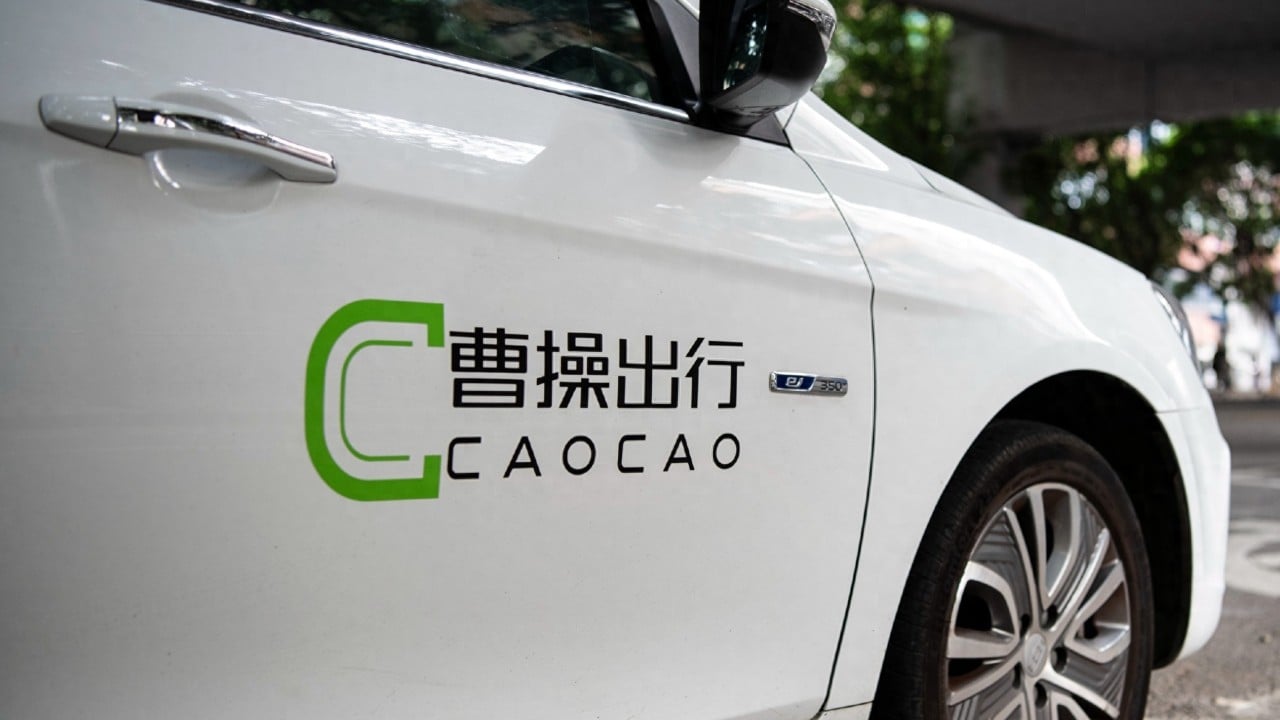
The promise of a driverless future in China is no longer a research paper or a closed-track demonstration. It is a balance sheet. As CaoCao Mobility maneuvers through its first year as a public entity on the Hong Kong Stock Exchange, the company is attempting to prove that a ride-hailing firm can survive the transition from burning venture capital to managing a fleet of autonomous machines. The industry calls it a race. In reality, it is a war of attrition where the primary weapon is not software, but the cost per kilometer.
CaoCao, the mobility arm of automotive giant Geely, recently posted a full-year 2025 revenue of RMB 20.2 billion. On paper, the 38% year-on-year growth looks like a victory lap. Look closer at the adjusted net loss of RMB 508 million, and the narrative shifts. While the company achieved its first-ever positive adjusted net profit in the fourth quarter of 2025, the path to a sustainable robotaxi business is littered with the remains of tech firms that underestimated the sheer physical gravity of operating a massive fleet.
The core premise of CaoCao’s strategy is a "fleet-first" approach. Unlike competitors who focus on the "brain" of the car, CaoCao is betting on the "body." By 2030, the company aims to deploy 100,000 purpose-built robotaxis. This is not a software play. It is a manufacturing and logistics play that leverages Geely’s industrial muscle to lower the floor on operating costs.
The Manufacturing Trap
Silicon Valley and its Chinese counterparts in Beijing’s Zhongguancun have long treated cars as computers on wheels. This is a fundamental misunderstanding of the unit economics required to replace a human driver. A standard electric vehicle (EV) modified with a trunk full of sensors and a cooling system for a massive computer is too expensive to ever reach parity with a gig worker in a budget sedan.
CaoCao is taking the opposite route. By utilizing Geely’s automotive platforms, they are developing vehicles specifically designed for the ride-hailing grind. These are cars without steering wheels in the long-term roadmap, but more importantly, they are cars designed for automated battery swapping and 24/7 utilization.
The strategy hinges on a simple, brutal calculation:
- Human Driver Cost: Roughly 60% to 70% of the total cost per mile.
- Robotaxi Hardware Premium: The added cost of LiDAR, cameras, and compute power.
- Operational Overhead: Maintenance, cleaning, and charging/swapping.
If the hardware premium and operational overhead exceed the cost of the human driver, the robotaxi is a hobby, not a business. CaoCao claims that by 2030, their operating costs will fall below RMB 0.8 per kilometer. To get there, they aren't just building a car; they are building a "Green Intelligent Mobility Hub"—a specialized garage where robots, not humans, handle the maintenance.
The Illusion of Full Autonomy
There is a persistent myth that the winner of the robotaxi race will be the company with the best AI. This ignores the reality of urban geography. In cities like Hangzhou and Suzhou, where CaoCao is currently piloting its "Robotaxi 2.0" solution, the "edge cases"—the unpredictable maneuvers of delivery scooters and pedestrians—still necessitate a safety net.
CaoCao’s current fleet of 100 vehicles in Hangzhou’s Binjiang District is a drop in the bucket compared to their 37,000 purpose-built human-driven cars. This hybrid period is the most dangerous phase for the company’s finances. They must maintain a massive traditional ride-hailing network to keep the brand alive while simultaneously funding the capital-intensive R&D for the autonomous future.
The company is pivoting to an "asset-light" expansion in secondary cities by selling these specialized vehicles to partners rather than owning them outright. It is a move to protect the balance sheet, but it also dilutes the control necessary to ensure the seamless transition to autonomous software updates later. You cannot remotely upgrade a fleet you do not own without significant friction.
The Global Pivot and Geopolitical Headwinds
While the domestic market is a meat grinder of competition against Baidu’s Apollo Go and Pony.ai, CaoCao is looking toward the Middle East and Southeast Asia. The recent Memorandum of Understanding with the Abu Dhabi Investment Office (ADIO) is a clear signal. The UAE is hungry for "smart city" infrastructure, and CaoCao is selling a turnkey solution: the car, the battery-swap station, and the dispatch algorithm.
However, exporting Chinese autonomous technology is no longer a simple commercial transaction. Sensors and mapping data are now classified as national security concerns in many Western jurisdictions. By focusing on markets like Abu Dhabi, CaoCao is sidestepping the regulatory walls of the US and EU, but they are also tying their growth to a specific geopolitical corridor.
Profitability vs. Projections
Investors in the Hong Kong market are notoriously less patient than those in New York. The 29.8% reduction in net loss is a positive trend, but the company’s shareholders' equity remains negative. Every additional unit of revenue in the current ride-hailing climate still edges close to a loss when accounting for the subsidies required to keep users from switching to Didi or Amap.
The transition to robotaxis is marketed as the "final fix" for these margins. If you remove the driver, you keep the profit. But this assumes that the price of a ride remains stable. In a world where every major player—from Tesla to Baidu—deploys a fleet, the resulting price war will likely transfer all those "driver savings" directly back to the consumer in the form of lower fares.
The Infrastructure Deadlock
The most overlooked factor in the CaoCao narrative is the power grid. A fleet of 100,000 robotaxis requires an astronomical amount of electricity, concentrated in urban hubs. CaoCao’s reliance on battery swapping is a tactical advantage for speed, but it requires massive upfront investment in physical real estate and high-voltage connections.
In the 195 cities where CaoCao operates, the local infrastructure is often the bottleneck, not the software. The "Space-Air-Ground Integrated" mobility ecosystem the company talks about sounds impressive in a prospectus, but it requires coordination with local governments that are often more concerned with protecting taxi driver livelihoods than upgrading transformer stations for autonomous pods.
Survival of the Most Integrated
CaoCao’s true advantage is its parentage. Being under the Geely umbrella means they aren't just a customer of the automotive industry; they are the industry. While pure-play tech firms struggle to find manufacturing partners who will let them "rip out the soul" of the car to install their software, CaoCao has a direct line to the assembly line.
The company is currently testing its "Robotaxi 3.0" models—vehicles that are meant to be mass-produced from day one as autonomous units. This is the only way to drive down the cost of sensors through sheer volume. If they can’t reach that volume before their current cash reserves dwindle, the "Robotaxi 2.0" pilots will be remembered as expensive experiments rather than the start of a revolution.
The success of CaoCao Mobility won't be measured by how many miles their cars can drive without a human intervention. It will be measured by whether they can lower the cost of a ride enough to make the private car obsolete for the Chinese middle class, while still leaving enough margin to pay for the electricity and the silicon. The race is no longer about who is first to launch; it is about who can afford to stay on the road when the subsidies stop.
The shift is moving from the lab to the street. In the coming year, as CaoCao expands its pilot to Abu Dhabi and assesses the Hong Kong market, the reality of "intelligent operations" will face its harshest critic: the volatility of a global economy that is increasingly skeptical of "disruptive" tech that hasn't found its way to a consistent bottom line.
The robotaxi is coming, but it won't look like a sci-fi dream. It will look like a meticulously optimized, battery-swapping, Geely-manufactured appliance that operates on margins thinner than a LiDAR beam.
Own the fleet, or the fleet will own you.