The guns have fallen silent between Jerusalem and Tehran, but the hills of Southern Lebanon are still shaking. Despite a historic ceasefire between Israel and Iran that many hoped would usher in a regional cooling period, the Israel Defense Forces (IDF) have accelerated operations against Hezbollah. This is not a misunderstanding of the truce or a temporary delay in de-escalation. It is a calculated, strategic choice to decouple the "head of the snake" from its most dangerous proxy.
Israel is operating under a simple, violent logic. While the direct exchange of ballistic missiles with Iran has paused, the threat on the northern border remains an existential domestic crisis. Over 60,000 Israeli citizens remain displaced from their homes in the Galilee. For the Israeli government, any peace with Iran that leaves Hezbollah’s infrastructure intact along the Litani River is a strategic failure. They are betting that they can crush the militia's remaining strongholds while Iran, currently licking its wounds and restricted by the terms of the new truce, stands by and watches its greatest investment burn.
The Myth of the Linked Front
For decades, the prevailing geopolitical theory was that the "Resistance Axis" operated as a singular, unified organism. If you touched one part, the whole body reacted. The current theater in Lebanon is proving that theory wrong. We are seeing a profound decoupling of interests.
Iran’s primary goal in the recent truce was the preservation of its own sovereign infrastructure and the survival of its nuclear program, which had come under direct threat from Israeli long-range strikes. To save the center, Tehran has been forced to sacrifice the periphery. This leaves Hezbollah in a position it has never occupied before: isolation.
The Litani Buffer and the Ground Reality
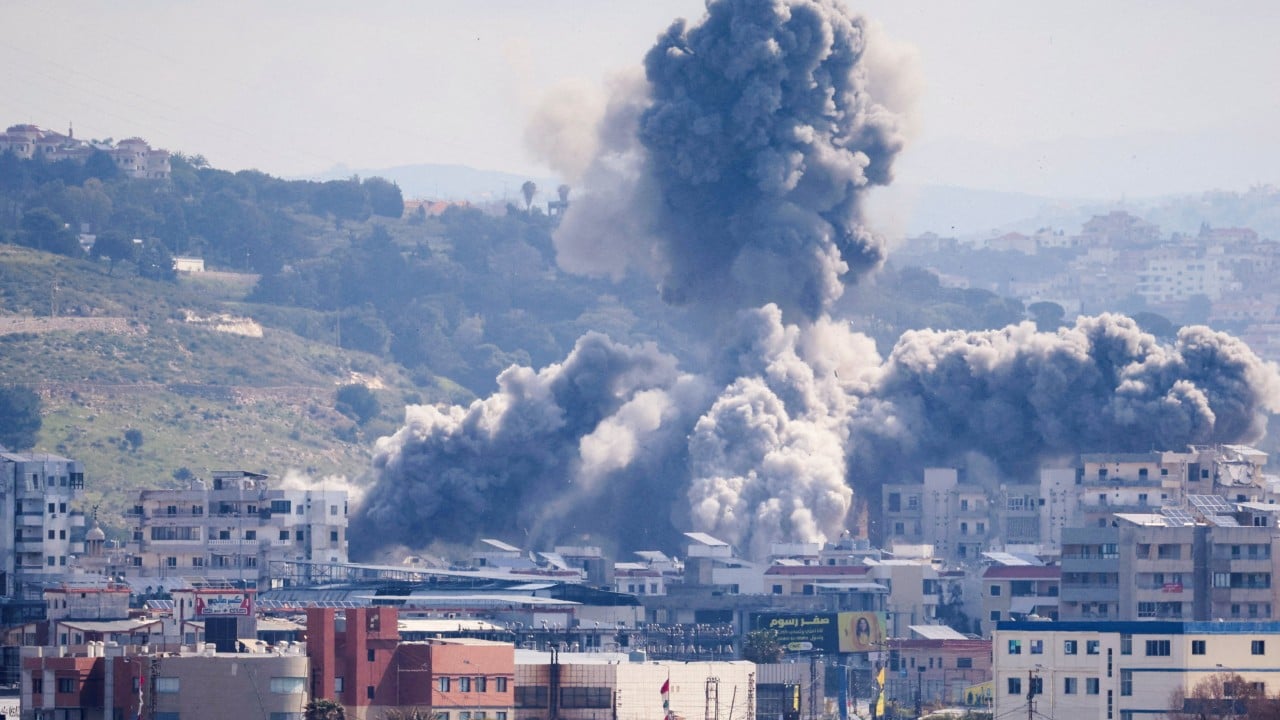
The IDF is not just trading fire; they are re-engineering the geography of the border. Military engineers are currently leveling villages that served as "launching pads" for the Radwan Force. This is a scorched-earth approach to border security. By destroying the tunnels and storage depots now, Israel intends to create a "gray zone" where no return to the status quo of October 6 is possible.
Intelligence suggests that Hezbollah’s command structure is in shambles, yet the rank-and-file fighters remain dug into the limestone ridges. These are men who have lived in these hills their entire lives. They are not waiting for an order from Tehran to fight; they are fighting for their own backyards. This makes the "post-truce" phase of the war more personal, more chaotic, and significantly more lethal for ground troops on both sides.
Why the Diplomacy is Stalling
International mediators in Paris and Washington are frustrated. They expected the Iran-Israel truce to act as a domino, falling naturally into a Lebanese ceasefire. It hasn't happened because the objectives in Lebanon are fundamentally different from those in the Persian Gulf.
- The Displacement Clock: The Israeli government faces immense internal pressure. Every week the Galilee remains a ghost town, the political viability of the current cabinet shrinks.
- The Weaponry Threshold: Israel is determined to prevent Hezbollah from re-arming with precision-guided munitions (PGMs). They view this window—where Iran is sidelined—as the final chance to destroy the convoys and manufacturing hubs.
- The Buffer Zone Mandate: Israel is no longer satisfied with UN Resolution 1701. They want a physical, enforced buffer, not a piece of paper held by a powerless UNIFIL force.
The Failure of International Oversight
UNIFIL has become a spectator to its own irrelevance. For years, the international community turned a blind eye as Hezbollah built a subterranean fortress under the noses of peacekeepers. Now, as Israeli Merkava tanks roll past UN outposts, the calls for "restraint" ring hollow in Jerusalem.
The IDF's current mandate is to ensure that when the residents of Kiryat Shmona return home, they aren't looking at a Hezbollah flag through their kitchen windows. That level of security cannot be negotiated at a mahogany table in Geneva. It is being carved out with high explosives in the villages of Ayta ash-Shab and Meiss ej-Jabal.
The Internal Lebanese Collapse
While the world watches the missiles, Lebanon as a state is evaporating. The Lebanese Armed Forces (LAF) are essentially a well-dressed humanitarian organization at this point. They lack the hardware, the mandate, and the sectarian permission to disarm Hezbollah.
This creates a vacuum. In the absence of a functional state, Israel is treating Southern Lebanon as a stateless military zone. The tragedy for the Lebanese civilian population is that they are being used as a human shield for a militia that is currently being hung out to dry by its Persian patrons.
Economic Warfare and Logistics
It isn't just about the frontline. Israel has shifted its focus to the logistics of survival. By striking the border crossings between Syria and Lebanon, they have effectively placed Hezbollah under a siege.
- Fuel Depots: Targeted to prevent the mobility of rocket launchers.
- Banking Infrastructure: Attacks on Al-Qard al-Hasan branches have gutted the militia's ability to pay its fighters in cash.
- Communication Lines: The pager and walkie-talkie attacks were just the beginning; the IDF is now systematically dismantling the fiber-optic networks Hezbollah spent a decade burying.
The Iranian Calculation
Why isn't Iran helping? The answer is cold, hard survival.
The recent direct exchanges showed Tehran that their air defenses are porous and their conventional air force is a museum exhibit. If Iran violates its truce with Israel to save Hezbollah, it risks the total destruction of its energy sector—the only thing keeping the regime's heart beating.
The mullahs are pragmatic. They would rather have a weakened Hezbollah and a functioning oil refinery in Abadan than a destroyed Hezbollah and a country in total darkness. This is the ultimate betrayal of the "Unity of Fields" doctrine, and every fighter in the tunnels of South Lebanon knows it.
The Risk of Overreach
There is a danger for Israel here. History is a cruel teacher in Lebanon. In 1982, Israel entered with the goal of expelling the PLO and ended up creating Hezbollah. In 2006, they sought a "New Middle East" and ended up with a stalemate that allowed the militia to grow ten times stronger.
The IDF is currently winning the tactical battle. They are killing commanders and blowing up caches. But the political "end state" remains a blurred image. If Israel stays too long, they become an occupying force again, providing Hezbollah with the very "resistance" narrative it needs to recruit a new generation of orphaned teenagers.
The Intelligence Gap
Despite the successes, there are shadows. Israel still doesn't know the full extent of the deepest tunnels. There are reports of "strategic reserves"—long-range missiles hidden in the mountains north of the Litani—that have not yet been used. Hezbollah is playing a game of patience. They are betting that Israeli society will eventually tire of the body bags coming back from the north, just as they did in the 1990s.
The Strategy of Permanent Friction
We are moving into a period of "permanent friction." The idea of a clean victory in Lebanon is a fantasy. Instead, we are looking at a long-term, high-intensity containment strategy. Israel will likely maintain a "security belt" of fire, if not boots, for the foreseeable future.
The Iran truce changed the map, but it didn't change the math. As long as Hezbollah exists as a military entity on Israel's border, the war in Lebanon will continue, regardless of what papers are signed in Muscat or Doha.
The Israeli Air Force continues to strike targets in the Bekaa Valley even as diplomats talk about "regional stability." This is the new normal: a localized, brutal war of attrition happening within the framework of a broader, fragile peace. It is a paradox that the people of the Levant have lived with for seventy years.
Israel has decided that the cost of finishing the job in Lebanon is high, but the cost of leaving it half-done is terminal. They are no longer interested in "quiet for quiet." They are looking for a definitive architectural change in the Middle East, one where the northern border is no longer a tripwire for a third world war.
The infantry is moving forward. The artillery is reloading. The truce with Iran is a footnote; the war in Lebanon is the main text.