The architecture of modern financial warfare rests on a simple, ruthless premise: cut off the oxygen of hard currency, and a defiant state eventually collapses from within. Washington is attempting to execute this playbook on an unprecedented scale against Iran, threatening what officials have dubbed an economic D-Day designed to sever Tehran's last remaining commercial lifelines. Yet this strategy collides with a stubborn historical reality. For nearly five decades, the Iranian apparatus has adapted to economic isolation, turning sanctions evasion into a specialized state science.
When Treasury officials roll out secondary penalties targeting any international entity, bank, or government assisting Iranian commerce, they are betting that foreign capitals will find trade with Tehran far less valuable than access to the dollar-dominated global financial system. But this calculation ignores how deeply entrenched shadow trade networks have become across Eurasia. If you enjoyed this piece, you might want to look at: this related article.
The Anatomy of Sanctions Evasion
Decades of embargoes have forced Iran to construct an intricate, decentralized web of front companies, illicit ship-to-ship oil transfers, and cash-transfer networks. These systems do not rely on Western clearinghouses. Instead, they depend on an opaque matrix of intermediaries spanning multiple jurisdictions, often utilizing non-dollar currencies or bartered commodities.
A hypothetical crude oil shipment from Kharg Island illustrates the mechanic. The tanker disables its transponder, slips out of the Persian Gulf, and meets a middle-sea vessel near Southeast Asia to transfer its cargo. Paperwork is scrubbed through shell corporations registered in tax havens with nominal regulatory oversight. By the time the petroleum reaches its final destination refineries—frequently masked as blended stock from alternative origins—the transaction has bypassed every traditional compliance checkpoint. For another perspective on this story, see the recent coverage from USA Today.
Cracking down on this infrastructure requires policing every single touchpoint of global commerce. Washington can penalize primary actors, but as long as demand for discounted energy persists in major developing markets, the financial incentive to cheat remains astronomical. The profit margins on sanctioned oil are wide enough to absorb the risk of occasional asset freezes or diplomatic rebukes.
The Diplomatic Friction Point
The core vulnerability of Washington's maximum pressure approach lies in its extraterritorial reach. Demanding that foreign sovereign nations sever all commercial ties with a regional energy producer creates acute friction, even among traditional allies.
Beijing, which absorbs the vast majority of Iran's shipped petroleum exports, views these secondary measures not as legitimate international law, but as an infringement on its own economic sovereignty. Rather than complying with Washington's directives, major trading partners often choose a middle path of quiet accommodation, keeping channels open while outwardly counseling diplomacy.
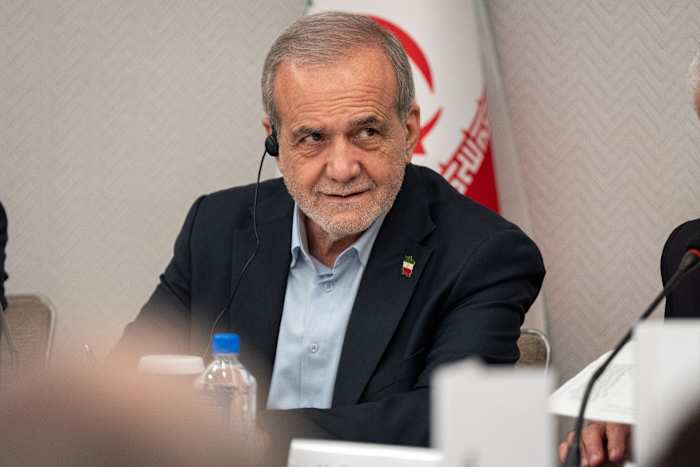
This dynamic transforms the conflict into a prolonged war of attrition. Iranian President Masoud Pezeshkian has publicly acknowledged the severe domestic strain gripping society, characterized by chronic inflation, a depreciated currency, and a manufacturing sector starved of modern inputs. At the same time, hardline factions within the security apparatus use these external pressures to rally nationalist sentiment, framing every foreign embargo as proof of an unremitting Western hostility designed to break the nation's sovereignty.
The Limits of Financial Coercion
Sanctions work best when they offer a credible diplomatic off-ramp. When economic isolation is absolute and unaccompanied by an open door for negotiation, targeted regimes often double down on asymmetric retaliation. Tehran has repeatedly signaled that if its economic survival is threatened, it will leverage its geographic position to disrupt regional trade and energy flows through the Strait of Hormuz.
The cost is borne not just by the targeted economy, but by global energy markets that remain acutely sensitive to chokepoint disruptions. Every turn of the sanctions screw triggers defensive postures that spike shipping insurance rates, delay cargo transit, and inject persistent volatility into international commodity pricing.
Financial warfare offers the illusion of decisive action without the immediate casualties of boots on the ground. Yet after months of kinetic conflict and mounting economic strangulation, the underlying geopolitical stalemate remains entirely unchanged. Pushing an adversary into total isolation eliminates any incentive they might have to compromise, leaving statecraft trapped in a perpetual loop of escalation where the next tightening of the financial noose provokes an immediate counter-threat on the water.